
Wrought aluminium and aluminium alloy wires are used in many industries. These include the electrical, construction, transportation industry, and general engineering. This is due to the lightweight nature of the wires, their high strength, and resistance to corrosion. To ensure that the quality and performance of the wires are consistent and reliable, it is important that they meet the requirements set in the standard.
This includes important aspects of the wires' quality, strength, and performance. BIS certification for the wires is essential. This is because it helps to ensure that the wires have been tested and produced according to Indian regulations. This means that the wires can be used safely and effectively in different industrial applications.
This standard specifies the technical requirements for wrought aluminium and aluminium alloy wires. The specification ensures that wires meet the necessary standards for quality, strength, and performance.
Key Features include:
Meeting these requirements is essential to obtain ISI Certification and ensure reliable performance of the wires.
To ensure the quality of wrought aluminium and aluminium alloy wires, IS 739: 1992 defines specific inspection and testing practices during manufacturing. These checks help maintain consistency and ensure the material meets required standards.
The wires must be free from harmful defects such as cracks or surface irregularities. Proper in-process controls are maintained during manufacturing to ensure consistent quality.
The size and uniformity of the wires are checked during production. Adequate in-process inspection ensures that the material meets the specified tolerances, and proper records are maintained as proof of compliance.
The chemical composition is verified to ensure the correct alloy is used.
If the raw material wire rods are ISI marked and supplied with a test certificate, further testing may not be required.
Tensile Test
This test checks the strength and durability of the wires.
This test checks the flexibility and ability of the wire to withstand bending.
Importance Of These Checks
These testing and inspection practices help maintain consistent quality, reduce defects, and ensure the product is suitable for industrial applications.
The BIS certification process for wrought aluminium and aluminium alloy wires ensures that the materials follow the requirements of the standard and meet the quality, safety, and performance criteria mentioned for the materials. The process involves a series of technical and regulatory steps:
Foreign manufacturers must additionally appoint an Authorized Indian Representative (AIR) to coordinate with the Bureau of Indian Standards (BIS) and manage compliance requirements in India.

After obtaining the BIS license,the product must display the ISI Mark on the product or its packaging. This mark indicates that the wires comply with the requirements of the standard.
In addition to the ISI Mark, other important details must also be provided on the product or packaging, as shown in the table below :
After obtaining BIS Certification for the product, the license is valid for a fixed period and must be maintained by following BIS rules and standards.
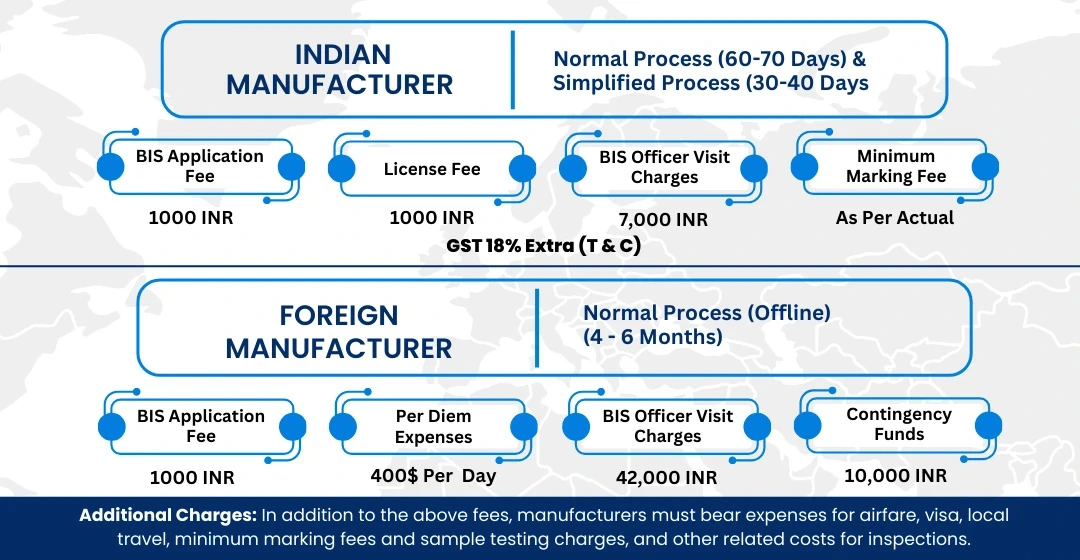
The cost of BIS certification includes charges for application, inspection, license, testing, and marking. These fees are paid to BIS as per Scheme I guidelines.
Note: Additional costs such as pre-testing or factory pre-inspection may apply. The total cost may vary depending on product type, testing requirements, and current BIS guidelines.
Note: The marking fee is based on reference data from the Manak portal. Actual fees may vary depending on production volume, scale of operation, and current BIS guidelines.
BIS certification under IS 739: 1992 ensures that wrought aluminium and aluminium alloy wires meet the required quality and performance standards. The BIS certification ensures that all important aspects related to the wires, such as composition, strength, dimensions, and testing, are being done according to BIS guidelines.
The BIS certification process involves various steps such as documentation, product testing, and factory inspection, which may take some time. With the guidance and support of a BIS consultant for Wrought Aluminium and Aluminium Alloy Wires, such as EVTL INDIA, the BIS certification process can be completed successfully and efficiently.