ISI MARK CERTIFICATION
[ Table Of Content ]
Introduction
The ISI Mark is one of the most recognized quality certification marks in India, issued by the Bureau of Indian Standards (BIS). It indicates that a product complies with the prescribed Indian Standards for safety, quality, reliability and trust. The ISI Mark was originally introduced by the Indian Standards Institution, which later became BIS under the BIS Act 2016.
The BIS ISI Mark Certification is mandatory for many products that affect public daily life, including electrical appliances, cement, steel products, and LPG cylinders. There are 680 mandatory products in ISI certification. The ISI Mark certification falls under Scheme I. When a product carries the ISI Mark, it confirms that the manufacturer has obtained certification from BIS and that the product has been tested according to the relevant Indian Standard (IS).
To obtain the BIS ISI Mark certification, manufacturers must go through a strict certification process involving product testing, factory inspections, and continuous quality monitoring. This certification ensures consistent product quality, protects consumers, and promotes trust in products available in the Indian market.
Difference between BIS and ISI Mark
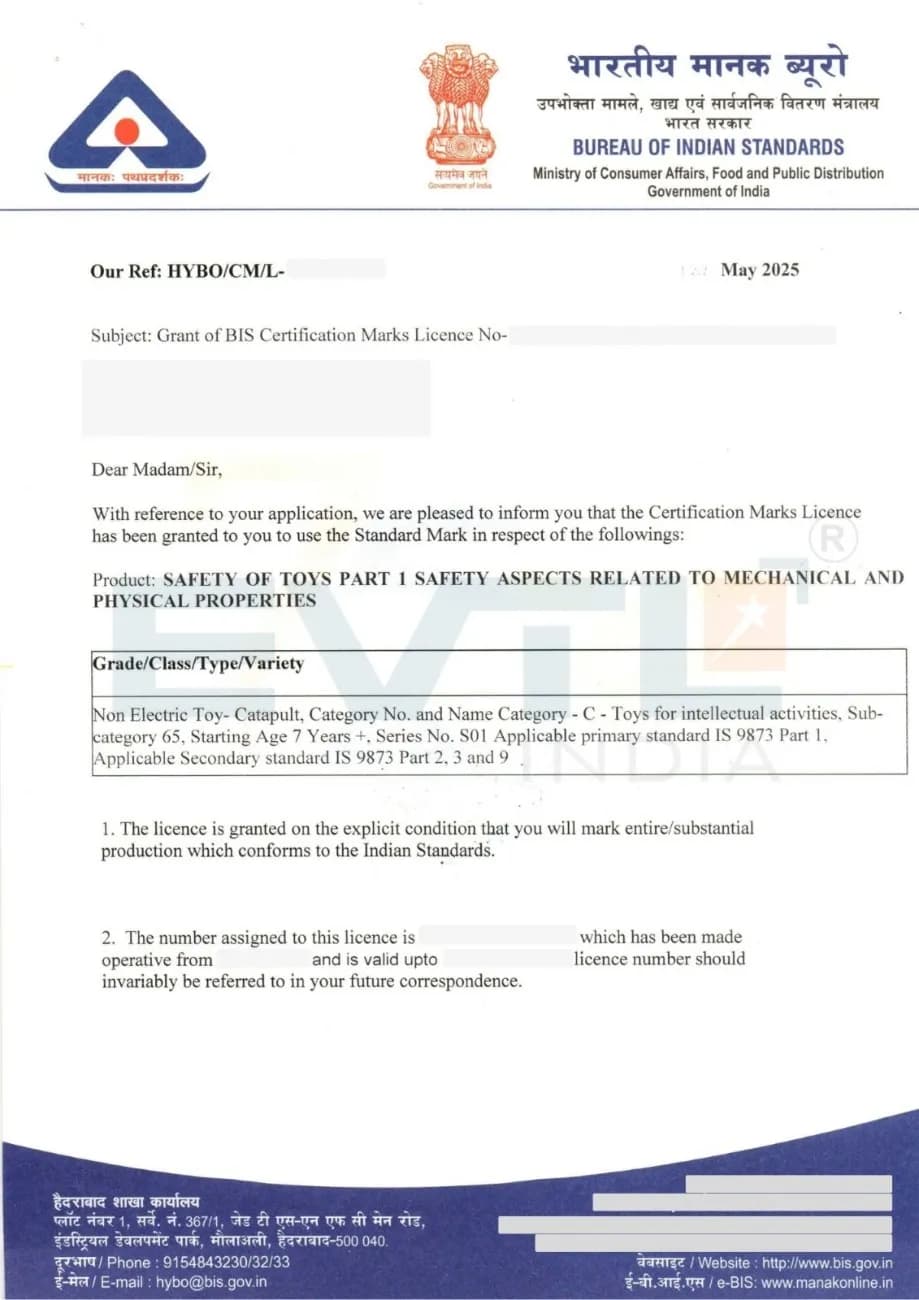
The Bureau of Indian Standards (BIS) and the ISI Mark are closely related but they are not the same. BIS is the national standards authority of India, while the ISI Mark is a certification mark issued by BIS to indicate that a product meets the required Indian Standards.
BIS is a government organization established under the BIS Act 2016. It is responsible for developing Indian Standards, regulating product quality, and granting certifications for various products in India. BIS manages different certification schemes, including BIS ISI certification, CRS registration, and FMCS certification.
On the other hand, the ISI Mark is the quality mark placed on products that comply with specific Indian Standards. It shows that the product has been tested, inspected, and approved by BIS.
Basic Requirements for ISI Certification
To obtain an ISI mark certificate, manufacturers must meet stringent standards that ensure product quality, safety, and compliance with Indian Standards. Here’s a clear guide to the essential requirements:
Manufacturing Plant
Your manufacturing facility must comply with the quality control measures specified in the relevant Indian Standards.
Calibration of Testing Equipment
Ensure all equipment is properly calibrated and procedures documented for certification validity.
Testing Facility
Determine if testing can be conducted in-house or through an accredited third-party lab.
Quality Control Procedures
Establish and document processes to ensure consistent adherence to standards.
Product Compliance
Ensure your product meets all technical and performance requirements of the applicable Indian Standards.
Factory Inspection
Prepare for BIS inspection with the right infrastructure, equipment, and trained personnel.
Record Keeping
Maintain organized records of specifications, test results, and compliance-related documents.
Benefits of BIS Certification (ISI Mark Certificate)
Obtaining the ISI Mark from the Bureau of Indian Standards (BIS) offers several important advantages for manufacturers as well as consumers. It not only ensures product quality but also helps businesses build credibility in the market.
1. Legal Manufacturing
- An ISI Mark Certificate allows manufacturers to legally manufacture and sell their products across India without regulatory issues. It ensures that the products comply with the required Indian Standards.
2. Authorization to Use the ISI Mark
- BIS certification permits manufacturers to use the ISI Standard Mark on products covered under the mandatory certification scheme. Producing or selling such products without the ISI Mark can lead to heavy penalties, including fines or legal action under the BIS Act 2016.
3. Builds Consumer Trust
- Products carrying the ISI Mark assure consumers that they meet safety, health, and quality standards, which increases customer confidence.
4. Better Product Quality and Customer Satisfaction
- BIS-certified products follow strict quality standards, which improves customer satisfaction and helps businesses strengthen their brand reputation and increase revenue.
5. Mandatory for Many Products
- In India, ISI Mark Certification is mandatory for more than 680 products, especially those related to safety and public use. This regulation helps protect consumers from substandard, counterfeit, and unsafe products
BIS ISI Certification Process
In this section, we will understand how to apply for the ISI Mark or how manufacturers can obtain ISI Certification for their products from the Bureau of Indian Standards (BIS). The certification process ensures that products meet the required Indian Standards for quality, safety, and reliability.
Basic Steps to Apply for ISI Certification
The ISI certification process generally includes the following steps:
- Selection of the Relevant Indian Standard (IS Code) for the product.
- Submission of the online application on the BIS Manak portal along with the required documents.
- Product sample testing in a BIS-recognized laboratory.
- Factory inspection conducted by a BIS-authorized auditor to check manufacturing and quality control processes.
- Grant of license by BIS if the product successfully meets all standard requirements.
BIS certification can be obtained through two procedures:
- Normal Procedure – usually takes 60 to 65 days.
- Simplified Procedure – usually takes 35 to 40 days.
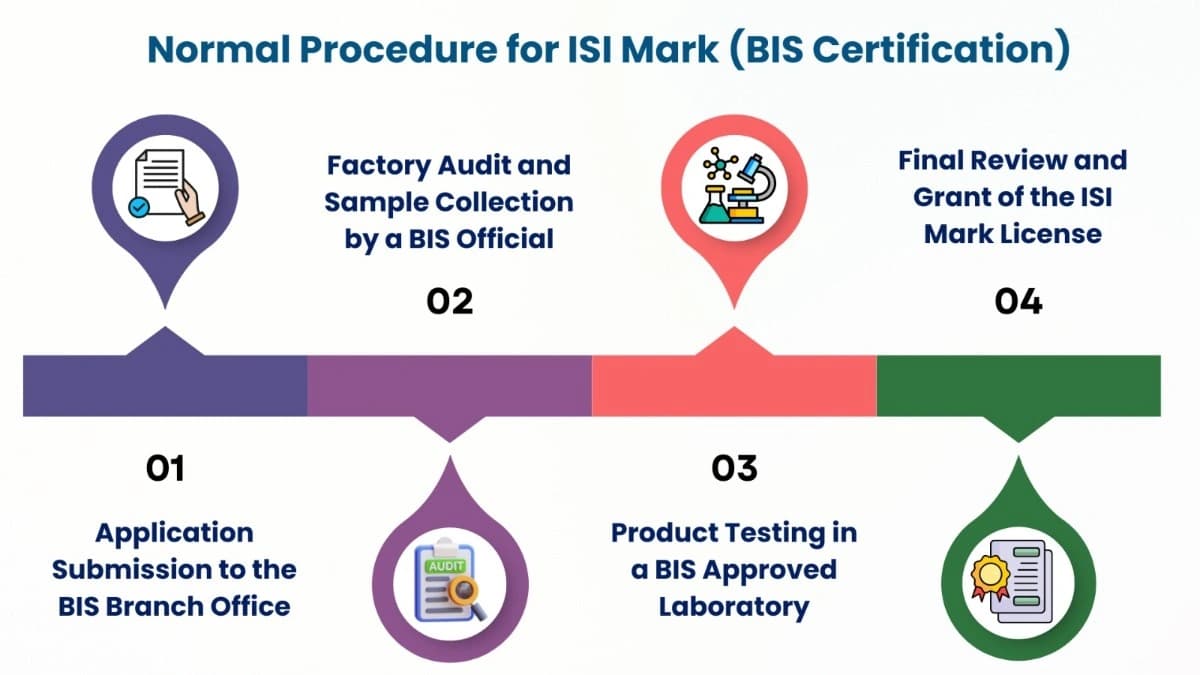
Normal Procedure
Under the normal procedure, the manufacturer first prepares all BIS requirements, including setting up an in-house testing facility and ensuring that the product complies with the relevant Indian Standard. After submitting the application, BIS officials conduct a factory inspection to verify the manufacturing process and quality control systems.
During the inspection, product samples are sealed and sent to BIS-approved laboratories for testing. If the product successfully meets all required testing parameters, BIS approves the application and grants the ISI license within 60 to 65 days from the date of application submission.
Simplified Procedure
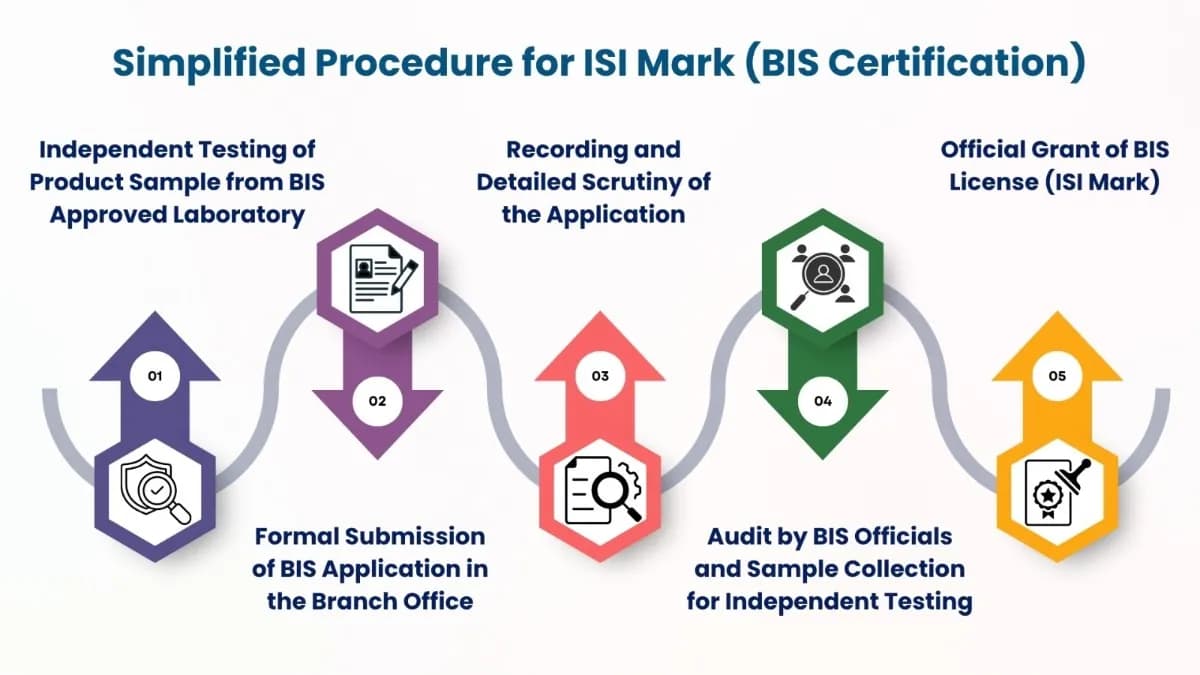
The simplified procedure is a faster way to obtain BIS certification. In this process, the manufacturer first gets the product tested in a BIS-recognized laboratory and submits the test report along with the BIS online application and required documents.
After reviewing the documents, BIS officials conduct a factory inspection to verify production and quality control systems. Once the inspection and verification process is completed and the product meets all required standards, BIS grants the certification within 35 to 40 days from the date of application.

Documents Required for ISI Certification
To obtain the ISI Mark, manufacturers must submit several documents to the Bureau of Indian Standards (BIS) during the application process. These documents help BIS verify the manufacturer’s identity, manufacturing capability, and product compliance with the relevant Indian Standard. Below is the list of commonly required documents for ISI Mark Certification in India:
Company Incorporation Documents (Certificate of Incorporation, Partnership Deed, or MSME registration).
Factory Registration and Address Proof of the manufacturing unit.
Location Map and Layout Plan of the Factory showing production and testing areas.
Manufacturing Process Flowchart explaining the complete production process.
Details of Manufacturing Machinery and Equipment used in the production process.
Details of In-house Testing Facilities available at the manufacturing unit.
Laboratory Test Reports as per the relevant Indian Standard from in-house or BIS-recognized laboratories.
Raw Material Details and Test Certificates used in the manufacturing process.
Product Drawings, Technical Specifications, and Component Details.
Packaging Details including size, quantity, and storage information.
Bank Statement or Financial Details of the Business.
Trademark Registration Certificate (if the product is sold under a brand name).
Proof of Ownership or Lease Agreement for the manufacturing premises.
Details of Authorized Signatory and supporting identification documents.
Submitting complete and accurate documentation helps ensure a smooth verification process and faster approval of the ISI certification.
ISI Mark Certification Fees
The fee structure provided below is indicative and may vary based on the specific product and BIS policies. It is advisable to check the latest fee structure on the BIS official website or contact EVTL India for complete clarification.
| No | Type of Fees / Charges | Amount |
|---|---|---|
| 1 | APPLICATION FEE | INR 1000/- |
| 2 | PRELIMINARY INSPECTION CHARGES | INR 7000/- |
| 3 | ANNUAL FEE | INR 1000/- |
| 4 | MINIMUM MARKING FEE (Micro Scale 80% Off, Small 50%, Medium 20%) | As Applicable |
| 5 | Sample Testing Fee | As Applicable |
Mandatory Products Under ISI Scheme
Conclusion
The ISI Mark plays a crucial role in maintaining product quality, safety, and reliability in the Indian market. Issued by the Bureau of Indian Standards (BIS), this certification ensures that products comply with the prescribed Indian Standards and meet strict testing and quality requirements. For manufacturers, obtaining ISI certification not only helps in meeting legal compliance but also strengthens brand credibility and allows them to sell their products confidently across India.
From understanding the difference between BIS and the ISI Mark to learning about its benefits, certification process, documentation requirements, and fees, it is clear that ISI certification is an important step for businesses that want to deliver safe and high-quality products to consumers. Moreover, since the certification is mandatory for many products related to public safety, it also protects consumers from substandard and counterfeit goods.
FAQ ?
Why Choose EVTL INDIA?
- Expert Advice from Former BIS & Industry Specialists
- Direct Coordination With Government & Regulatory Bodies
- Dedicated Project Managers For Smooth End-to-End Support
- All Compliance Solutions Under One Trusted Platform
- Encrypted CRM With Real-Time Project Monitoring & Updates
Request a Callback
More Certifications
- BIS ISI Mark
- BIS For Furniture
- DPL/NDPL Certification
- CDSCO Registration
- Gem Registration
- Rdso Vendor Registration
- WPC ETA Approval Certificate
- BIS Certification
- BIS FMCS Certification
- BIS Scheme-X Certification
- CPSC Certification
- Ce Certification
- EMI EMC Testing
- List Of Equipments
- BIS for Textile
- BIS Consultant in Delhi
Loading EVTL memories...
Meet Our Experts