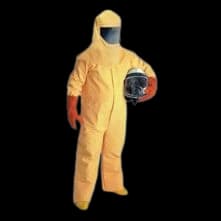
Protective Clothing for use in Welding and Allied Processes is specifically designed to shield workers from risks associated with welding, such as heat, flames, molten metal splashes, and ultraviolet (UV) radiation. These garments are made from flame-retardant materials that provide a high level of thermal resistance while ensuring durability and comfort during prolonged use.
Reinforced stitching and ergonomic designs enhance both safety and mobility, making them suitable for industrial environments. They also resist abrasion and tear, offering reliable protection in demanding conditions. These clothes are essential for welders, fabricators, and others working in high-temperature environments, ensuring their safety and compliance with workplace safety standards.
The Protective Textiles (Quality Control) Order, 2022, issued by the Ministry of Textiles, mandates BIS certification for Protective Clothing used in Welding and Allied Processes. This certification ensures that these garments conform to the requirements outlined in Indian Standard IS 16655:2017, which specifies performance standards for resistance to heat, flame, and mechanical hazards. By obtaining BIS certification, manufacturers demonstrate adherence to national safety regulations, guaranteeing their products offer effective protection against workplace hazards. Non-compliance with this mandate can result in penalties under the Bureau of Indian Standards Act, 2016, making certification crucial for legal and market acceptability in India.
BIS certification for Protective Clothing used in Welding and Allied Processes is essential to ensure that these garments meet stringent safety and performance criteria specified in IS 16655:2017. The certification assures that the clothing provides adequate protection against heat, flame, and sparks, reducing the risk of burns and injuries for workers. It also verifies the garments' durability, ensuring their effectiveness during prolonged usage in industrial environments. The mandatory nature of BIS certification under the Protective Textiles (Quality Control) Order, 2022, helps standardize quality across manufacturers and builds consumer trust. Non-compliance can attract penalties under the Bureau of Indian Standards Act, 2016, emphasizing the importance of certification for manufacturers and worker safety.
IS 16655:2017 defines the technical specifications and performance requirements for Protective Clothing used in Welding and Allied Processes. The standard outlines parameters such as flame resistance, thermal insulation, durability, and resistance to molten metal splashes. It prescribes rigorous testing methods to ensure garments withstand the high-temperature environments typically encountered in welding operations. Key requirements include low thermal shrinkage, resistance to UV radiation, and durability against mechanical wear and tear. Compliance with IS 16655:2017 ensures the protective clothing provides reliable safety in demanding conditions, supporting worker safety and regulatory adherence. This standard's mandatory implementation under the Protective Textiles (Quality Control) Order, 2022, highlights the critical role of BIS certification in maintaining product quality and safety standards.
The BIS certification process for Protective Clothing for Use in Welding and Allied Processes involves multiple steps, designed to thoroughly evaluate a product's compliance with the required standards. Here is a general overview of the certification process:
Additionally, manufacturers may be required to provide proof of compliance with environmental and safety regulations, depending on the specific type of product being certified.


BIS certification for Protective Clothing for Use in Welding and Allied Processes is essential to ensure adherence to quality and safety standards as per IS 16655 : 2017. By complying with the mentioned Quality control order, certified products provide reliable performance, enhance consumer safety, and reinforce the credibility of manufacturers in the Indian market.
Navigating the BIS certification process can be challenging, especially for small and medium-sized enterprises. EVTL India is a leading consultancy firm dedicated to assisting manufacturers in obtaining BIS certification (ISI Mark) efficiently. With expertise in managing BIS portal submissions, documentation, and regulatory fees, EVTL India ensures a smooth and successful certification process. By choosing EVTL India, manufacturers can enhance their product's marketability both in India and internationally, securing a competitive edge. Additionally, EVTL India provides ongoing support post-certification, helping manufacturers maintain compliance with BIS standards and renew their licenses as needed.