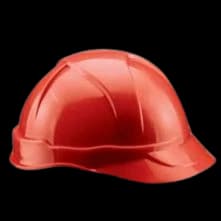
Industrial Safety Helmets are protective safety equipment used to protect workers from head injuries caused by falling objects, impact, electric shock, flying particles, and other workplace hazards during industrial operations. They are commonly used in construction sites, factories, warehouses, mining areas, electrical work, manufacturing units, and other hazardous workplaces where worker safety is important during regular industrial and maintenance activities.
To maintain the required safety and performance standards of these products, the Bureau of Indian Standards (BIS) provides certification as per IS 2925:1984. This certification ensures that Industrial Safety Helmets are properly tested for impact resistance, penetration resistance, electrical insulation, material quality, and overall durability, making them safe and reliable for industrial use while reducing the risks of serious head injuries, workplace accidents, and occupational hazards.
Overview of IS 2925:1984
IS 2925:1984 is the Indian Standard issued by the Bureau of Indian Standards (BIS) for Industrial Safety Helmets used in workplaces where there is a risk of head injuries. This standard specifies the requirements related to the design, construction, material quality, performance, and testing of safety helmets used for industrial worker protection. The main objective of this standard is to ensure that helmets provide effective protection against falling objects, impact hazards, and other workplace accidents.
The standard includes important safety and performance requirements such as:
- Shock absorption capability to minimize head injuries from impact
- Penetration resistance to protect against sharp and falling objects
- Chin strap strength and retention system for secure helmet positioning
- Resistance to flame and heat exposure in hazardous environments
- Durability and material strength for long service life
- Proper fitting and wearer comfort for regular industrial use
BIS Testing & Quality Standards for Industrial safety helmets
BIS testing is carried out for Industrial Safety Helmets as per IS 2925:1984. These tests help ensure that the helmets provide proper head protection, durability, and reliable performance for workers in industrial and hazardous working environments.
| Test Group | What is Tested |
|---|
| Shell Material Tests | Verification of helmet shell material quality and compliance with construction requirements |
| Harness Inspection | Quality, fitting, and performance of the internal harness system used inside the helmet |
| Metal Parts Corrosion Test | Resistance of metallic parts against corrosion and rust formation |
| Helmet Size Verification | Measurement and verification of helmet sizes and size ranges as specified under IS 2925:1984 |
| Construction Tests | Examination of helmet structure, dimensions, thickness, fittings, and assembly requirements |
| Workmanship and Finish Inspection | Surface finish, smoothness, assembly quality, and overall manufacturing workmanship |
| Mass Test | Weight measurement of industrial safety helmets as specified in the standard |
| Shock Absorption Test | Ability of the helmet to absorb impact energy and reduce head injury during falling object impact |
| Penetration Resistance Test | Resistance of the helmet shell against penetration by pointed or sharp objects |
| Flammability Resistance Test | Resistance of helmet materials against flame exposure and fire-related hazards |
| Electrical Resistance Test | Electrical insulation performance of the helmet under specified testing conditions |
| Water Absorption Test | Ability of the helmet material to resist water absorption during use |
| Heat Resistance Test | Performance and stability of the helmet after exposure to high temperature conditions |
| Corrosion Resistance of Metal Components | Durability and resistance of metal fittings, rivets, and accessories against environmental exposure |
| Dimensional Verification Tests | Verification of dimensions, gauges, and size adjustment systems used in the helmet |
| Load and Strength Tests | Performance of helmet components under specified loading and strength conditions |
| Environmental Conditioning Tests | Behaviour of helmet materials under controlled temperature and environmental conditions |
| Quality Control Inspection | Routine inspection and testing carried out during production as per BIS Scheme of Inspection and Testing |
Process for ISI Mark Certification for Industrial safety helmets
To obtain BIS certification for Industrial Safety Helmets under IS 2925:1984, manufacturers must follow the certification procedure specified by the Bureau of Indian Standards (BIS). The certification process includes the following important steps -
- Online Registration: Manufacturers must apply through the BIS Manak Online Portal by providing company details, manufacturing unit information, and product specifications. Foreign manufacturers are required to appoint an Authorized Indian Representative (AIR) in India.
- Product Testing: Helmet samples are tested in BIS-recognized laboratories to evaluate parameters such as impact absorption, penetration resistance, electrical insulation, chin strap strength, material performance, and overall helmet construction as per IS 2925:1984.
- Application Submission: The BIS application must be submitted along with laboratory test reports, technical specifications, manufacturing process details, and quality control documents. Foreign applicants must also submit AIR-related documentation.
- Factory Inspection: BIS officials conduct an inspection of the manufacturing facility to verify production capability, in-house testing arrangements, quality management systems, and compliance with BIS requirements.
- Grant of BIS License: If the product and manufacturing facility successfully comply with all applicable BIS requirements, the BIS license is granted under Scheme-I certification.
- Use of ISI Mark: After receiving approval, manufacturers are permitted to use the ISI Mark along with the CM/L number on the industrial safety helmets or packaging, indicating conformity with BIS standards.

Documents Required for Industrial safety helmets
| Document Category | Documents Required |
|---|
| Basic Details | GST Certificate, Email ID & Contact Number, Factory & Office Address, Rent Agreement / Lease Deed (if applicable),Partnership Deed (if applicable for partnership firms) |
| Manufacturing Details | List of Machinery, Process Flow Chart, Factory Layout Plan |
| Raw Material Details | List of Raw Materials, Supplier Details, Raw Material Invoices, Raw Material Test Certificates |
| Testing & Quality Control | List of Testing Equipment, Calibration Certificates, QC/Lab In-charge Appointment Letter & Qualification |
| Production Details | Annual Installed Capacity, Last Year Production Value |
| Product & Packaging Details | Quantity per Package, Nature of Packing, Product Printing / Marking Details |
| Management Details | Top Management Details, BIS Communication Contact Person |
| Brand & Certification Documents | Trademark / Brand Certificate, Consent Letter from BIS Recognized Laboratory |
| Additional Documents | Weekly Off Details, Hygiene Document (if applicable), Relaxation Letter (if applicable), Any Other Relevant Document |
| Foreign Manufacturer Requirement | Appointment of Authorized Indian Representative (AIR) for BIS coordination and compliance in India |
Foreign manufacturers are required to nominate an Authorized Indian Representative (AIR) in India to manage BIS coordination, documentation, and compliance-related procedures.
Marking Requirements for Industrial safety helmets
After receiving the BIS license, the ISI Mark for Industrial Safety Helmets must be permanently and visibly displayed on the helmet or its packaging along with the information provided below:
| Requirement | Details |
|---|
| ISI Mark | Confirms that the helmet complies with BIS certification requirements and relevant Indian Standards |
| Standard Number | IS 2925:1984 (Industrial Safety Helmets – Specification) |
| CML Number | BIS-issued Certification Marks Licence number |
| Manufacturer Details | Name of the manufacturer or registered brand/trademark |
| Helmet Identification | Size or model details of the helmet |
| Production Details | Batch number, lot number, or manufacturing date for traceability |
| Material Details | Information regarding the material used for manufacturing the helmet |
| Usage Information | Basic instructions, precautions, or safety guidance for users, wherever applicable |
Note: The required markings should be applied through durable methods such as printing, embossing, engraving, labeling, or stamping so that the details remain clear and identifiable during storage, transportation, handling, and regular industrial use in accordance with BIS guidelines.
BIS License Validity for Industrial safety helmets
After obtaining BIS certification for Industrial Safety Helmets under IS 2925:1984, the BIS license remains effective for a limited duration and must be maintained through ongoing compliance with BIS regulations and prescribed standards.
| particulars | Details |
|---|
| Initial Validity | Typically 1 to 2 years, depending on BIS approval conditions |
| Renewal | Must be renewed before expiry by submitting the application along with the prescribed fee and updated documents |
| Surveillane | Includes periodic factory inspections and market sample testing conducted by BIS |
| Compliance | Continuous following to standard and applicable Quality Control Orders (QCOs) is mandatory |
| Risk | Non-compliance or failed sample testing may lead to suspension or cancellation of the BIS license |
BIS Approval Cost for IS 2925:1984
The BIS certification cost for Industrial Safety Helmets under IS 2925:1984 includes different charges such as application fee, factory inspection fee, license fee, product testing charges, and marking fee under the BIS Scheme-I certification process.
| Charge Type | Indian Manufacturers | Foreign Manufacturers |
|---|
| Application Fee | INR 1,000 | USD 15 |
| Audit Charges | INR 7,000 | USD 3,200 – 5,900 |
| License Fee | INR 1,000 | USD 15 |
| Marking Fee | As applicable | As applicable |
| Testing Charges | As applicable | As applicable |
| EVTL India Consultancy Fee | As per actual | As per actual |
Note:
- Foreign manufacturers are required to pay the application fee through SWIFT transfer (SAARC countries may pay in INR along with applicable GST).
- Audit charges for foreign applicants may vary depending on the factory location and country.
- Marking fee is calculated according to production volume and applicable BIS guidelines.
- Testing charges must be paid directly to BIS-recognized laboratories.
- Consultancy charges may differ based on documentation requirements, product category, and manufacturing location.
Conclusion
Industrial Safety Helmets certified under IS 2925:1984 are important for protecting workers from head injuries and other workplace dangers in factories, construction sites, mining areas, and industrial workplaces. BIS certification confirms that the helmets meet the required Indian safety and quality standards set by the Bureau of Indian Standards. These helmets are tested for impact resistance, penetration protection, electrical insulation, strength, and durability to ensure safe and reliable use during industrial work.
Manufacturers applying for BIS Certification for Industrial Safety Helmets can take assistance from EVTL India for documentation, product testing, application filing, inspection support, and complete certification services.