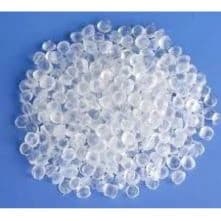
Copolymers made up of ethylene vinyl acetate (EVA) are commonly used in making flexible packages, tubes, container coatings, seals, etc. The copolymers are known for their high flexibility, transparency, water-resistance property, and excellent sealability properties. Flexibility under various processing conditions makes the materials suitable for application in various industries where hygiene and stability are important.
Items that will make contact with any consumable or medicinal items need to undergo a thorough quality assurance evaluation. This standard IS 13601:1993 outlines the requirements to be fulfilled by EVA copolymers to prove their suitability for use in the manufacture of foodstuffs, drugs or drinking water. The BIS study of the materials involves the study of several aspects, such as migration, purity aspects and other safety aspects.
What is IS 13601: 1993?
This is the Indian Standard for Ethylene Vinyl Acetate (EVA) copolymers intended for safe use in contact with foodstuffs, pharmaceuticals, and drinking water applications. It mentions the quality requirements to ensure EVA copolymers do not release harmful substances during usage. As per the BIS (Bureau of Indian Standards), these food-grade EVA materials are:
- Checked for hygiene
- Assessed for food-grade safety compliance
- Tested for migration limits
- Evaluated for suitability in pharmaceutical contact use
Eligibility for LPG Gas Stove BIS Approval
BIS authorisation under IS 13601: 1993 is required for businesses involved in manufacturing, importing, or supplying food-safe plastic material in India.
Applicable to:
- Manufacturers (India) - Must get BIS approval if the EVA material is covered under QCO.
- Foreign Manufacturers - Need certification to export the product to India.
- Importers/Brand Owners - Must ensure that the products are BIS-certified before sale.
- Sellers/Distributors - Should only sell certified packaging polymer.
Testing and Inspection Requirements
To ensure safe performance of EVA copolymers intended for use in contact with foodstuffs, pharmaceuticals, and drinking water, the Bureau of Indian Standards outlines the minimum requirements under IS 13601: 1993. This certification ensures that manufacturers have strict control over composition and safety parameters. It also verifies that EVA copolymers are suitable for hygienic applications without compromising human health. The BIS testing parameters and quality checks for the ethylene vinyl acetate material are listed below:
| Test Group | What is Tested | Purpose |
|---|
| Vinyl Acetate Content Test | Percentage of vinyl acetate in EVA copolymer | Ensures correct chemical composition as per IS 13601 requirements |
| Additive Concentration Test | Presence and proportion of additives in material | Ensures material formulation consistency and performance stability |
| Pigments & Colourants Test | Type and limits of colourants, heavy metals (Pb, Cd, Hg, etc.) | Ensures safe colouring agents suitable for food, pharma, and drinking water contact |
| Primary Aromatic Amines Test | Migration of harmful aromatic compounds | Ensures chemical safety for human contact applications |
| Sulphonated Aromatic Amines Test | Presence of restricted aromatic compounds | Ensures compliance with safety limits for regulated substances |
| Polychlorinated Biphenyl (PCB) Test | Detection of PCB residues | Ensures absence of toxic persistent organic pollutants |
| Overall Migration Test | Total migration of substances into simulants | Ensures material does not release harmful substances into food or water |
| IR Spectrophotometry Test | Infrared absorption pattern of material | Ensures polymer identification and material authenticity |
| Thermal Stability Test | Behaviour of material under controlled heat exposure | Ensures material stability during processing and usage |
| Mechanical Property Check | Basic structural integrity and consistency | Ensures uniform performance and durability of polymer batches |
| Packaging Integrity Test | Condition and safety of packaging material | Ensures contamination-free storage and transportation |
| Moisture & Contamination Check P | Presence of moisture, dust, or foreign particles | Ensures hygienic quality for food-grade applications |
| Batch Consistency Test | Uniformity across production batches | Ensures stable production quality and repeatability |
| Migration in Simulants Test | Behaviour in food simulant liquids | Ensures compliance for food contact safety standards |
| Residual Chemical Analysis | Traces of harmful residual chemicals | Ensures material safety for pharmaceutical and drinking water use |
How to apply for EVA Packaging Material BIS License?
The BIS Authorisation process ensures that the EVA Copolymers in Food Grade and Medical Applications meet the required standards for proper and efficient operation. This process is set by the Bureau of Indian Standards (BIS) and includes the following steps:
- Online Registration: Manufacturers register on the BIS Manak portal by submitting company, factory, and product details. Foreign manufacturers must appoint an Authorized Indian Representative (AIR).
- Testing at BIS-Approved Laboratory: Product samples are tested in BIS-approved laboratories for chemical composition, vinyl acetate content, additive concentration, migration limits, heavy metal content, and overall material safety.
- Application Submission: The application is submitted along with test reports, technical documents, and factory details. Foreign manufacturers must also submit AIR-related documents.
- Factory Inspection: BIS officials carry out an on-site inspection of the manufacturing unit to verify the production process, safety measures, and quality control system.
- Grant of BIS License: Once all compliance requirements are successfully verified, BIS grants the certification license under Scheme-I.
- Use of ISI Mark: After approval, the manufacturer is authorized to use the ISI Mark on the product along with a valid CM/L number, confirming that the product meets BIS standards.

IS 13601: 1993 License Document Requirements
| Document Category | Documents Required |
|---|
| Basic Details | GST Certificate, Email ID & Contact Number, Factory & Office Address, Rent Agreement / Lease Deed (if applicable),Partnership Deed (if applicable for partnership firms) |
| Manufacturing Details | List of Machinery, Process Flow Chart, Factory Layout Plan |
| Raw Material Details | List of Raw Materials, Supplier Details, Raw Material Invoices, Raw Material Test Certificates |
| Testing & Quality Control | List of Testing Equipment, Calibration Certificates, QC/Lab In-charge Appointment Letter & Qualification |
| Production Details | Annual Installed Capacity, Last Year Production Value |
| Product & Packaging Details | Quantity per Package, Nature of Packing, Product Printing / Marking Details |
| Management Details | Top Management Details, BIS Communication Contact Person |
| Brand & Certification Documents | Trademark / Brand Certificate, Consent Letter from BIS Recognized Laboratory |
| Additional Documents | Weekly Off Details, Hygiene Document (if applicable), Relaxation Letter (if applicable), Any Other Relevant Document |
| Foreign Manufacturer Requirement | Appointment of Authorized Indian Representative (AIR) for BIS coordination and compliance in India |
The Foreign manufacturers must designate an Authorized Indian Representative (AIR) in India. The representative is the local point of contact for the Bureau of Indian Standards (BIS) and is responsible for handling all compliance, documentation, and regulatory obligations within the country.
Marking Requirements & License Validity
Marking Requirements
After the manufacturer obtains a BIS license, the ISI Mark for drinking water safe polymer must be clearly and permanently marked on its packaging or on the product. Along with the ISI Mark, essential details such as the manufacturer’s identification and licence number (CM/L) must be mentioned. This ensures the product complies with all safety requirements. Further details are mentioned below:
| Requirement | Details |
|---|
| ISI Mark | Indicates that the product is BIS certified and conforms to standards |
| Standard Number | IS 13601: 1993 |
| CML Number | Certification Marks License (CML) number issued by BIS |
| Manufacturer Details | Name of manufacturer or registered trademark |
| Batch / Date | Batch number, heat number, or manufacturing date for traceability |
Note: Marking is typically applied using durable stamping, tagging, or permanent printing to ensure clear identification during handling, storage, and transportation, as per BIS marking requirements.
BIS License Validity for Packaging Polymer
| particulars | Details |
|---|
| Initial Validity | Typically 1 to 2 years, depending on BIS approval conditions |
| Renewal | Must be renewed before expiry by submitting the application along with the prescribed fee and updated documents |
| Surveillane | Includes periodic factory inspections and market sample testing conducted by BIS |
| Compliance | Continuous following to standard and applicable Quality Control Orders (QCOs) is mandatory |
| Risk | Non-compliance or failed sample testing may lead to suspension or cancellation of the BIS license |
Fee Breakdown for EVA Copolymer BIS Approval
The cost of BIS Approval for a food-safe plastic material includes charges for application, inspection, license, testing, and marking. These fees are paid to BIS as per Scheme I guidelines.
| Charge Type | Indian Manufacturers | Foreign Manufacturers |
|---|
| Application Fee | INR 1,000 | USD 15 |
| Audit Charges | INR 7,000 | USD 3,200 – 5,900 |
| License Fee | INR 1,000 | USD 15 |
| Marking Fee | As applicable | As applicable |
| Testing Charges | As applicable | As applicable |
| EVTL India Consultancy Fee | As per actual | As per actual |
Note:
- Application fee for foreign manufacturers is payable via SWIFT (SAARC countries may pay in INR with applicable GST).
- Audit charges for foreign manufacturers vary based on country/location.
- The marking fee is determined based on the product category and production volume (MSME benefits may apply).
- Testing charges are to be paid directly to BIS-recognised laboratories.
- Consultancy fees can vary depending on product type and factory location.
Conclusion
Safe selection of polymers is crucial to ensure that product quality remains preserved in its packaging and storage. BIS Certification under IS 13601:1993 ensures that Ethylene Vinyl Acetate (EVA) copolymers have undergone tests to ascertain their safety and suitability in terms of quality standards. This also ensures the consistent performance of the materials during processing and handling. Firms that need to obtain BIS certification usually seek expert guidance on documentation and compliance processes. In many cases, firms find it easier to work with EVTL India to manage BIS certification processes due to their vast knowledge in technical matters related to the same.