quick enquiry

Get A Quote

Services

BIS Certification for Enameled Copper Winding Wire Class 180 – IS 13730 (Part 8)

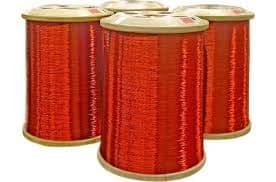
Enameled Copper Winding Wire Class 180

Enameled Copper Winding Wire Class 180 motors and transformers are components that guarantee the smooth flow of electricity that has good insulation. As it works under high load, and heat, safety and quality are essential.

The BIS Certification of the IS 13730 Part 8 certifies compliance with all standards of performance, insulation, reliability, etc with each wire to ensure that electrical systems remain safe and efficient.

What is an ISI Certification?

The Bureau of Indian Standards (BIS) is the authority in India that controls the safety and quality of products. Enameled Copper Winding Wire: Certification of Class 180 is BIS Certification as per IS 13730 (Part 8). It is used to check the heat resistance and electrical performance of the wire.

The ISI mark is a mark of trust that can be used by manufacturers with a BIS license. It indicates that the wire has already been tested and it is Indian compliant. In addition to compliance, the ISI mark also guarantees the user and manufacturers that it is a safe, reliable and well-built wire to be used in any electrical equipment. 

Understanding the value of BIS Certification?

Following are the reasons for which BIS certification is valuable:

  1. Provides Safety : It provides safety against overheating, shorting and insulation breakdown.
  2. Guarantees Quality :  Assures stable electrical performance and heat resistance.
  3. Standards Compliance : Conforms to all the requirements of IS 13730 (Part 8) of Class 180 wires.
  4. Boosts Confidence : Convincing to the manufacturers, buyers and electrical equipment users.
  5. Supports Legal and Export Requirements :  Helps in compliance and improves its adoption in both the domestic and the foreign market. 

Important details about IS 13730 (Part 8)

IS 13730 (Part 8) is an Indian standard of Enameled Copper Winding Wire utilized in the electrical equipment. It establishes standards of insulation, thermal resistance and electrical conductivity of the wire. The standard grants the performance of the wires to resist hot temperatures and reliable to use.

It helps prevent issues like short circuits, overheating, and insulation failure. Following this standard guarantees consistent quality and reliable performance. Overall, it makes electrical systems safer and more efficient for everyday use. 

What should you submit to get a BIS License?

The following documents are necessary for Domestic Manufacturers:

  1. List of raw material
  2. Layout plan of the factory premises
  3. List of testing equipment as per the Indian standard
  4. Quality Control (QC) Personnel Details (Education degree and Aadhaar card)
  5. GST
  6. Authorized Person Aadhar & Pan Card
  7. MSME
  8. Electricity Bill
  9. Email Address & Permanent Contact Number
  10. Office Address
  11. Factory Address
  12. Copy of Partnership Deed / MOA (for Private Limited Co.)
  13. Premises document / Rent Agreement
  14. List of Manufacturing Machinery  

The following documents are necessary for Foreign Manufacturers:

  1. Checklist for Application
  2. Copy of Swift Remittance
  3. Duly Filled Application Form
  4. Copy of Business License
  5. List of Machinery
  6. List of Raw Material
  7. Test certificate of Raw Material
  8. List of Testing Equipment
  9. Calibration certificate of Test Equipment
  10. Process Flowchart
  11. Layout Plan
  12. Location Plan (Route Map)
  13. Details of Technical Personnel
  14. Qualification of QC
  15. Copy of Certification of Product and/ System
  16. Factory Test Report  
  17. Agreement with AIR
  18. Aadhar Card of AIR
  19. AIR Nomination Form
  20. Educational Degree of AIR
  21. Undertakings
  22. Scope of License

Simple way to apply for ISI Certification 

There are two key procedures to get your BIS license: Simplified and Normal.

Simplified Procedure

The steps involved in the simplified procedure are:

  1. Document Collection : All the necessary KYC and technical documents are collected in order to start the BIS application without problems.
  2. BIS Portal Registration : The license application is processed by the manufacturer being registered on the official portal of BIS.
  3. Pre-Testing of Samples : Before submission, product samples are tested in a BIS authorized laboratory.
  4. In-House Lab Requirement : Depending on the product, an internal laboratory facility might be necessary according to the BIS requirements.
  5. BIS Review & Clarifications : BIS analyzes the documents and test reports provided and can seek clarifications.
  6. BIS Audit at Factory : Audit of the product samples carried out by the BIS inspectors is done at the factory. 
  7. Timely Audit Completion : The audit, inspection and sample collection are conducted within 17 days of the application submission along with the EVTL India engineer.
  8. Factory Inspection with EVTL India Engineer : The BIS auditor and an engineer at EVTL India undertake a proper inspection at the factory.
  9. Independent Collection of Samples : The BIS auditor draws samples to be tested by the post-audit.
  10. Sample Testing at BIS Lab : BIS sealed samples are sent to BIS laboratories, and the BIS department pays the price of testing.
  11. Grant of BIS License : Upon satisfactory document inspection, testing and audit, ISI license is issued. 

Normal Procedure

The steps involved in the normal procedure are:

  1. Submit Documents : Firstly, it is required to submit all the KYC and technical documentation to start the BIS application.
  2.  Plan In-House Laboratory and Technical Proposal : Prepare an internal lab in case necessary and prepare all technical documentation.
  3. Ready Factory Test Report (FTR) : Carry out in-house tests and document the FTR to demonstrate that the product is to the standards.
  4. Submit Application & Fees : Includes your BIS application and the amount of fees necessary by the government.
  5. BIS Audit : An audit of documents and processes at a BIS takes place within 3 weeks.
  6. EVTL India Engineer Factory Inspection : BIS auditor inspects the factory with an EVTL India engineer to make sure that everything is in order. 
  7. Sample Collection & Sealing : The BIS auditor picks samples randomly, puts them into a sealed sample and forward the sample to a BIS authorized lab to be tested.
  8. License Approval : After the lab tests of the sample are passed-on, BIS issues the ISI license, and your product is certified and market-ready. 

Time needed to get BIS License?

According to IS 13730 (Part 8), the expected time duration for obtaining BIS Certification of Enameled Copper Winding Wire Class 180 is as follows:

  • For Indian Manufacturers (40-45 days is the standard timeframe)
  • For International Manufacturers (180 days is the standard timeframe) 

Why manufacturers rely on EVTL India for BIS Support?

In the case of BIS Certification of Enameled Copper Winding Wire Class 180 under IS 13730 (Part 8), EVTL India is a reputable BIS consultant to work with, without any trouble.

We will take you through the process all the way to the verification of your manufacturing arrangement to organising BIS-compliant testing and the drafting of all required documents. Your winding wire, with our assistance, is in compliance with all BIS requirements, safe and reliable, and will be top on the market.

Conclusion

More than just complying to IS 13730 (Part 8) regulations, BIS Certification on Enameled Copper Winding Wire Class 180 shows a commitment to dependability, quality, and safety. It is easy with the assistance of qualified BIS consultants to get through the process easily and properly.

Compliance is not only achieved by the use of the ISI mark but also informs the customers that the wire is safe to use, dependable, and of high Indian standards. It represents trust, and that is what increases brand credibility and inspires in all electrical products where the wire has been utilised.

Frequently Asked Questions (FAQs)

1. What is BIS Certification for Class 180 wires?

It guarantees that the wire is of Indian standard in terms of safety, insulation and electrical performance.

2. What is the importance of BIS Licensing?

It eliminates overheating and short circuits and guarantees high capacity to perform well even in high temperatures.

3. What does IS 13730 (Part 8) cover?

It establishes the standards of insulation quality, resistance to heat and electrical efficiency of Class 180 wires.

4. Which documents are required for a BIS License?

They are factory layouts, raw material list, QC details, testing equipment and KYC documents.

5. Why is EVTL India the right choice for BIS Support?

To have a hassle-free certification, EVTL India handles all the steps beginning with testing and documentation up to compliance.

Free Call Back

Latest News & Update

Why Choose EVTL INDIA

Expertise in Indian Regulatory Standards

End-to-End Support

Trusted by Top Indian & Global Brands

Fast Processing & Transparent Pricing

Strong Liaison with Indian Authorities

Company Profile