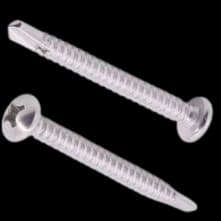
BIS Certification for Fasteners– Cross Recessed Drilling Screws with Tapping Screw Thread Part 1 Pan Head IS 18471 (Part 1) :2023
Fasteners such as Cross Recessed Drilling Screws with Tapping Screw Thread (Part 1 – Pan Head) are widely used in construction, automotive, electrical, and general engineering applications for secure and reliable fastening. These screws are designed to drill and tap threads in materials simultaneously, ensuring efficiency and strong holding performance. To maintain consistent quality, safety, and performance standards, these fasteners must comply with the requirements specified under IS 18471 (Part 1):2023.
The BIS Certification Process for these fasteners is governed by the Bureau of Indian Standards (BIS) under Scheme-I of Schedule-II. This certification ensures that the product meets the prescribed Indian Standard through rigorous testing, factory inspection, and quality control measures. Manufacturers are required to obtain the BIS license and use the ISI Mark on their products, demonstrating conformity with national standards. This not only enhances product credibility but also ensures consumer safety and market acceptance across India.
IS 18471 (Part 1): 2023 is an Indian Standard published by the Bureau of Indian Standards (BIS) that specifies the requirements for cross recessed drilling screws with tapping screw thread – pan head. This standard is aligned with the international standard ISO 15481:1999, ensuring consistency with global practices.
The standard provides comprehensive technical guidelines for the design, manufacture, and performance of these fasteners, which are widely used in construction, manufacturing, and engineering applications.
Key Features of the Standard:
Scope of Product
Design and Dimensions
Material and Mechanical Properties
Performance Requirements
Testing and Inspection Requirements for Fasteners (Cross Recessed Drilling Screws – Pan Head)
To ensure proper quality, strength, durability, and performance of fasteners, the standard defined by the Bureau of Indian Standards (BIS) under IS 18471 (Part 1): 2023 / ISO 15481:1999 specifies detailed testing and inspection requirements during manufacturing. These tests help ensure that fasteners meet all required mechanical, dimensional, and coating standards before being certified with the BIS Standard Mark.
What is R and S?
R (Required): Test must be conducted in the manufacturer’s in-house laboratory
S (Subcontracting Allowed): Test can be conducted in a BIS-recognized or NABL-accredited external laboratory
Material Quality Tests
Material Verification Test (S) – Ensures that the steel used complies with ISO 10666 standards
Chemical Composition Test (S) – Verifies correct composition of raw material
Metallurgical Tests (R) – Includes microstructure analysis to ensure proper material properties
Mechanical and Functional Tests
Surface Hardness Test (R) – Ensures the screw surface is hard enough for drilling applications
Core Hardness Test (R) – Checks internal strength of the fastener
Case Depth Test (R) – Measures the hardened layer depth for durability
Hydrogen Embrittlement Test (R) – Ensures resistance to cracking under stress
Torsional Strength Test (R) – Checks the ability of the screw to withstand twisting force
Core Hole Drilling Capability Test (R) – Verifies drilling performance in materials
Thread Forming Capability Test (R) – Ensures proper thread formation during application
Dimensional and Physical Tests
Dimension Test (R) – Ensures compliance with size and shape as per Table 1
Thread Test (R) – Checks thread accuracy as per ISO 1478 / IS 5957
Tolerance Test (R) – Verifies allowable dimensional variations
Cross Recess Test (R) – Ensures proper shape and fit of screw head recess
Coating and Surface Finish Tests
Electroplating Test (R) – Ensures proper coating thickness and uniformity
Coating Thickness Test (R) – Measured using coat meter
Salt Spray Test (R) – Evaluates corrosion resistance under harsh conditions
Surface Condition Test (R) – Ensures proper finish (plain or coated)
Performance and Durability Tests
Mechanical Performance Test (R) – Evaluates overall functional strength
Corrosion Resistance Test (R/S) – Ensures long-term durability in different environments
Adhesion Test (R) – Checks bonding strength of coating with base metal
Inspection and Quality Control
Manufacturers must implement a Quality Assurance Plan (QAP) to ensure continuous compliance.
Each batch (control unit) of fasteners must be tested regularly.
Testing frequency and sample size must follow BIS guidelines.
Test records must be maintained and made available for inspection.
bis certification process for Cross recessed drilling screws
The BIS certification process ensures that fasteners such as cross recessed drilling screws with tapping screw thread (pan head) meet the required quality, strength, and performance standards. This process is governed by the Bureau of Indian Standards and includes the following steps:
Online Registration: Manufacturers are required to register on the BIS Manak portal by
providing details of the company, manufacturing unit, and product specifications. Foreign
manufacturers must appoint an Authorized Indian Representative (AIR) to apply on their
behalf.
Testing at BIS-Approved Laboratory: Samples of the fasteners are tested in
BIS-recognized laboratories to verify parameters such as mechanical strength,
dimensional accuracy, corrosion resistance, hardness, and thread performance as per IS
18471 (Part 1):2023.
Application Submission: After successful testing, the manufacturer submits the
application along with test reports, product details, raw material information,
manufacturing process details, and quality control documents. In the case of foreign
manufacturers, AIR-related documents must also be included.
Factory Inspection: BIS officials conduct an on-site inspection of the manufacturing
facility to assess production capabilities, in-house testing facilities, quality assurance
systems, and compliance with the relevant Indian Standard.
Grant of BIS License: If the product complies with all the specified requirements and
the inspection is satisfactory, BIS grants the certification license under Scheme-I.
Use of ISI Mark: Once the license is granted, the manufacturer is authorized to use the
ISI mark on the fasteners along with the CM/L number. This mark indicates that the
product conforms to IS 18471 (Part 1):2023 and meets the required quality and safety
standards.
documents required for bis certification
Basic Details
GST Certificate
Email ID & Contact Number
Factory & Office Address
Rent Agreement / Lease Deed (if applicable)
Legal Documents
Partnership Deed (if partnership firm)
Manufacturing Details
List of machinery
Process flow chart
Layout Plan of Factory
Raw Material Details
List of Raw Materials
Supplier Details
Raw Material Invoices
Raw Material Test Certificates
Testing & Quality Control
List of Testing Equipment
Calibration Certificates
QC / Lab In-charge Appointment Letter & Qualification
Production Details
Annual Installed Capacity
Last Year Production Value
Product & Packaging Details
Quantity per Package
Nature of Packing
Nature of Printing / Marking on Product
Management Details
Top Management Details
Concerned Person for BIS Communication
Brand & Certification Documents
Trademark / Brand Certificate
Consent Letter from BIS Recognized Laboratory
Additional Documents
Weekly Off Details
Hygiene Document (if applicable)
Relaxation Letter (if applicable)
Any Other Relevant Document
Foreign manufacturers must additionally appoint an Authorized Indian Representative
(AIR) to coordinate with the Bureau of Indian Standards (BIS) and manage compliance
requirements in India.
Marking Requirement & License Validity
Marking Requirements
When a manufacturer obtains the BIS license, the ISI mark for Cross Recessed Drilling
Screws with Tapping Screw Thread Part 1 Pan Head must be applied clearly and
permanently on the product or its packaging. In addition to the ISI Mark, other important
details must also be provided on the product or packaging, as specified in the table
below. This ensures the product meets all quality and safety standards as prescribed by
the Bureau of Indian Standards.
Requirement
Details
ISI Mark
Indicates that the product is BIS certified and conforms to the standard
Standard Number
IS 18471 (Part 1) :2023
CM/L Number
Certification Marks Licence (CM/L) number issued by BIS
Manufacturer Details
Name of manufacturer or registered trademark
Product Details
Type (Pan Head), size, and designation of the screw
Batch / Date
Batch number or date of manufacture for traceability
Note:
Marking is typically applied using durable stamping, tagging, or permanent printing to ensure clear identification during handling, storage, and transportation, as per BIS marking requirements.
Validity of BIS Licence for Aluminium Electrical Products
After obtaining BIS Certification for the product, the license is valid for a fixed period and must be maintained by following BIS rules and standards.
Particulars
Details
Initial Validity
Typically 1 to 2 years, depending on BIS approval conditions
Renewal
Must be renewed before expiry by submitting the application along with the prescribed fee and updated documents
Surveillance
Includes periodic factory inspections and market sample testing conducted by BIS
Compliance
Continuous following to standard and applicable Quality Control Orders (QCOs) is mandatory
Risk
Non-compliance or failed sample testing may lead to suspension or cancellation of the BIS license
BIS ISI Mark Certification Costing And Timeline
Cost of BIS Certification for IS 18471 (Part 1): 2023
The cost of BIS certification includes charges for application, inspection, license, testing, and marking. These fees are paid to BIS as per Scheme I guidelines.
Indian Manufacturers
No.
Major Charges
Particulars
Amount
Remark
1.
BIS Fees
Application Fee
INR 1,000
—
Audit Charges
INR 7,000
—
License Fee
INR 1,000
—
Marking Fee
Depends on product
Discount as per MSME
2.
Testing Charges
Sample Testing Fee
As Applicable
Payable to a BIS-approved laboratory.
3.
EVTL India Service Fee
Consultancy & Support
As per actual
Depends on product type and factory location.
Foreign Manufacturers
No.
Major Charges
Particulars
Amount
Remark
1.
BIS Fees
Application Fee
USD 15
Payable via SWIFT to BIS. SAARC countries can pay INR with 18% GST
Audit Charges
USD 3,200 – 5,900
Depend on Country
License Fee
USD 15
—
Marking Fee
Depends on product
—
2.
Testing Charges
Sample Testing Fee
As Applicable
Payable to a BIS-approved laboratory.
3.
EVTL India Service Fee
Consultancy & Support
As per actual
Depends on product type and factory location.
Note: The marking fee is based on reference data from the Manak portal. Actual fees may vary depending on production volume, scale of operation, and current BIS guidelines.
BIS certification for Cross Recessed Drilling Screws with Tapping Screw Thread (Part 1 – Pan
Head) under IS 18471 (Part 1):2023 plays a crucial role in ensuring product quality, reliability,
and safety across various industries. By complying with the standards set by the Bureau of
Indian Standards, manufacturers can guarantee that their fasteners meet stringent requirements
related to material quality, mechanical strength, dimensional accuracy, and corrosion resistance.
The use of the ISI mark further enhances product credibility and ensures easy market
acceptance in India. With the expert guidance and support of EVTL India, manufacturers can
smoothly navigate the certification process, ensure proper documentation, and achieve
compliance without delays.
For manufacturers, obtaining BIS certification is not just a regulatory obligation but also a
strategic advantage that improves brand value, reduces product failures, and ensures long-term
business growth. Continuous compliance with the standard and proper quality control practices
are essential to retain the license and remain competitive in the market.
What does R and S mean in testing requirements?
R (Required): Test must be conducted in the manufacturer’s in-house lab
S (Subcontracting Allowed): Test can be conducted in BIS-approved or
NABL-accredited labs
BIS Certification for Fasteners– Cross Recessed Drilling Screws with Tapping Screw Thread Part 1 Pan Head IS 18471 (Part 1) :2023