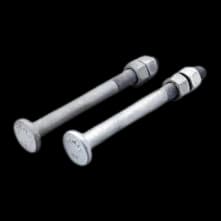
BIS Certification for Threaded Steel Fastener– Step Bolts for Steel Structures IS 10238: 2001
Threaded fasteners including step bolts for steel structures are widely used in transmission tower applications, bridges, steel frames, and other heavy engineering structures where fastening needs to be highly reliable. The application of step bolts in steel structure construction will guarantee strong mechanical joints and performance. In light of this need, it is important that the manufacture of step bolts conform to the technical requirements as set out in BIS IS 10238:2001 standard regarding step bolts in steel structure construction.
Some of the technical issues with respect to step bolts include steel grade and chemical composition, tensile strength, load carrying capacity, dimensional tolerances, thread characteristics, and corrosion resistance coating. In India, threaded steel fasteners are required to be certified and meet the technical specifications as per BIS QCO and IS 10238:2001 for sale.
What is IS 10238:2001 Standard for Step Bolts for Steel Structures
IS 10238:2001 is the Indian Standard that describes the requirements for the use of step bolts in threaded steel fasteners in steel structures like towers, poles, and industrial structures. The standard lays down the material specifications, mechanical strength, dimensional precision, threading specifications, and corrosion protection coatings to provide safety while operating under the required loads. The testing of these fasteners by BIS is based on:
Chemical composition and steel grade quality
Tensile strength and proof load capacity
Dimensional accuracy and thread conformity
Surface finish and protective coating quality
Resistance to corrosion and environmental exposure
Uses of BIS Certified Threaded Steel Fasteners Step Bolts in Engineering Projects
Step bolts that are approved according to IS 10238:2001 find many applications in industry and infrastructure constructions where safety is of paramount importance. Step bolts offer durability, strength, and climbing assistance in such tough conditions.
Telecommunications Towers: Facilitate the installation of telecommunications equipment
Transmission Towers: Provide climbing assistance to linemen for servicing of the electricity transmission network
Industrial Buildings: Utilized at steel factories, chimneys and heavy engineering structures for maintenance activities
Light and Utility Poles: Provide vertical assistance for maintenance activities
Eligibility Rules for BIS ISI Mark on Step Bolts under IS
10238:2001
BIS certification under IS 10238:2001 is mandatory for manufacturers and suppliers producing
or selling step bolts in the Indian market. Compliance ensures adherence to safety standards
and quality control norms required for structural applications in steel frameworks.
Applicable to -
Domestic Manufacturers - Must obtain BIS certification before market sale in India
Foreign Manufacturers - Required to secure BIS approval before exporting to India
\Importers and Brand Owners - Responsible for ensuring BIS-compliant sourcing
Sellers/Distributors - Must use only certified fasteners in structural projects
Importance of ISI Mark for Step Bolts for Steel Structures
The BIS Certification according to IS 10238:2001 ensures that the step bolts are safe and high-performing products necessary for maintaining the structural strength of steel structures.
Gives adherence to IS 10238:2001 standards
Improves load bearing strength and mechanical performance
Provides better resistance to corrosion and adverse weather
Reduces chances of structural collapse of steel structures
Facilitates usage in construction by governments and agencies
Builds credibility for domestic as well as export markets
Provides uniformity in the quality of threading
Improves safety for tower and bridge constructions
Increases life of the product under heavy mechanical stress
Creates confidence among engineers, contractors, and architects
Mandatory Inspection Tests for BIS Approved Threaded Steel Fasteners Step Bolts (IS 10238:2001)
The Bureau of Indian Standards specifies the minimum criteria to ensure safe usage of threaded fasteners made from steel like Step Bolts for steel structures as described in IS 10238:2001. This certification guarantees quality and strength of the bolts as per the standards. The step bolts must also have the ability to perform safely when used in structures under load. The BIS testing parameter for step bolts for steel structures are given below -
Test Group
What is Tested
Purpose
Dimensional & Tolerance Tests
Bolt length, diameter, head dimensions, thread pitch, and fitment accuracy
Ensures correct sizing, interchangeability, and proper installation in steel structures
Ensures proper engagement with nuts and prevents loosening under load
Mechanical Property Tests
Tensile strength, yield strength, proof load, hardness, wedge load test
Ensures high load-bearing capacity and resistance to deformation or failure
Surface Discontinuity Tests
Cracks, folds, seams, laps, and other surface defects
Ensures structural integrity and defect-free manufacturing
Finish & Coating Tests
Galvanizing thickness, uniformity, adhesion, appearance of coating
Ensures corrosion resistance and long service life in outdoor conditions
Nut & Washer Compatibility Tests
Fitment with corresponding nuts and washers as per IS standards
Ensures proper assembly and safe fastening performance
Control Unit Testing
Random sampling from production batches for full compliance testing
Ensures consistent quality across production lots and heat treatment batches
BIS ISI Mark Approval Process for Step Bolts under IS 10238:2001
The BIS certification process makes sure that threaded steel fasteners like Step Bolts used for steel structures as per standard IS 10238:2001 are up to the mark in terms of quality and efficiency. The BIS certification process consists of the following stages -
Online Registration Manufacturers register on the BIS Manak portal with company and product details. Foreign manufacturers must appoint an Authorized Indian Representative (AIR).
Testing at BIS-Approved Laboratory Product samples are tested in BIS-approved laboratories for chemical, mechanical, and dimensional compliance in BIS-recognized labs.
Application Submission The application is submitted along with test reports, technical documents, and factory details. Foreign manufacturers must also submit AIR-related documents.
Factory Inspection BIS officials inspect the manufacturing units to verify the production process, safety measures, and quality control system.
Grant of BIS License If all the above requirements are satisfactorily met, BIS grants the certification license under Scheme-I.
Use of ISI Mark Certified manufacturers are allowed to use the ISI mark and CM/L number on approved products.
Documentation List for BIS IS 10238 Certification Application
List of Machinery, Process Flow Chart, Factory Layout Plan
Raw Material Details
List of Raw Materials, Supplier Details, Raw Material Invoices, Raw Material Test Certificates
Testing & Quality Control
List of Testing Equipment, Calibration Certificates, QC/Lab In-charge Appointment Letter & Qualification
Production Details
Annual Installed Capacity, Last Year Production Value
Product & Packaging Details
Quantity per Package, Nature of Packing, Product Printing / Marking Details
Management Details
Top Management Details, BIS Communication Contact Person
Brand & Certification Documents
Trademark / Brand Certificate, Consent Letter from BIS Recognized Laboratory
Additional Documents
Weekly Off Details, Hygiene Document (if applicable), Relaxation Letter (if applicable), Any Other Relevant Document
Foreign Manufacturer Requirements
Agreement with AIR (Authorized Indian Representative), Aadhaar Card of AIR, AIR Nomination Form, Required Undertakings, Scope of License
Foreign manufacturers need to appoint an Authorized Indian Representative (AIR) in India. This person is the local point of contact for the Bureau of Indian Standards (BIS) and takes care of all rules and compliance work in India.
ISI Marking Requirements for Step Bolts under IS 10238:2001
After gaining the BIS license, Step Bolt for steel structure should have the ISI mark imprinted on it. In addition to the ISI mark, other information like the manufacturer's identity and the BIS license number (CM/L) is mandatory. This would make sure that the item conforms to all the requirements of IS 10238:2001 standards. Some additional information is provided in the following section.
Requirement
Details
ISI Mark
Indicates that the product is BIS certified and conforms to standards
Standard Number
IS 10238:2001
CML Number
Certification Marks Licence (CML) number issued by BIS
Manufacturer Details
Name of manufacturer or registered trademark
Batch / Date
Batch number, heat number, or manufacturing date for traceability
Note: Marking is typically applied using durable stamping, tagging, or permanent printing to ensure clear identification during handling, storage, and transportation, as per BIS marking requirements.
BIS License Validity and Surveillance for Step Bolts for Steel Structures
Particulars
Details
Validity
Typically 1 to 2 years, depending on BIS approval conditions
Renewal
Must be renewed before expiry by submitting the application along with the prescribed fee and updated documents
Surveillance Compliance Risk
Includes periodic factory inspections and market sample testing conducted by BIS.
Continuous following to standard and applicable Quality Control Orders (QCOs) is mandatory.
Non-compliance or failed sample testing may lead to suspension or cancellation of the BIS license.
BIS Certification Cost Structure for Step Bolts for Steel Structures under IS 10238:2001
The costs involved in the process of BIS approval for threaded steel fasteners like Step Bolts include application fees, factory inspection fees, license fees, testing fees and stamping fees. These costs vary according to Scheme-I of the Bureau of Indian Standards and can differ based on the type of product, quantity, and location of manufacture.
Charge Type
Indian Manufacturers
Foreign Manufacturers
Application Fee
INR 1,000
USD 15
Audit Charges
INR 7,000
USD 3,200 - 5,900
License Fee
INR 1,000
USD 15
Marking Fee
As applicable
As applicable
Testing Charges
As applicable
As applicable
EVTL India Consultancy Fee
As per actual
As per actual
Note -
Application fee for foreign manufacturers is payable via SWIFT (SAARC countries may pay in INR with applicable GST).
Audit charges for foreign manufacturers vary based on country/location.
The marking fee is determined based on the product category and production volume (MSME benefits may apply).
Testing charges are paid directly to BIS-recognised laboratories.
Consultancy fees vary depending on product type and factory location.
Key Problems Faced in BIS Licensing under IS 10238:2001
Various difficulties may be encountered when it comes to certifying step bolts using the BIS standard, some of which include the following -
Variation in steel chemical composition
Failure in tensile or proof load testing
Dimensional deviations in threading
Poor galvanizing or coating quality
Inconsistent production quality control
Documentation errors or missing records
Delays in laboratory test reports
Non-compliance with BIS inspection observations
Conclusion
Threaded steel fasteners such as Step Bolts for steel structures have become necessary elements for today's construction, which includes transmission towers, bridges, steel plants, and many more. The main reason behind using the Step Bolt is their strong and reliable mechanical fixing capacity. Conformity to the IS 10238:2001 standard guarantees that manufacturers observe quality standards regarding strength, threading, dimension, and corrosion of fasteners. Certification by BIS for Step Bolts involves confirmation that the step bolts meet the Indian Standard and provides license to use the ISI logo. It implies that the fasteners made from steel will be safe in terms of quality and durability in use. Certification makes it easier for step bolts to enter the market because clients trust the ISI logo and the manufacturer's reputation.
Manufacturers of step bolts may contact EVTL India, a BIS Consultant, for an easier certification process.
BIS Certification for Threaded Steel Fastener– Step Bolts for Steel Structures IS 10238: 2001