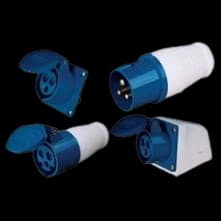
BIS Certification for Switch Socket Outlet (Non-Interlock Type) guarantees the safety and reliability of the electrical products. A switch socket outlet is a device that connects electrical appliances to the power supply. As these products are used daily, they should be reliable and safe for consumers. The BIS certification verifies whether the product meets the safety and quality requirements as mentioned in IS 15787:2025
It is mandatory for producers of switch socket outlets to meet the requirements of the Indian Standard. During the process of BIS registration for Switch Socket Outlet, the products are checked for their reliability, durability and safety. Upon fulfilling all requirements, the manufacturer gets a BIS ISI Mark for Switch Socket Outlet. The BIS Approval for Switch Socket Outlet (Non-Interlock Type) enables customers to choose reliable and trusted products.
What is IS 15787:2025?
IS 15787:2025 is the Indian Standard that defines the safety and performance requirements for non-interlock type switch socket outlets used in electrical installations. The standard ensures that these products are safe during everyday use and can handle electrical load without failure. As per BIS guidelines, switch socket outlets are tested for -
- Electrical safety and insulation strength
- Temperature rise and heat resistance
- Mechanical strength and durability
- Proper contact and connection performance
- Fire resistance and safety performance
Who must get BIS Certification for IS 15787:2025 Switch Socket Outlets?
BIS certification under IS 15787:2025 is mandatory for businesses involved in manufacturing, importing, or supplying switch socket outlets in India, especially when covered under the BIS QCO for Switch Socket Outlet.
Applicable to -
- Manufacturers (India) - Must obtain a BIS License for Switch Socket Outlet Non-Interlock Type before selling products in the Indian market.
- Foreign Manufacturers - Must get BIS approval for Switch Socket Outlet before exporting to India.
- Importers - Must ensure products are BIS-certified before distribution or sale in India.
Benefits of ISI Mark Certification for Switch Socket Outlets
BIS ISI Mark for Non-Interlock Type Switch Socket Outlet ensures that the products meet the required parameters as mentioned in BIS IS 15787:2025. It helps to improve product reliability in the market. A few advantages of having the BIS ISI Mark Certification for Non-Interlock Type Switch Socket Outlet are mentioned below -
- Ensures electrical safety and reduces shock risk
- Improves product durability and performance
- Ensures resistance to heat and overload
- Increases trust among customers and contractors
- Reduces risk of electrical failure and fire hazards
- Ensures compliance with BIS QCO for Switch Socket Outlet (Non-Interlock Type) requirements
BIS Testing Requirements for Switch Socket Outlets without Interlock
Various tests are performed by BIS as per IS 15787:2025 standards to check the safety and durability of switch socket outlets. These tests ensure that the item is able to handle electrical load safely. The BIS Testing Requirement for Non-Interlock Type Switch Socket Outlets are mentioned below -
| Test Group | What is Tested | Purpose |
| Dimensional Tests | Product dimensions, creepage distances, and clearances | Ensures the socket outlet meets the required size, spacing, and safety specifications. |
| Electrical Safety Tests | Protection against electric shock, insulation resistance, electric strength (flash test), operation of earthing contacts, and temperature rise | Ensures electrical safety, proper insulation, grounding performance, and safe operation during use. |
| Construction & Terminal Tests | Provision for earthing, terminals, construction of switched socket-outlets, screws, current-carrying parts, and electrical connections | Verifies correct construction, secure connections, and reliable electrical performance. |
| Performance Tests | Breaking capacity, normal operation, and plug withdrawal force | Confirms the socket outlet operates reliably under normal and repeated usage conditions. |
| Mechanical Strength Tests | Mechanical strength, resistance to heat, and resistance to rusting | Ensures the product can withstand physical stress, heat exposure, and corrosion over time. |
| Environmental & Fire Resistance Tests | Resistance to ageing, humidity, water ingress, abnormal heat, fire, and tracking | Verifies durability in different environmental conditions and resistance to fire-related hazards. |
Step-by-Step BIS Certification Process for Switch Socket Outlets without Interlock
The process of getting the BIS certification of Non-Interlock Type Switch Socket Outlets includes product testing, factory inspection, document verification, etc. When the product meets the set quality and safety standards, the BIS gives certification for the switch socket outlets. The steps for the BIS certification process are detailed below -
- Online Registration Manufacturers register themselves on the BIS Manak portal through their company, factory and product details. The foreign manufacturers should also nominate their Authorized Indian Representative (AIR).
- Testing at BIS-Approved Laboratory Products undergo testing in the BIS- approved laboratory for checking their electrical safety, durability and performance.
- Application Submission The application is submitted along with test reports, technical documents, and factory details. Foreign manufacturers must also submit AIR-related documents.
- Factory Inspection BIS officials inspect the manufacturing units to verify the production process, safety measures, and quality control system.
- Grant of BIS License When all criteria are satisfied, the license is issued under Scheme-I.
- Use of ISI Mark Once licensed, the manufacturer can use ISI mark with the CM/L number on the product.
List of Documents for IS 15787:2025 Certification
| Document Category | Documents Required |
| Basic Details | GST Certificate, Email ID & Contact Number, Factory & Office Address, Rent Agreement / Lease Deed (if applicable), Partnership Deed (if applicable for partnership firms) |
| Manufacturing Details | List of Machinery, Process Flow Chart, Factory Layout Plan |
| Raw Material Details | List of Raw Materials, Supplier Details, Raw Material Invoices, Raw Material Test Certificates |
| Testing & Quality Control | List of Testing Equipment, Calibration Certificates, QC/Lab In-charge Appointment Letter & Qualification |
| Production Details | Annual Installed Capacity, Last Year Production Value |
| Product & Packaging Details | Quantity per Package, Nature of Packing, Product Printing / Marking Details |
| Management Details | Top Management Details, BIS Communication Contact Person |
| Brand & Certification Documents | Trademark / Brand Certificate, Consent Letter from BIS Recognized Laboratory |
| Additional Documents | Weekly Off Details, Hygiene Document (if applicable), Relaxation Letter (if applicable), Any Other Relevant Document |
| Foreign Manufacturer Requirements | Agreement with AIR (Authorized Indian Representative), Aadhaar Card of AIR, AIR Nomination Form, Required Undertakings, Scope of License |
Foreign manufacturers need to appoint an Authorized Indian Representative (AIR) in India. This person is the local point of contact for the Bureau of Indian Standards (BIS) and takes care of all rules and compliance work in India.
ISI Marking Requirements for Switch Socket Outlets without Interlock (IS 15787:2025)
Use of ISI marking on switches socket outlets in accordance with IS 15787:2025 shall be permitted only after the product passes all BIS tests. The ISI mark should be clearly marked on the Switch Socket Outlet and the package along with the license number issued by the BIS.
| Requirement | Details |
| ISI Mark | Indicates BIS certification |
| Standard Number | IS 15787:2025 |
| CM/L Number | BIS licence number |
| Manufacturer Details | Name or registered brand |
| Batch Details | Manufacturing date or batch number |
Note: The marking must be permanent, clear, and durable for identification and traceability.
BIS Licence Validity for Switch Socket Outlets under IS 15787:2025
| Particulars | Details |
| Validity | Typically 1 to 5 years, depending on BIS approval conditions |
| Renewal | Must be renewed before expiry by submitting the application along with the prescribed fee and updated documents |
| Surveillance | Includes periodic factory inspections and market sample testing conducted by BIS |
| Compliance | Continuous following to standard and applicable Quality Control Orders (QCOs) is mandatory |
| Risk | Non-compliance or failed sample testing may lead to suspension or cancellation of the BIS license |
BIS Certification Cost for Switch Socket Outlets (Non-Interlock Type)
BIS certification fees for switch socket outlets under IS 15787:2025 generally comprise the testing, inspection, application and marking fees. The final cost may increase in case of more tests, factory inspections or multiple product variants are involved.
| Charge Type | Indian Manufacturers | Foreign Manufacturers |
| Application Fee | INR 1,000 | USD 15 |
| Audit Charges | INR 7,000 | USD 3,200 - 5,900 |
| License Fee | INR 1,000 | USD 15 |
| Marking Fee | As applicable | As applicable |
| Testing Charges | As applicable | As applicable |
| EVTL India Consultancy Fee | As per actual | As per actual |
Note -
- Application fee for foreign manufacturers is payable via SWIFT (SAARC countries may pay in INR with applicable GST).
- Audit charges for foreign manufacturers vary based on country/location.
- The marking fee is determined based on the product category and production volume (MSME benefits may apply).
- Testing charges are paid directly to BIS-recognised laboratories.
- Consultancy fees vary depending on product type and factory location.
Why Choose EVTL India as Your BIS Consultant?
Choosing the right BIS ISI Mark Consultant for Switch Socket Outlet (Non-Interlock Type) would simplify your BIS Registration process. With 12+ years of experience, EVTL India helps manufacturers obtain BIS Certification for Non-Interlock Type Switch Socket Outlet. Our expert team ensures that all BIS requirements are met as per the standard requirements.
From document preparation to coordination with BIS recognized testing labs, EVTL India supports its clients in every step of the BIS license process for Switch Socket Outlet. This helps businesses save time, reduce errors and obtain their BIS license more smoothly. Manufacturers looking for a BIS Agent for Switch Socket Outlet can connect with EVTL India to have a stress-free BIS Certification journey.
Conclusion
Switch Socket Outlet (Non-Interlock Type) is one of the important electrical products used in domestic, commercial and industrial applications. Through BIS for IS 15787:2025, companies will be able to manufacture socket outlets that meet the safety and performance parameters. The BIS ISI Mark for Switch Socket Outlet minimizes the risks associated with electric shocks, overheating and short circuits.
The BIS License for Switch Socket Outlet (Non-Interlock Type) ensures that manufacturers adhere to the Indian Standards. After the BIS Approval for Switch Socket Outlet is received, the manufacturer must put the ISI Mark on the product to sow complinec with IS 15787.
The manufacturers can take help from a BIS ISI Mark Consultant for Switch Socket Outlets to obtain the BIS certification in a relaxed manner. As a top BIS Consultant for Switch Socket Outlet, EVTL India provides guidance to manufacturers during the BIS Approval Process under IS 15787:2025.