
Super Sulphated Cement is a specialized cement designed for use in environments with high sulphate exposure. With a unique composition of granulated blast furnace slag, gypsum, and a small amount of clinker, this cement offers enhanced resistance to sulphate attack, making it ideal for constructions like foundations, underground structures, and wastewater treatment facilities. Super Sulphated Cement is particularly valued for its durability and low heat of hydration, which reduce thermal cracking in mass concrete pours. Its specialized properties make it an essential choice for infrastructure projects in aggressive soil conditions.
In response to increasing demands for quality assurance, the Ministry of Commerce and Industry, through the Department for Promotion of Industry and Internal Trade (DPIIT), issued the Cement (Quality Control) Order, 2023. Effective from January 1, 2024, this regulation requires BIS certification for Super Sulphated Cement as per Indian Standard IS 6909:1990. The BIS certification, marked by the ISI symbol, is mandatory before these cements can be marketed in India. Ensuring consistent performance and safety, this certification supports uniform standards and safeguards constructions exposed to sulphate-rich environments.
BIS certification is essential for Super Sulphated Cement as it enforces strict quality guidelines, crucial for applications in high-sulphate conditions. IS 6909:1990 ensures that Super Sulphated Cement meets specific criteria, such as sulphate resistance, compressive strength, and low heat of hydration. This minimizes risks of structural damage due to sulphate attacks, enhancing the longevity of constructions in aggressive soils. BIS certification under the Cement (Quality Control) Order, 2023, also ensures compliance with Indian safety regulations, providing consumer trust in certified products while fulfilling legal requirements under the Bureau of Indian Standards Act, 2016.
Indian Standard IS 6909:1990 specifies the essential requirements for Super Sulphated Cement, ensuring its suitability for use in aggressive environments, particularly those prone to sulphate attacks. The standard emphasizes sulphate resistance, making SSC ideal for applications in sulphate-rich soils or seawater, where conventional cements might fail. It also ensures that the cement delivers adequate compressive strength, providing reliable structural support in high-stress applications. Additionally, SSC has a low heat of hydration, which helps minimize the risk of thermal cracking in large concrete structures. The standard prescribes setting times to ensure proper handling and application, allowing for efficient construction processes. Finenessand uniformity are also controlled to ensure consistent quality and performance across all batches of cement. Compliance with IS 6909:1990 is crucial for manufacturers to produce Super Sulphated Cement that maintains its durability and performance even in the most challenging environmental conditions, ensuring the longevity and safety of structures exposed to aggressive chemical environments.

The BIS certification process for Super Sulphated Cement includes the following steps:
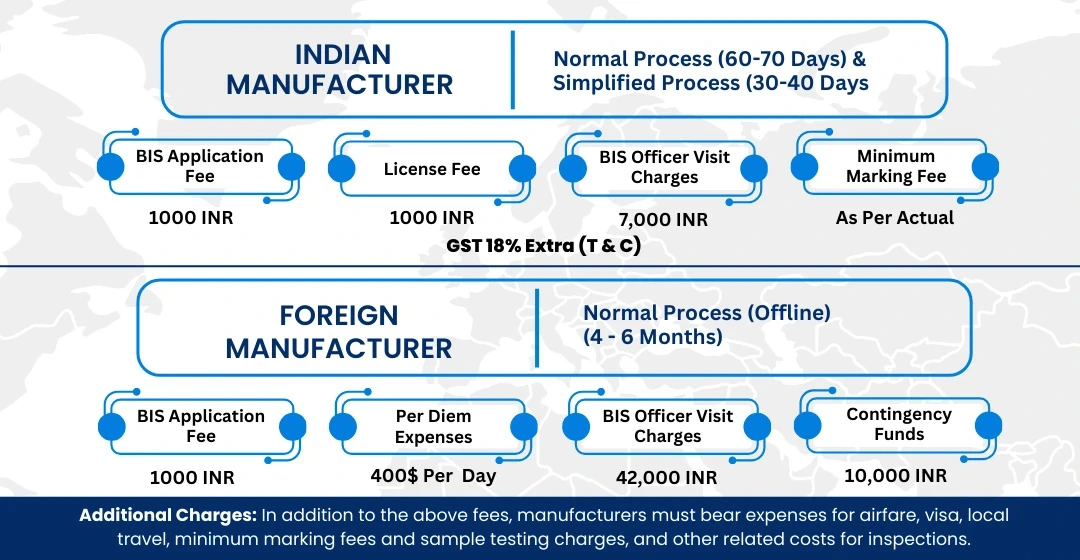
BIS certification for Super Sulphated Cement is essential to maintain product quality and safety under IS 6909:1990, particularly for infrastructure exposed to sulphate-rich soils. Complying with the Cement (Quality Control) Order, 2023, ensures that manufacturers provide durable, high-performance cement that meets critical standards in the Indian market.
EVTL India, a leading consultancy, specializes in helping manufacturers achieve BIS certification efficiently. With extensive expertise in BIS portal submissions, regulatory documentation, and certification fees, EVTL India provides a streamlined certification process for companies. Partnering with EVTL India not only enhances a product’s credibility and market reach in India but also supports manufacturers in maintaining long-term compliance with BIS standards, allowing them to deliver high-quality, reliable cement solutions for challenging environments.