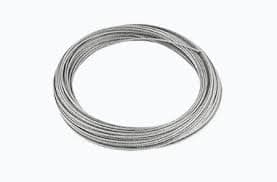
Steel wires used for mechanical springs, particularly stainless steel wire, are designed to
provide excellent corrosion resistance along with high strength and durability. These types of
steel wires are mostly used in machinery that is often subjected to conditions involving exposure
to moisture and chemicals, such as automobiles, medical instruments, naval machinery, and
precision engineering assemblies. Their ability to maintain mechanical performance while
resisting corrosion makes them a preferred choice for long-lasting spring applications.
To ensure safety, stainless steel wire for mechanical springs is governed under IS 4454 (Part 4):
2001, set by the Bureau of Indian Standards. This product approval sets standards regarding
the dimensions, surface quality, and corrosion resistance of these wires. Obtaining the BIS
certification ensures that the product consistently meets the performance expectations.
Manufacturers must have the product approval to sell the wires to the Indian customers.
what is is 4454 (part 4):2001?
This is the Indian Standard for SS wire used for mechanical springs, which defines requirements
for chemical composition and quality of wire intended for corrosion-resistant spring applications.
This standard is set by the BIS (Bureau of Indian Standards) to ensure that product quality and
safety are met, and the steel wires are
- Manufactured using controlled processes to maintain uniform strength.
- Tested for torsion and surface finish quality.
- Produced with specified stainless steel grades and dimensional tolerances.
- Designed to perform reliably in mechanical spring applications.
Stainless spring wire bis approval bligibility criteria
BIS authorisation under IS 4454 (Part 4): 2001 is required for businesses involved in
manufacturing, importing, or supplying industrial stainless spring wire in India.
Applicable to:
- Manufacturers (India): Must get BIS authorisation if the spring wire stainless steel is
covered under QCO.
- Foreign Manufacturers - Need certification to export the stainless spring wire to India.
- Importers/Brand Owners - Must ensure that the products are BIS certified before
selling.
- Sellers/Distributors - Should only sell certified products..
Testing and Inspection Requirements
To ensure the quality, safety needs, and adequate performance of SS wire in mechanical springs, the standard set by the Bureau of Indian Standards (BIS) defines proper testing and inspection requirements during manufacturing.
Manufacturing & Standards Compliance Tests
- Standard Compliance Verification (R) - Ensures product conforms to IS 4454 (Part 4): 2001 requirements.
- Manufacturing Process Control (R) - Confirms stainless steel wire is produced under controlled processing conditions.
- Specification Compliance Review (R) - Ensures adherence to grade (X07Cr18Ni9, X04Cr19Ni9, X04Cr17Ni12Mo2), size, and performance requirements.
- Production Control Unit Verification (R) - Ensures batches are defined based on heat, grade, and uniform production conditions.
- Quality Assurance Plan (QAP) Implementation (R) - Verifies inspection and testing levels are properly followed.
Chemical & Material Verification Tests
- Ladle Analysis Test (R) - Confirms chemical composition at steel making stage (for primary producers).
- Product Analysis Test (R/S) - Verifies chemical composition of finished stainless steel wire.
- Alloy Composition Verification (R) - Ensures elements like C, Si, Mn, Cr, Ni, Mo meet specified limits.
- Impurity Control Test (R) - Ensures Sulphur (S) and Phosphorus (P) are within permissible limits.
- Grade Identification Verification (R) - Confirms correct stainless steel grade classification.
Mechanical Testing Requirements
- Tensile Strength Test (R) - Determines tensile strength of stainless steel wire.
- Wrapping Test (R) - Evaluates ductility and surface performance during coiling.
- Reverse Torsion Test (R) - Checks resistance to twisting stresses.
- Bend Test (R) - Verifies flexibility (applicable for wires > 3 mm diameter).
- Coiling Test (S) - Assesses performance in spring formation (0.50 mm to 1.50 mm wires).
- Cast of Wire Test (R/S) - Evaluates wire form stability when cut from coil.
Dimensional & Physical Property Tests
- Dimension Verification Test (R) - Ensures wire diameter complies with specified limits (up to 10 mm).
- Tolerance Compliance Check (R) - Verifies dimensional accuracy as per IS requirements.
- Surface Finish Inspection (S) - Confirms acceptable finish (polished, coated, or uncoated).
- Freedom from Defects Check (R) - Ensures absence of harmful defects such as cracks or seams.
Sampling & Batch Control Tests
- Sample Selection Verification (R) - Ensures correct sampling (min & max diameter for each grade).
- Grouping Compliance Check (R) - Verifies grouping based on stainless steel grades.
- Batch/Heat Traceability (R) - Ensures linkage to heat number/control unit.
- Sampling Frequency Compliance (R) - Ensures testing per control unit as defined.
- Rotation Sampling Compliance (R) - Ensures all sizes and grades are tested periodically.
How to apply for Stainless Steel Spring Wire BIS Approval?
The BIS Authorisation process ensures that the steel wire meets the required standards for proper and efficient operation. This process is set by the Bureau of Indian Standards (BIS) and includes the following steps:
- Online Registration: Manufacturers register on the BIS Manak portal by submitting company, factory, and product details. Foreign manufacturers must appoint an Authorized Indian Representative (AIR).
- Testing at BIS-Approved Laboratory: Product samples are tested in BIS-approved laboratories for material safety and structural durability.
- Application Submission: The application is submitted along with test reports, technical documents, and factory details. Foreign manufacturers must also submit AIR-related documents.
- Factory Inspection: BIS officials inspect the manufacturing unit to verify the production process, safety measures, and quality control system.
- Grant of BIS License: If all requirements are met, BIS grants the certification license under Scheme-I.
- Use of ISI Mark : After approval, the manufacturer can use the ISI mark on the product with a CM/L number, confirming that the product meets BIS standards.

List of Documents for IS 4454 (Part 4): 2001 License
The following documents are typically required for obtaining BIS approval:
Basic Details: - GST Certificate
- Email ID, Contact Number
- Factory, Office Address
- Rent and Lease Agreement(if applicable)
- Partnership Deed (if partnership firm)
| Product and Packing Details: - Quantity per Package
- Nature of Packing
- Nature of Printing / Marking on Product
|
Testing and Quality Control: - List of testing Equipment
- Calibration Certificates
- QC or Lab In-charge Appointment Letter
- Qualification
| Raw Material Details: - List of Row Materials
- Supplier Details
- Raw Material Invoices
- Raw Material Test Certificates
|
Manufacturing Details: - List of Machinery
- process flow chart
- Layout plan of Factory
| Brand and Certification Documents: - Trademark / Brand Certificate
- Consent Latter From BIS Recognized Laboratory
|
Production Details: - Annual Installed Capacity
- Last Year Production Value
| Additional Documents: - Weekly Off Details
- Hygiene Documents(if applicable)
- Relaxation Latter(if applicable)
- Any Other Relevant Documents
|
Management Details: - Top Management Details
- Concerned Person for BIS Communication
| Required Documents: - Agreement with AIR
- Aadhaar Card with AIR
- AIR Nomination Form
- Required Undertakings
- Scope of License
|
Foreign manufacturers must additionally appoint an Authorized Indian Representative (AIR) to coordinate with the Bureau of Indian Standards (BIS) and manage compliance requirements in India.
Marking Requirements & License Validity
Marking Requirements
When a manufacturer obtains BIS Approval, the ISI Mark for SS wire for mechanical springs must be written clearly and permanently on the product or its packaging. In addition to the ISI Mark, other important details must also be provided on the product or packaging, as specified in the table below, this ensures the product meets all quality and safety standards.
| Requirement | Details |
|---|
| ISI Mark | Indicates that the product is BIS certified and conforms to standards |
| Standard Number | IS 4454 (Part 4): 2001 |
| CML Number | Certification Marks License (CML) number issued by BIS |
| Manufacturer Details | Name of manufacturer or registered trademark |
| Batch / Date | Batch number, heat number, or manufacturing date for traceability |
Note: Marking is typically applied using durable stamping, tagging, or permanent printing to ensure clear identification during handling, storage, and transportation, as per BIS marking requirements.
Validity of Stainless Steel Spring Wire BIS Licence
After obtaining BIS approval for the mechanical spring stainless steel wire, the license is valid for a fixed period and must be maintained by following BIS rules and standards.
| particulars | Details |
|---|
| Initial Validity | Typically 1 to 2 years, depending on BIS approval conditions |
| Renewal | Must be renewed before expiry by submitting the application along with the prescribed fee and updated documents |
| Surveillance | Includes periodic factory inspections and market sample testing conducted by BIS |
| Compliance | Continuous following to standard and applicable Quality Control Orders (QCOs) is mandatory |
| Risk | Non-compliance or failed sample testing may lead to suspension or cancellation of the BIS license |
Spring Stainless Steel Wire Approval Fee Guide
The cost of BIS Approval for SS steel wire includes charges for application, inspection, license, testing, and marking. These fees are paid to BIS as per Scheme I guidelines.
| Charge Type | Indian Manufacturers | Foreign Manufacturers |
|---|
| Application Fee | INR 1,000 | USD 15 |
| Audit Charges | INR 7,000 | USD 3,200 – 5,900 |
| License Fee | INR 1,000 | USD 15 |
| Marking Fee | As applicable | As applicable |
| Testing Charges | As applicable | As applicable |
| EVTL India Consultancy Fee | As per actual | As per actual |
Note:
- Application fee for foreign manufacturers is payable via SWIFT (SAARC countries may pay in INR with applicable GST).
- Audit charges for foreign manufacturers vary based on country/location.
- Marking fee depends on the product category and production volume (MSME benefits may apply).
- Testing charges are paid directly to BIS-approved laboratories.
- Consultancy fees depend on product type and factory location.
Conclusion
The Bureau of Indian Standards has set the required specification for manufacturing and selling Steel Wire for Mechanical Springs, specifically stainless steel wire under IS 4454 (Part 4): 2001. This means that the BIS License guarantees that the products meet the quality requirements. Thus, stainless steel wires produced by the manufacturers are resistant to corrosion and have the required mechanical strength. It is mandatory to have the BIS certificate for SS Wires for Mechanical Springs to ensure compliance and approval for sale in India. In addition to legal compliance, it also enhances brand trust and strengthens customer loyalty for the stainless spring wire. EVTL India supports manufacturers in meeting required standards by assisting with documentation, application submission, and coordination of the testing process.