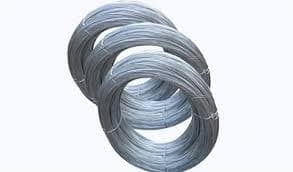
Steel wires used for reeds are important elements in textile weaving machinery. These steel
wires are manufactured to form reeds which assist in the separation and proper guidance of
warp yarns during weaving. They play a very critical role in determining the evenness of the
fabric structure as well as the proper functioning of looms to produce quality fabrics
In order to establish consistent standards in terms of quality, safety, and performance, the
Bureau of Indian Standards has established certain guidelines as per IS 8566:1977. The
standard sets out the specifications of materials, dimensions, mechanical strength, and
performance characteristics of steel wire employed in making reeds. In addition, the guidelines
help in ensuring that the reed is able to withstand constant mechanical pressure while being
woven.
What is IS 8566: 1977?
This is the Indian Standard for Textile machinery wire used in the manufacture of reeds for
weaving machines, which defines requirements for mechanical properties, surface finish, and
dimensional tolerances of the product. This standard is set by the BIS (Bureau of Indian
Standards) to ensure that product quality and safety are met, and the reed wires are
- Manufactured specified material composition for strength and flexibility
- Designed to ensure smooth weaving performance
- Tested for tensile strength and hardness
- Made with BIS-compliant materials
Eligibility for Textile Reed Wire Registration
BIS approval under IS 8566: 1977 is required for businesses involved in manufacturing,
importing, or supplying Reed Wire in India.
Applicable to:
- Manufacturers (India): Must get BIS authorisation if the wire is covered under QCO.
- Foreign Manufacturers - Need certification to export the product to India.
- Importers/Brand Owners - Must ensure that the products are BIS certified before
selling.
- Sellers/Distributors - Should only sell certified Steel Wire for Textile Reeds.
Testing and Inspection Requirements
To ensure the quality, safety needs, and adequate performance of Reed Steel Wire, the standard set by the Bureau of Indian Standards (BIS) defines proper testing and inspection requirements during manufacturing.
What is R and S
- R (Required): Test must be conducted in the manufacturer’s in-house laboratory
- S (Subcontracting Allowed): Test can be conducted in a BIS-recognized or NABL-accredited external laboratory
Manufacturing & Process Control Tests
- Manufacturing Process Verification (R) - Ensures steel wire is produced using approved processes such as open-hearth, electric, duplex, or basic oxygen steelmaking.
- Raw Material Selection Verification (R) - Confirms use of selected low-carbon steel suitable for reed wire production.
- Wire Drawing Process Control (R) - Ensures uniform drawing process to maintain temper, texture, and smooth finish.
- Condition of Steel Supply Verification (R) - Ensures steel is supplied in semi-killed, killed, or rimming condition as specified.
Chemical Composition Tests
- Ladle Chemical Composition Analysis (R) - Determines carbon, sulphur, and phosphorus content as per IS 228 methods.
- Product Chemical Analysis (R) - Verifies finished wire composition within permissible limits of IS 8566:1977.
- Carbon Content Test (R) - Ensures carbon does not exceed specified maximum for low carbon steel wire.
- Sulphur & Phosphorus Analysis (R) - Confirms impurity levels remain within acceptable limits.
- Instrumental Spectro Analysis (S) - Alternative spectrometer-based method for elemental verification.
Dimensional & Tolerance Tests
- Wire Diameter Measurement Test (R) - Confirms compliance with standard sizes (0.80 mm to 1.40 mm range).
- Dimensional Tolerance Verification (R) - Ensures ±1.5% tolerance with minimum ±0.15 mm compliance.
- Cross-Section Circularity Test (R) - Ensures round wire cross-section remains within permitted deviation limits.
Mechanical & Physical Tests
- Tensile Strength Test (R) - Ensures strength range of 600-900 N/mm² as per IS 1521.
- Flattening Performance Test (R) - Checks resistance to cracking or edge failure during flattening.
- Surface Smoothness Test (R) - Ensures smooth finish suitable for weaving application.
Defect & Surface Quality Tests
- Freedom from Defects Test (R) - Ensures wire is free from scratches, die marks, drum marks, and piping.
- Visual Inspection (R) - Detects surface irregularities and manufacturing defects.
- Edge Crack Inspection (R) - Ensures no cracking during flattening process.
- Surface Finish Evaluation (R) - Confirms smooth finish for textile reed application.
Size & Grade Classification Tests
- Size Verification Test (R) - Confirms wire availability in specified standard diameters.
- Grade Identification Test (R) - Ensures correct steel grade classification as per IS requirements.
Sampling & Batch Control Tests
- Lot Formation Verification (R) - Ensures coils of the same grade and diameter form a single lot.
- Random Sampling (R) - Sampling done as per IS 4905 using statistical methods.
- Heat/Batch Identification Test (R) - Ensures traceability of wire back to production heat.
- Representative Sample Preparation (R) - Ensures correct sampling for both chemical and physical tests.
Laboratory & Testing Infrastructure
- In-House Laboratory Requirement (R) - Ensures availability of testing facility at manufacturer site.
- External Laboratory Testing (S) - Permitted in BIS/NABL accredited labs for chemical analysis or confirmation testing.
- Equipment Calibration Verification (R) - Ensures accuracy of testing instruments like tensile machines and spectrometers.
Quality Control & Documentation
- Test Record Maintenance (R) - Ensures traceability of chemical and physical test results.
- Batch Certification Record (R) - Maintains heat-wise and lot-wise compliance data.
- Compliance Documentation Review (R) - Ensures conformity to IS 1387 general supply requirements.
- Test Certificate Issuance (R) - Confirms compliance of each batch with IS 8566:1977.
Inspection & Compliance Monitoring
- Scheme of Inspection & Testing Compliance (R) - Ensures adherence to BIS testing scheme.
- Lot Conformity Verification (R) - Ensures full compliance of physical and chemical requirements.
- Surveillance Inspection Testing (S) - Conducted during BIS audits and factory inspections.
- Periodic Reverification Testing (S) - Ensures ongoing compliance over production cycles.
Packaging, Marking & Certification
- IS Marking Verification (R) - Ensures correct application of BIS Standard Mark.
- Labelling Compliance Check (R) - Confirms details like manufacturer name, size, lot number, and coil mass.
- Packaging Integrity Check (R) - Ensures proper oiling and secure coil packing.
- Certification Scope Verification (R) - Ensures correct product coverage under BIS licence.
Non-Conformance & Rejection Control
- Defective Material Identification (R) - Detects non-compliant wire during inspection.
- Rejected Material Disposal Control (R) - Ensures defective wire is scrapped or remelted.
- ISI Mark Misuse Prevention (R) - Ensures removal of BIS mark from rejected lots.
Type & Surveillance Testing
- Initial Type Testing (S) - Conducted before BIS certification approval.
- Surveillance Testing (S) - Ensures continued compliance during license validity.
- Grade Rotation Testing (S) - Ensures all sizes and variants are periodically tested.
Sampling & Acceptance Criteria
- Physical Test Sampling (R) - Based on lot size using IS 4905 random sampling.
- Chemical Test Sampling (R) - Conducted from physically accepted samples.
- Lot Acceptance Criteria (R) - Lot accepted only when all physical and chemical requirements are satisfied.
Reed Steel Wire BIS Approval Process

The BIS Authorisation process ensures that the wire meets the required standards for proper and efficient operation. This process is set by the Bureau of Indian Standards (BIS) and includes the following steps:
- Online Registration: Manufacturers register on the BIS Manak portal by submitting company, factory, and product details. Foreign manufacturers must appoint an Authorized Indian Representative (AIR).
- Testing at BIS-Approved Laboratory: Product samples are tested in BIS-approved labs for material safety and structural durability.
- Application Submission: The application is submitted along with test reports, technical documents, and factory details. Foreign manufacturers must also submit AIR-related documents.
- Factory Inspection: BIS officials inspect the manufacturing unit to verify the production process, safety measures, and quality control system.
- Grant of BIS License: If all requirements are met, BIS grants the certification license under Scheme-I.
- Use of ISI Mark: After approval, the manufacturer can use the ISI mark on the product with a CM/L number, confirming that the product meets BIS standards.
Documents List for IS 8566: 1977
The following documents are typically required for obtaining BIS approval:
| Basic Details | - GST Certificate
- Email ID & Contact Number
- Factory & Office Address
- Rent Agreement / Lease Deed (if applicable)
|
| Legal Documents | - Partnership Deed (if partnership firm)
|
| Manufacturing Details | - List of machinery
- Process flow chart
- Layout Plan of Factory
|
| Raw Material Details | - List of Raw Materials
- Supplier Details
- Raw Material Invoices
- Raw Material Test Certificates
|
| Testing & Quality Control | - List of Testing Equipment
- Calibration Certificates
- QC / Lab In-charge Appointment Letter & Qualification
|
| Production Details | - Annual Installed Capacity
- Last Year Production Value
|
| Product & Packaging Details | - Quantity per Package
- Nature of Packing
- Nature of Printing / Marking on Product
|
| Management Details | - Top Management Details
- Concerned Person for BIS Communication
|
| Brand & Certification Documents | - Trademark / Brand Certificate
- Consent Letter from BIS Recognized Laboratory
|
| Additional Documents | - Weekly Off Details
- Hygiene Document (if applicable)
- Relaxation Letter (if applicable)
- Any Other Relevant Document
|
Marking Requirements & License Validity
Marking Requirements
When a manufacturer obtains BIS Approval, the ISI Mark for steel wire used in loom reeds must be written clearly and permanently on the product or its packaging. In addition to the ISI Mark, other important details must also be provided on the product or packaging, as specified in the table below, this ensures the product meets all quality and safety standards.
| Requirement | Details |
|---|
| ISI Mark | Indicates that the product is BIS certified and follows to the standard |
| Standard Number | IS 8566: 1977 |
| CML Number | Certification Marks License (CML) number issued by BIS |
| Manufacturer Details | Name of manufacturer or registered trademark |
| Batch / Date | Batch number, heat number, or manufacturing date for traceability |
Note: Marking is typically applied using durable stamping, tagging, or permanent printing to ensure clear identification during handling, storage, and transportation, as per BIS marking requirements.
BIS Validity for Loom Reed Steel Wire
After obtaining BIS approval for the reed wire, the license is valid for a fixed period and must be maintained by following BIS rules and standards.
| Particulars | Details |
|---|
| Initial Validity | Typically 1 to 2 years, depending on BIS approval conditions |
| Renewal | Must be renewed before expiry by submitting the application along with the prescribed fee and updated documents |
| Surveillance | Includes periodic factory inspections and market sample testing conducted by BIS |
| Compliance | Continuous following to standard and applicable Quality Control Orders (QCOs) is mandatory |
| Risk | Non-compliance or failed sample testing may lead to suspension or cancellation of the BIS license |
Fee Structure for Reed Steel Wire
The cost of BIS Authorisation for a reed wire includes charges for application, inspection, license, testing, and marking. These fees are paid to BIS as per Scheme I guidelines.
Cost Breakdown
Indian Manufacturers
| No. | Major Charges | Particulars | Amount | Remark |
| 1. | BIS Fees | Application Fee | INR 1,000 | --- |
|
| Audit Charges | INR 7,000 | --- |
|
| License Fee | INR 1,000 | --- |
|
| Marking Fee | Depends on product | Discount as per MSME |
| 2. | Testing Charges | Sample Testing Fee | As Applicable | Payable to a BIS-approved laboratory. |
| 3. | EVTL India Service Fee | Consultancy & Support | As per actual | Depends on product type and factory location. |
Foreign Manufacturers
| No. | Major Charges | Particulars | Amount | Remark |
| 1. | BIS Fees | Application Fee | USD 15 | Payable via SWIFT to BIS. SAARC countries can pay INR with 18% GST. |
|
| Audit Charges | USD 3,200 – 5,900 | Depend on Country |
|
| License Fee | USD 15 | --- |
|
| Marking Fee | Depends on product | --- |
| 2. | Testing Charges | Sample Testing Fee | As Applicable | Payable to a BIS-approved laboratory. |
| 3. | EVTL India Service Fee | Consultancy & Support | As per actual | Based on product and manufacturing location. |
Note: Additional costs such as pre-testing or factory pre-inspection may apply. The total cost may vary depending on product type, testing requirements, and current BIS guidelines.
Conclusion
The Steel Wire for Reeds follows the requirements mentioned in IS 8566: 1977 set by the Bureau of Indian Standards. The Registration ensures that the manufacturers producing steel wire for textile reeds meet the safety and performance standards. BIS certification ensures that the product functions effectively in reed assemblies, enabling smooth and precise weaving operations in textile production .
BIS certification not only helps the manufacturers meet the legal requirements for the products sold in India but also boosts their credibility in the marketplace. Professional services such as those provided by EVTL India make the whole procedure easy for manufacturers. They provide documentation, application filing, testing, compliance advice, and inspections to help the manufacturers.