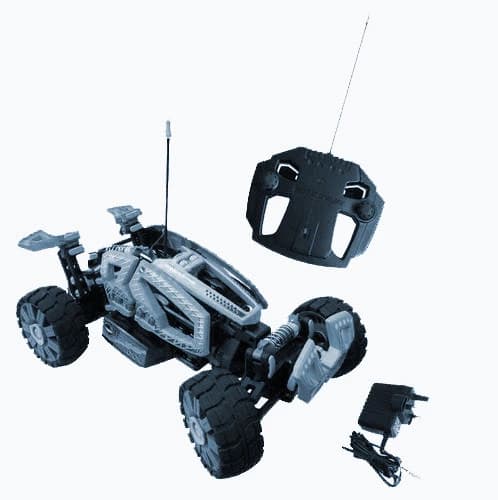
The introduction of electric toys in the world of play has brought about the integration of features
such as interaction and electricity in the playing equipment. Since electric toys are meant to be
used directly by children, safety should be given top priority. Manufacturers of such toys must
conform to the safety standards required by BIS IS 15644:2006 for the safety of electric toys to
guarantee consumers against dangers associated with such equipment.
BIS IS 15644:2006 provides requirements concerning safety with regard to construction,
insulation, electrical safety, temperature, mechanical strength, and safe functioning of electric
toys. Conformity to BIS certification for the safety of electric toys and relevant BIS QCO is
mandatory for any manufacturer, importer, or seller to manufacture, import, or sell electric toys in
India. The BIS ISI mark on electric toys indicates that the product conforms to prescribed safety
standards.
What is IS 15644:2006 for the Safety of Electric Toys?
This is the Indian Standard for the safety requirements of electric toys. It mentions the
construction and performance criteria to reduce hazards associated with electric-operated toys.
As per the BIS (Bureau of Indian Standards), toys are:
- Tested for protection against overheating
- Evaluated for electrical safety
- Assessed for mechanical strength
- Checked for material safety
Why BIS Certification is Important for Electric Toys?
Certification of BIS Certification for Safety of Electric Toys under IS 15644:2006 ensures that
electric toys are safe and meet the required quality standards before being marketed within the
Indian market. There are various benefits of getting the BIS ISI mark for Electric Toys.
- Gives evidence of the conformity with the BIS Certification for Electric Toys and IS
15644:2006.
- Permits the manufacturers to put the BIS ISI Mark on Electric Toys.
- Proves the conformity with the BIS Quality Conformity Order (QCO) for Electric Toys.
- Boosts product safety as it meets all the electrical and mechanical safety requirements.
- Builds up consumer trust and confidence in the products in the market.
- Helps access new markets easily.
- Assists in ensuring the quality and regulatory requirements of the products.
- Gives the manufacturer a competitive edge over other manufacturers in the market.
Who requires BIS Approval for Electric Toys under IS 15644:
2006?
BIS authorisation under IS 15644: 2006 is required for businesses involved in manufacturing,
importing, or supplying motorized toys in India.
Applicable to:
- Manufacturers (India) - Must get BIS approval if the motion-based electric toys are
covered under QCO.
- Foreign Manufacturers - Need certification to export the product to India.
- Importers/Brand Owners - Must ensure that the products are BIS-certified before sale.
- Sellers/Distributors - Should only sell certified RC toys.
BIS Testing Requirements for Electric Toys under IS 15644:2006
To ensure reliable performance of electric toys used by children, the Bureau of Indian Standards outlines the minimum requirements under IS 15644: 2006. This certification ensures that manufacturers meet the mechanical safety standards for electric toys.The BIS testing parameters and quality checks for the toys are listed below:
| Test Group | What is Tested | Purpose |
| Dimensional & Marking Tests | Dimensions, labeling, product markings, and identification details | Ensures correct marking, traceability, and conformity to standard requirements |
| Visual & Finish Inspection | Surface finish, insulation quality, enclosure condition, and general appearance | Ensures safe finish, defect-free construction, and user-friendly appearance |
| Mechanical Strength Tests | Structural strength, impact resistance, and component durability | Ensures toy can withstand handling, dropping, and physical stress during use |
| Construction & Assembly Tests | Internal wiring, component fitting, screws, and mechanical assembly | Ensures safe and stable construction without loose or unsafe parts |
| Electrical Safety Tests | Insulation resistance, leakage current, electric strength, and circuit safety | Ensures protection against electric shock and safe current flow |
| Heating & Abnormal Operation Tests | Temperature rise, overheating, and performance under fault conditions | Ensures safety during prolonged use and abnormal working conditions |
| Switch & Control Performance Tests | Operation of switches, buttons, and control mechanisms | Ensures reliable and consistent user control without malfunction |
| Cord & Wiring Safety Tests | Power cords, internal wiring, and protection against strain or damage | Ensures wiring safety and prevents short circuits or exposure |
| Component Safety Tests | Transformers, batteries, switches, and electrical components | Ensures only approved and safe components are used in toys |
| Clearance & Creepage Tests | Electrical spacing between live parts and insulation barriers | Ensures prevention of electric flashover or breakdown |
| Moisture Resistance Tests | Exposure to humidity and moisture penetration checks | Ensures safe operation in humid or damp conditions |
| Mechanical Durability Tests | Resistance to vibration, shock, and repeated mechanical stress | Ensures long-term durability of toy structure |
| Radiation & Chemical Safety Tests | Electrical emissions and hazardous substance checks | Ensures child safety from toxic or harmful exposure |
How to get BIS ISI Mark Certification for Electric Toys?

The BIS Authorisation process ensures that the Interactive electric toys meet the required standards for proper and efficient operation. This process is set by the Bureau of Indian Standards (BIS) and includes the following steps:
- Online Registration :- Manufacturers register on the BIS Manak portal by submitting company, factory, and product details. Foreign manufacturers must appoint an Authorized Indian Representative (AIR).
- Testing at BIS-Approved Laboratory :- Product samples are tested in BIS-approved laboratories for electrical safety, insulation resistance, mechanical strength and overheating protection.
- Application Submission :- The application is submitted along with test reports, technical documents, and factory details. Foreign manufacturers must also submit AIR-related documents.
- Factory Inspection :- The Bureau of Indian Standards officials inspect the manufacturing units to verify the production process, safety measures, and quality control system.
- Grant of BIS License :- Upon successful verification of all requirements, BIS grants the certification license under Scheme-I.
- Use of ISI Mark :- Once approved, the manufacturer can use the ISI mark on the product with a CM/L number, confirming that the product meets BIS standards.
IS 15644: 2006 Documentation Checklist for BIS ISI Mark Certification
| Document Category | Documents Required |
| Basic Details | GST Certificate, Email ID & Contact Number, Factory & Office Address, Rent Agreement / Lease Deed (if applicable), Partnership Deed (if applicable for partnership firms) |
| Manufacturing Details | List of Machinery, Process Flow Chart, Factory Layout Plan |
| Raw Material Details | List of Raw Materials, Supplier Details, Raw Material Invoices, Raw Material Test Certificates |
| Testing & Quality Control | List of Testing Equipment, Calibration Certificates, QC/Lab In-charge Appointment Letter & Qualification |
| Production Details | Annual Installed Capacity, Last Year Production Value |
| Product & Packaging Details | Quantity per Package, Nature of Packing, Product Printing / Marking Details |
| Management Details | Top Management Details, BIS Communication Contact Person |
| Brand & Certification Documents | Trademark / Brand Certificate, Consent Letter from BIS Recognized Laboratory |
| Additional Documents | Weekly Off Details, Hygiene Document (if applicable), Relaxation Letter (if applicable), Any Other Relevant Document |
| Foreign Manufacturer Requirements | Agreement with AIR (Authorized Indian Representative), [Aadhaar Redacted], AIR Nomination Form, Required Undertakings, Scope of License |
The Foreign manufacturers are required to appoint an Authorized Indian Representative (AIR) in India. The representative is the local point of contact for the Bureau of Indian Standards (BIS) and takes care of all rules and compliance work in India.
BIS Labelling and ISI Mark Guidelines for Electric Toys
Once a manufacturer obtains BIS approval, the ISI Mark for automated toys for kids must be clearly and permanently marked on its packaging or on the product. Along with the ISI Mark, key details such as the manufacturer’s identification and licence number (CM/L) must be marked. This ensures the product complies with all performance standards. Further details are mentioned below:
| Requirement | Details |
| ISI Mark | Indicates that the product is BIS certified and conforms to standards |
| Standard Number | IS 15644: 2006 |
| CML Number | Certification Marks Licence (CML) number issued by BIS |
| Manufacturer Details | Name of manufacturer or registered trademark |
| Batch / Date | Batch number, heat number, or manufacturing date for traceability |
Note: Marking is typically applied using durable stamping, tagging, or permanent printing to ensure clear identification during handling, storage, and transportation, as per BIS marking requirements.
Validity and Renewal of Electric Toys BIS Certification under IS 15644:2006
| Particulars | Details |
| Validity | Typically 1 to 2 years, depending on BIS approval conditions |
| Renewal | Must be renewed before expiry by submitting the application along with the prescribed fee and updated documents |
| Surveillance | Includes periodic factory inspections and market sample testing conducted by BIS |
| Compliance | Continuous following to standard and applicable Quality Control Orders (QCOs) is mandatory |
| Risk | Non-compliance or failed sample testing may lead to suspension or cancellation of the BIS license |
BIS Registration Charges for Electric Toys
The cost of BIS Approval for Smart Toys includes charges for application, inspection, license, testing, and marking. These fees are paid to BIS as per Scheme I guidelines.
| Charge Type | Indian Manufacturers | Foreign Manufacturers |
| Application Fee | INR 1,000 | USD 15 |
| Audit Charges | INR 7,000 | USD 3,200 - 5,900 |
| License Fee | INR 1,000 | USD 15 |
| Marking Fee | As applicable | As applicable |
| Testing Charges | As applicable | As applicable |
| EVTL India Consultancy Fee | As per actual | As per actual |
Note:
- Application fee for foreign manufacturers is payable via SWIFT (SAARC countries may pay in INR with applicable GST).
- Audit charges for foreign manufacturers vary based on country/location.
- The marking fee is determined based on the product category and production volume (MSME benefits may apply).
- Testing charges are to be paid directly to BIS-recognised laboratories.
- Consultancy fees can vary depending on product type and factory location.
Challenges of obtaining BIS Certification for Electric Toys
Though BIS certification is mandatory for electric toys, there are certain problems encountered by manufacturers in the whole procedure. Such problems include:
- Knowledge about BIS Standards: Interpreting the BIS Certification for Electric Toys according to IS 15644:2006 is a difficult task for manufacturers.
- Process of BIS Testing and Laboratory Coordination: Coordination of the testing and laboratory procedures related to product samples requires expertise on the part of manufacturers.
- Documents Preparation for BIS ISI Mark Certification for Electric Toys: Preparation of documents for the BIS ISI Mark Certification requires precision as errors will cause delay or rejection of the application.
- Proper Factory Preparation before Inspection: The manufacturer needs to ensure compliance with BIS standards when their factory undergoes an inspection by BIS.
- Slow BIS Approval Process: The BIS Certification process for Electric Toys can be delayed due to some mistakes on the part of the manufacturer.
Penalties for Non-Compliance with IS 15644:2006 for Electric Toys
Electric toys that are governed by the BIS regulations shall have to adhere to the provisions of IS 15644:2006 and also get BIS certification prior to their production, importation, stocking, distribution, or sale in India. Violation could lead to enforcement actions taken by the authorities against those concerned based on the relevant BIS provisions in the Act, 2016.
- Prohibition of manufacture, import, sale, or distribution of uncertified electric toys.
- Withdrawal from the market of any non-conforming goods.
- Revocation or suspension of the BIS license.
- Action by regulatory agencies in case of non-compliance of BIS regulations/QCOs.
- Penalty actions under the BIS Act, 2016.
Conclusion
Electric toys are quite popular in today's educational environment, and safety is one of the key criteria for any company producing them. The IS 15644: 2006 certification shows that the toy is safe, reliable and appropriate for children's play. Moreover, certification significantly reduces product-related risks and improves the reputation of the brand and its products. In addition, certification is very helpful in keeping product quality constant from batch to batch.
At EVTL India, assistance is provided to the manufacturers in their BIS certification journey for electric toys. The team helps with application filling, technical documentation and coordination of product testing. Thus, the entire process is done quickly and without any problems.