
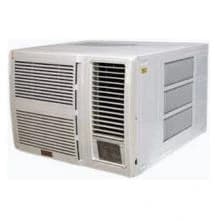
Room Air Conditioners, such as window ACs and portable ACs, are commonly used to maintain thermal comfort in residential, commercial and institutional areas. Such devices are crucial in order to ensure efficient performance, energy efficiency and safety of users from different weather conditions. Being such important devices for consumer safety and electrical reliability, these goods have to conform to the specifications provided by IS 1391 (Part 1):2023 for unitary air conditioners.
As per the Indian Standard, various technical aspects are taken into account in respect of room air conditioners, including cooling capacity, energy efficiency ratio, electrical safety, performance of the refrigerant system, performance of the compressor and overall mechanical and thermal durability. It is obligatory to conform to the BIS Quality Control Orders (QCO) and be certified according to IS 1391 (Part 1):2023 for production, import and marketing of air conditioners in India.
IS 1391 (Part 1):2023 is the Indian Standard that specifies safety and performance requirements for unitary air conditioners designed for single-phase operation up to defined capacity limits. It ensures that air conditioners function efficiently under Indian climatic conditions while maintaining electrical and user safety. As per BIS guidelines, these air conditioners are -
IS 1391 (Part 1):2023 sets out criteria for unitary room air conditioner and heat pump equipment operating on a single-phase power supply with no ducting, intended for use in residential and similar types of applications. Unitary room air conditioners are self-contained systems where all components of the refrigeration system are contained in one enclosure. As per BIS scope, this standard is applicable only to unitary air conditioning equipment with a single refrigeration circuit and does not cover split systems, ducted systems, and some types of portable equipment.
BIS certification under IS 1391 (Part 1):2023 is mandatory for all manufacturers and importers involved in production or sale of unitary air conditioners in India. Compliance is required to ensure legal sale and distribution in the Indian market.
Applicable to:
ISI Mark Certification as per IS 1391 (Part 1):2023 guarantees that window air conditioners conform to rigorous Indian standards in terms of safety and performance. This ISI Mark Certification guarantees conformity to BIS standards related to safety aspects of electrical, energy efficiency, cooling performance, and environmental safety.
The Bureau of Indian Standards specifies the basic standards that need to be met by Room Air Conditioners in IS 1391 (Part 1):2023 to guarantee safety and efficient working. It makes sure that the manufacturers adhere to all the parameters related to safety, performance, and energy efficiency as specified by the standard. It also makes sure that the air conditioners provide consistent cooling performance irrespective of the temperatures and humidity levels. The test parameters specified by the BIS for Unit Air Conditioners are as follows:
BIS certification procedure guarantees that the Room Air Conditioners comply with the standards prescribed under IS 1391 (Part 1):2023 for safe and efficient performance. This certification procedure is controlled by the Bureau of Indian Standards (BIS), and it includes the following -

Foreign manufacturers need to appoint an Authorized Indian Representative (AIR) in India. This person is the local point of contact for the Bureau of Indian Standards (BIS) and takes care of all rules and compliance work in India.
After receiving the BIS certification, the ISI mark for the Room Air Conditioner with respect to IS 1391 (Part 1):2023 must be prominently marked on the product name plate and/or package. The ISI mark, along with additional information, such as the identification of the manufacturer and the Certification Mark Licence (CM/L), is compulsory. This helps the product meet all the required safety and energy efficiency standards according to the BIS regulations. Further information is given below -
Note - Marking is typically applied using durable stamping, tagging, or permanent printing to ensure clear identification during handling, storage, and transportation, as per BIS marking requirements.
The total cost involved in BIS Certification of Room Air Conditioner under IS 1391 (Part 1):2023 involves application processing charges, factory inspection charge, product test charges, license issue charge, and mark charge. The above charges are charged by BIS under scheme - I. The above charges are applicable to both Indian and foreign manufacturers based on the certification requirement.
Note -
Failure to meet the BIS specifications for Room Air Conditioners under IS 1391 (Part 1):2023 will have severe ramifications on a legal as well as financial front. Being a mandatory certification as per QCO, failure to meet the specifications shall be treated as a crime as per the Bureau of Indian Standards Act, 2016. Consequences for not complying with regulations can be:
Suspend or withdraw BIS Certification license (CM/L)
Room Air Conditioners are highly essential in providing comfort inside living and working environments. The main aim of using unitary air conditioners is that of efficient cooling performance, electrical safety, energy efficiency, and reliability in operations. Adherence to IS 1391 (Part 1):2023 makes sure that manufacturers comply with strict BIS regulations concerning cooling capacity, electrical safety, refrigerant management, energy consumption, and durability. BIS certification for room air conditioners ensures that the room air conditioners conform to all Indian standards thus qualifying the manufacturers to put the ISI mark on their products. BIS certification increases product reliability, assurance of safety and also market acceptability in India. It also helps in making a product eligible for procurement by governments and institutions.
For manufacturers who want trouble-free certification, they can get professional help from EVTL India, which is an experienced BIS consultant and make sure that all compliance issues related to IS 1391 (Part 1):2023 are met easily.