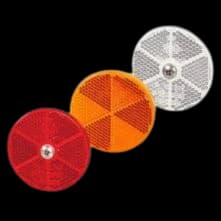
Retro-reflective devices help improve visibility on the road. These are helpful, especially in low light and night conditions. These devices help reflect the light from vehicles back to their source. They are fitted in different parts of the bicycle, such as pedals, wheels, etc. These devices have become popular across urban as well as rural areas.
To ensure the performance requirements, a BIS certification is required for the reflectors. As per IS/ISO 6742-2: 2023, retro-reflective devices must meet defined standards for brightness, colour, and durability. It also ensures that the reflectivity levels and structural stability meet the minimum requirements as per the Indian standard. Companies manufacturing cycle reflectors must obtain BIS approval to sell the product to the Indian customers.
What is IS/ISO 6742-2: 2023?
This is the Indian Standard for the retro-reflective devices used on cycles. It mentions the criteria to ensure visibility under low-light and nighttime conditions. As per the BIS (Bureau of Indian Standards), reflective devices are:
- Evaluated for photometric performance
- Tested for colour accuracy
- Checked for mechanical durability
- Verified for resistance to moisture
Bicycle Reflectors BIS License Eligibility Criteria
BIS authorisation under IS/ISO 6742-2: 2023 is required for businesses involved in manufacturing, importing, or supplying Reflective Devices in India.
Applicable to:
- Manufacturers (India) - Must get BIS approval if the Reflective Safety Devices are covered under QCO.
- Foreign Manufacturers - Need certification to export the product to India.
- Importers/Brand Owners - Must ensure that the Cycle Reflectors are BIS-certified before sale.
- Sellers/Distributors - Should only sell certified Bicycle Reflective Equipment.
Testing and Inspection Requirements
To ensure the safety of bicycles on roads, the Bureau of Indian Standards outlines the minimum requirements under IS/ISO 6742-2: 2023. This certification ensures that manufacturers meet the performance standards for retro-reflective devices used on cycles. The BIS testing parameters and quality checks for the reflective devices are listed below:
| Test Group | What is Tested | Purpose |
|---|
| Photometric Performance Tests | Light reflection intensity and visibility under different angles | Ensures high visibility of bicycles in low-light and night conditions |
| Colorimetric Tests | Colour accuracy of reflectors (white, red, yellow, etc.) | Ensures compliance with standard colors for road safety recognition |
| Temperature Resistance Tests | Performance under high and low temperature conditions | Ensures durability and stability in varying environmental conditions |
| Impact Resistance Tests | Resistance to mechanical impact and shocks | Ensures product can withstand physical stress during usage |
| Moisture Resistance Tests | Performance under humid and wet conditions | Ensures reliability during rain and high moisture exposure |
| Fuel Resistance Tests | Resistance to fuels like petrol mixtures | Ensures no degradation when exposed to fuel substances |
| Lubricating Oil Resistance Tests | Resistance to oils and lubricants | Ensures durability in contact with common automotive substances |
| Adhesion Tests | Bond strength of reflective material to base surface | Ensures reflector layers remain intact during use |
| Abrasion Resistance Tests | Resistance to wear due to friction | Ensures long-lasting reflective performance despite surface wear |
| Water Resistance Tests | Performance after water exposure or immersion | Ensures consistent functionality in wet conditions |
| Corrosion Resistance Tests | Resistance to corrosion (especially for metal parts) | Ensures long-term durability and protection against rust |
| Durability & Performance Tests | Combined environmental and mechanical testing | Ensures long-term effectiveness and reliability of reflectors |
BIS License Steps for Cycle Reflectors
The BIS Approval process ensures that the Reflective Devices meet the required standards for proper and efficient operation. This process is set by the Bureau of Indian Standards (BIS) and includes the following steps:
- Online Registration: Manufacturers register on the BIS Manak portal by submitting company, factory, and product details. Foreign manufacturers must appoint an Authorized Indian Representative (AIR).
- Testing at BIS-Approved Laboratory: Product samples are tested in BIS-approved laboratories for luminous intensity, colour requirements, durability, and visibility.
- Application Submission: The application is submitted along with test reports, technical documents, and factory details. Foreign manufacturers must also submit AIR-related documents.
- Factory Inspection: Officials from the Bureau of Indian Standards inspect the manufacturing units to verify the production process, safety measures, and quality control system.
- Grant of BIS License : After successful verification of all requirements, BIS issues the certification license under Scheme-I.
- Use of ISI Mark : Once approved, the manufacturer is authorized to affix the ISI mark on the product with a CM/L number, confirming that the product meets BIS standards.

Documents Required for IS/ISO 6742-2: 2023 Certification
| Document Category | Documents Required |
|---|
| Basic Details | GST Certificate, Email ID & Contact Number, Factory & Office Address, Rent Agreement / Lease Deed (if applicable),Partnership Deed (if applicable for partnership firms) |
| Manufacturing Details | List of Machinery, Process Flow Chart, Factory Layout Plan |
| Raw Material Details | List of Raw Materials, Supplier Details, Raw Material Invoices, Raw Material Test Certificates |
| Testing & Quality Control | List of Testing Equipment, Calibration Certificates, QC/Lab In-charge Appointment Letter & Qualification |
| Production Details | Annual Installed Capacity, Last Year Production Value |
| Product & Packaging Details | Quantity per Package, Nature of Packing, Product Printing / Marking Details |
| Management Details | Top Management Details, BIS Communication Contact Person |
| Brand & Certification Documents | Trademark / Brand Certificate, Consent Letter from BIS Recognized Laboratory |
| Additional Documents | Weekly Off Details, Hygiene Document (if applicable), Relaxation Letter (if applicable), Any Other Relevant Document |
| Foreign Manufacturer Requirement | Appointment of Authorized Indian Representative (AIR) for BIS coordination and compliance in India |
Foreign manufacturers are required to appoint an Authorized Indian Representative (AIR) in India. This representative is the local point of contact for the Bureau of Indian Standards (BIS) and ensures all regulatory and compliance requirements are met in India.
Marking Requirements & License Validity
Marking Requirements
Once a manufacturer obtains BIS approval, the ISI Mark for Bicycle Reflective Equipment must be clearly and permanently marked on its packaging or on the product. Along with the ISI Mark, certain details such as the manufacturer’s identification and licence number (CM/L) must be written. This ensures the product complies with all safety standards. Further details are mentioned below:
| Requirement | Details |
|---|
| ISI Mark | Indicates that the product is BIS certified and conforms to standards |
| Standard Number | IS/ISO 6742-2: 2023 |
| CML Number | Certification Marks License (CML) number issued by BIS |
| Manufacturer Details | Name of manufacturer or registered trademark |
| Batch / Date | Batch number, heat number, or manufacturing date for traceability |
Note: Marking is typically applied using durable stamping, tagging, or permanent printing to ensure clear identification during handling, storage, and transportation, as per BIS marking requirements.
Validity for Cycle Reflectors BIS Approval
| particulars | Details |
|---|
| Validity | Typically 1 to 2 years, depending on BIS approval conditions |
| Renewal | Must be renewed before expiry by submitting the application along with the prescribed fee and updated documents |
| Surveillane | Includes periodic factory inspections and market sample testing conducted by BIS |
| Compliance | Continuous following to standard and applicable Quality Control Orders (QCOs) is mandatory |
| Risk | Non-compliance or failed sample testing may lead to suspension or cancellation of the BIS license |
Fees for Cycle Retro-Reflective Devices BIS Approval
The cost of BIS Approval for a bicycle reflector includes charges for application, inspection, license, testing, and marking. These fees are paid to BIS as per Scheme I guidelines.
| Charge Type | Indian Manufacturers | Foreign Manufacturers |
|---|
| Application Fee | INR 1,000 | USD 15 |
| Audit Charges | INR 7,000 | USD 3,200 – 5,900 |
| License Fee | INR 1,000 | USD 15 |
| Marking Fee | As applicable | As applicable |
| Testing Charges | As applicable | As applicable |
| EVTL India Consultancy Fee | As per actual | As per actual |
Note:
- Application fee for foreign manufacturers is payable via SWIFT (SAARC countries may pay in INR with applicable GST).
- Audit charges for foreign manufacturers vary based on country/location.
- The marking fee is determined based on the product category and production volume (MSME benefits may apply).
- Testing charges are paid directly to BIS-recognised laboratories.
- Consultancy fees may vary depending on product type and factory location.
Conclusion
Cycles retro-reflective devices play a key role in improving road visibility and rider safety. It is essential to have the right design to be able to use these devices effectively when riding at night. Certification by BIS is essential to ensure that these products meet the standards. Such reflective devices alert car drivers to the presence of cyclists in dark conditions. For those interested in the BIS certification for their retro-reflective devices, EVTL India offers assistance. It ensures systematic testing and documentation, and thus no delay occurs. With the help of an expert, companies can focus on manufacturing and simultaneously meet the legal parameters.