
%20%20Portland%20Pozzolana%20Cement-Part%202%20Calcined%20clay%20based.webp&w=828&q=75)
Calcined Clay-Based Portland Pozzolana Cement (PPC) is a type of blended cement that combines calcined clay with Portland cement clinker to enhance durability and strength in a variety of construction applications. The addition of calcined clay provides several advantages, such as improved workability, resistance to chemical attacks, and lower environmental impact due to reduced clinker content. This makes calcined clay PPC particularly suitable for large-scale infrastructure projects, residential buildings, and any structure exposed to challenging environmental conditions.
The Ministry of Commerce and Industry, through the Department for Promotion of Industry and Internal Trade (DPIIT), issued the Cement (Quality Control) Order, 2023, making BIS certification mandatory for Calcined Clay-Based Portland Pozzolana Cement. Effective from January 1, 2024, all manufacturers producing PPC under IS 1489 (Part 2): 2015 are required to obtain BIS certification. This requirement ensures compliance with Indian standards and helps uphold quality and safety in construction materials throughout the country.
BIS certification for Calcined Clay-Based Portland Pozzolana Cement ensures that the product meets essential quality, strength, and durability standards as per IS 1489 (Part 2): 2015. Compliance with the Cement (Quality Control) Order, 2023, ensures that manufacturers adhere to stringent production standards, minimizing the risk of structural defects and supporting long-lasting construction. Non-compliance is subject to penalties under the Bureau of Indian Standards Act, 2016, making certification crucial for lawful market participation and consumer trust.
IS 1489 (Part 2): 2015 defines the quality parameters and performance requirements for Calcined Clay-Based Portland Pozzolana Cement. This standard specifies critical factors such as setting time, compressive strength, and resistance to sulfate and chloride attack, ensuring that PPC performs reliably under various conditions. By enforcing adherence to this standard, the BIS certification supports uniformity and quality in the cement industry, safeguarding the structural integrity of construction projects in India.

The BIS certification process for Calcined Clay-Based Portland Pozzolana Cement involves several stages to rigorously ensure product compliance with IS standards:
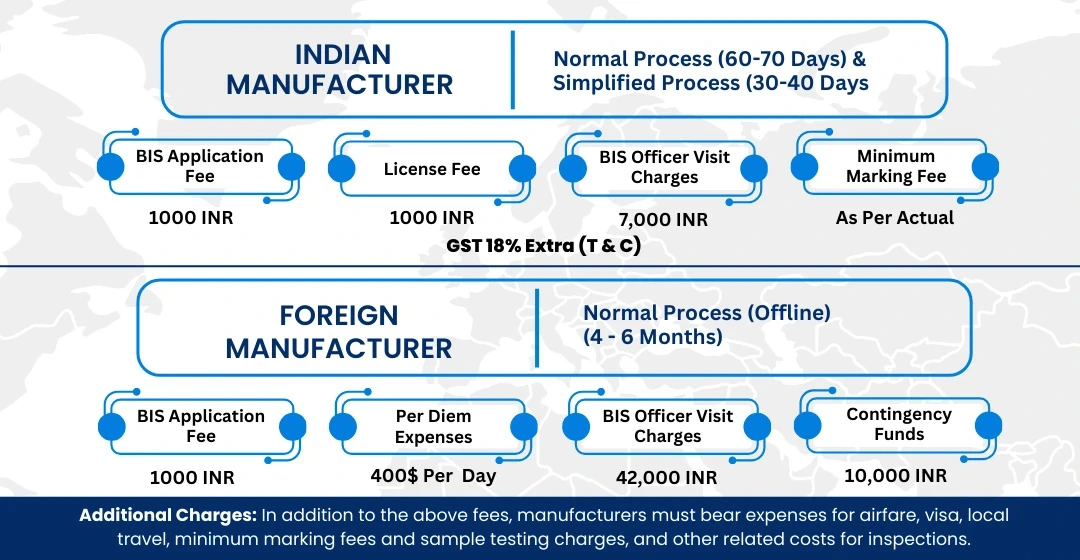
BIS certification for Calcined Clay-Based Portland Pozzolana Cement (PPC) as per IS 1489 (Part 2): 2015 is critical for ensuring high-quality, durable cement for construction. Adhering to this standard under the Cement (Quality Control) Order, 2023 helps manufacturers provide safe, reliable products, fostering trust and credibility in the market.
Obtaining BIS certification can be challenging, especially for small and medium-sized enterprises. EVTL India offers expert consultancy to guide manufacturers through the certification process, from application submission to documentation and regulatory fee management. With EVTL India’s support, manufacturers can secure certification efficiently, enhancing their product’s marketability and competitive edge in India and abroad. Additionally, EVTL India provides ongoing support for compliance, helping clients maintain certification and renew licenses as required