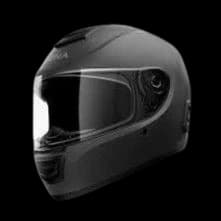
Protective Helmets for Motorcycle Riders are popularly used products that provide safety to the
riders from possible head injuries while riding. Using certified helmets offers better safety and
improved functionality and performance during usage. These helmets are important safety
equipment for road users and, therefore, should be manufactured according to the
specifications stated in BIS IS 4151:2015 for Protective Helmets for Motorcycle Riders.
As per the Indian standard, certain technical specifications that a protective helmet must meet
include impact absorption capacity, penetration resistance, retention capability, field of vision,
shell construction quality, and material durability. The certification of helmets according to the
technical specifications of the Indian standards and adherence to BIS Quality Control Order
(QCO) specifications are essential for selling these helmets in India. The ISI mark provided on
these helmets assures their reliability and suitability for road use.
What is IS 4151:2015 for Protective Helmets for Motorcycle
Riders?
IS 4151:2015 specifies the requirements, construction criteria, testing methods and safety
parameters for protective helmets intended for motorcycle riders. The standard aims to ensure
that helmets provide adequate protection during collisions and impacts while maintaining
comfort and usability for riders.As per BIS requirements, protective helmets are:
- Tested for impact absorption performance
- Evaluated for penetration resistance
- Verified for retention system strength
- Checked for field of vision requirements
- Assessed for construction and material quality
Importance of BIS ISI Certification for Helmets (Two-Wheeler)
IS 4151:2015 is vital when ensuring that both producers and importers comply with the Indian
safety standards. Some of the benefits of the BIS ISI mark for helmets are listed below:
- Safety and Quality:
BIS ISI certification ensures that helmets are made as per BIS safety and performance
standards.
- Legality Compliance:
Compulsory ISI certification ensures legality of the production and sale of helmets in
India based on the standards of BIS certification for helmets.
- Inferior Helmet Production and Distribution Avoidance:
Ensures avoidance of producing and distributing inferior helmets based on BIS
certification standards for helmets IS 4151:2015.
- Promoting Road Safety:
Ensures the encouragement of wearing protective helmets in order to reduce cases of
road accidents based on BIS certification standards for helmets.
Two-Wheeler Protective Helmets BIS Approval Eligibility
BIS authorisation under IS 4151: 2015 is required for businesses involved in manufacturing,
importing, or supplying Motorcycle Rider Protective Helmets in India.
Applicable to:
- Manufacturers (India) - Must get BIS approval if the products are covered under QCO.
- Foreign Manufacturers - Need certification to export road safety helmets to India.
- Importers/Brand Owners - Must ensure that the products are BIS-certified before sale.
- Sellers/Distributors - Should only sell certified motorcycle helmets.
BIS Testing Requirements for Helmets Under IS 4151:2015
The Bureau of Indian Standards (BIS) has set stringent standards on safety and performance of the product as per IS 4151:2015 for Protective Helmets for Motorcycle Riders in order to make the riders safer and protected from any injuries or damages during an accident. The standards help in determining the required qualities of the helmet in order to ensure that the product is of good quality and meets all the requirements for the safety of riders in actual riding conditions.The following are the BIS testing approvals for helmets for motorcycle riders as per IS 4151:2015:
| Test Group | What is Tested | Purpose |
| Shell Construction Test | Helmet outer shell structure, thickness, and integrity | Ensures structural strength and impact resistance capability |
| Protective Padding Test | Internal shock-absorbing padding quality | Ensures impact cushioning and wearer comfort |
| Retention System Test | Chin strap and locking mechanism strength | Ensures helmet remains secured during accidents |
| Peripheral Vision Test | Field of vision through helmet design | Ensures adequate visibility for safe riding |
| Workmanship & Finish Inspection | Surface quality, finishing, and defects | Ensures proper manufacturing quality and user safety |
| Mass (Weight) Test | Overall helmet weight measurement | Ensures comfort and compliance with safety limits |
| Impact Absorption Test | Helmet response to controlled impact | Ensures energy absorption during collisions |
| Rigidity Test | Structural resistance under applied load | Ensures helmet does not deform under stress |
| Dynamic Retention Test | Helmet retention under dynamic force conditions | Ensures helmet does not detach during impact |
| Retention (Detaching) Test | Strap and fastening strength under load | Ensures secure fastening during accident conditions |
| Micro-slip Test of Chin Strap | Strap movement under repeated loading | Ensures stability of retention system |
| Abrasion Resistance Test (Chin Strap) | Wear resistance of the chin strap material | Ensures long-term durability and safety |
| Visor Impact Resistance Test (if applicable) | Resistance of the visor to impact and penetration | Ensures eye protection and safety during accidents |
| Visor Optical Tests | Light transmission, distortion, and visibility quality | Ensures a clear and safe field of vision |
| Flammability Test | Behaviour of helmet materials under flame exposure | Ensures fire safety in extreme conditions |
| Environmental Conditioning Tests | Heat, cold, humidity, UV, and solvent exposure | Ensures performance stability in different environments |
| Audibility Test | Sound perception while wearing a helmet | Ensures the rider can hear traffic and surroundings |
| Corrosion Resistance Test (Metal Parts) | Metal component resistance to corrosion | Ensures durability and long service life |
BIS Certification Process for Helmets (Two-Wheeler)

The BIS approval process ensures that the protective helmet for motorcycle riders meets the required standards for proper and efficient operation. This process is set by the Bureau of Indian Standards (BIS) and includes the following steps:
- Online Registration :- Manufacturers register on the BIS Manak portal by submitting company, factory, and product details. Foreign manufacturers must appoint an Authorized Indian Representative (AIR).
- Testing at BIS-Approved Laboratory :- Product samples are tested in BIS-approved laboratories for shell strength, impact absorption, retention system strength, peripheral vision, mass and material durability.
- Application Submission :- The application form must be accompanied by test reports, technical documents, and factory details. In the case of foreign manufacturers, AIR-related documentation must also be provided.
- Factory Inspection :- The factory inspection is carried out by BIS authorities in order to review the production processes and safety measures undertaken at the manufacturing plant.
- Grant of BIS License :- Upon successful completion of all standards, the BIS will issue the license for certification under Scheme-I.
- Use of ISI Mark :- After approval, the manufacturer is permitted to use the ISI Mark on the product along with a valid CM/L number, indicating compliance with BIS standards.
IS 4151: 2015 Certification Documents List
| Document Category | Documents Required |
| Basic Details | GST Certificate, Email ID & Contact Number, Factory & Office Address, Rent Agreement / Lease Deed (if applicable), Partnership Deed (if applicable for partnership firms) |
| Manufacturing Details | List of Machinery, Process Flow Chart, Factory Layout Plan |
| Raw Material Details | List of Raw Materials, Supplier Details, Raw Material Invoices, Raw Material Test Certificates |
| Testing & Quality Control | List of Testing Equipment, Calibration Certificates, QC/Lab In-charge Appointment Letter & Qualification |
| Production Details | Annual Installed Capacity, Last Year Production Value |
| Product & Packaging Details | Quantity per Package, Nature of Packing, Product Printing / Marking Details |
| Management Details | Top Management Details, BIS Communication Contact Person |
| Brand & Certification Documents | Trademark / Brand Certificate, Consent Letter from BIS Recognized Laboratory |
| Additional Documents | Weekly Off Details, Hygiene Document (if applicable), Relaxation Letter (if applicable), Any Other Relevant Document |
| Foreign Manufacturer Requirements | Agreement with AIR (Authorized Indian Representative), [Aadhaar Redacted], AIR Nomination Form, Required Undertakings, Scope of License |
The Foreign manufacturers must designate an Authorized Indian Representative (AIR) in India. The representative is the local point of contact for the Bureau of Indian Standards (BIS) and manages all compliance and regulatory requirements in India.
BIS ISI Marking Requirements for Helmets
Once the manufacturer secures a BIS approval, the ISI mark helmet for two-wheeler must be written clearly and permanently either on its packaging or on the product. The marking should also include key information, such as the manufacturer’s identification and licence number (CM/L). This helps confirm that the product meets all required safety standards. More details are provided below:
| Requirement | Details |
| ISI Mark | Indicates that the product is BIS certified and conforms to standards |
| Standard Number | IS 4151: 2015 |
| CML Number | Certification Marks Licence (CML) number issued by BIS |
| Manufacturer Details | Name of manufacturer or registered trademark |
| Batch / Date | Batch number, heat number, or manufacturing date for traceability |
Note: Marking is typically applied using durable stamping, tagging, or permanent printing to ensure clear identification during handling, storage, and transportation, as per BIS marking requirements.
Motorcycle Helmets BIS License Validity Duration
| Particulars | Details |
| Validity | Typically 1 to 2 years, depending on BIS approval conditions |
| Renewal | Must be renewed before expiry by submitting the application along with the prescribed fee and updated documents |
| Surveillance | Includes periodic factory inspections and market sample testing conducted by BIS |
| Compliance | Continuous following to standard and applicable Quality Control Orders (QCOs) is mandatory |
| Risk | Non-compliance or failed sample testing may lead to suspension or cancellation of the BIS license |
BIS Approval Fee for Motorcycle Helmet
Cost for a BIS license for Protective Helmets for Motorcycle Riders (IS 4151:2015) is comprised of application charge, inspection charge, testing charge, license charge and marking charge. These charges depend on the scale of manufacture, the models of helmets manufactured, the manufacturing capacity and the place of manufacture.
| Charge Type | Indian Manufacturers | Foreign Manufacturers |
| Application Fee | INR 1,000 | USD 15 |
| Audit Charges | INR 7,000 | USD 3,200 - 5,900 |
| License Fee | INR 1,000 | USD 15 |
| Marking Fee | As applicable | As applicable |
| Testing Charges | As applicable | As applicable |
| EVTL India Consultancy Fee | As per actual | As per actual |
Note:
- Application fee for foreign manufacturers is payable via SWIFT (SAARC countries may pay in INR with applicable GST).
- Audit charges for foreign manufacturers vary based on country/location.
- The marking fee is determined based on the product category and production volume (MSME benefits may apply).
- Testing charges are to be paid directly to BIS-recognised laboratories.
- Consultancy fees can vary depending on product type and factory location.
Benefits of BIS ISI Mark Standards for Helmet Manufacturers and Consumers
Some of the benefits of getting BIS Certification for Protective Helmets for Motorcycle Riders (IS 4151:2015) include ensuring safety and better marketability of helmets for the manufacturer/importer and consumer, respectively.
Benefits for Manufacturers/Importers
- Manufacturers/importers of protective helmets can easily get into the market without any restrictions, as well as enjoy new possibilities for expansion within the helmet industry due to BIS certification requirements.
- Minimizes legal risks, fines, and other problems caused by non-compliance with BIS Certification for helmets requirements.
- Improves the reputation of the helmets' brand and increases competitiveness on the market.
- Promotes higher credibility of the business and provides more development opportunities.
- Allows participation in government tenders and institutions' procurement programs as per BIS ISI Mark helmet requirements.
Benefits for Consumers
- Consumers can easily recognize quality helmets by means of the BIS ISI Mark helmet certification standard.
- Increases the probability of buying quality-tested helmets complying with IS 4151:2015 standard.
- Protects consumers from injuries resulting from the use of unsafe helmets under BIS for IS helmet requirements.
Conclusion
Protective Helmets for Motorcycle Riders are very crucial safety products to provide protection to riders from any injury to the head. These helmets are extensively used all over India; hence quality and compliance have become necessary. Strict adherence to the standard IS 4151:2015 for Protective Helmets for Motorcycle Riders helps in ensuring that the product meets high requirements related to impact absorption, penetration resistance, retention system strength, field of vision, and material strength.
BIS Certification for Protective Helmets for Motorcycle Riders means that the product meets high Indian safety standards and becomes eligible for sales. ISI Mark provides assurances about reliability, safety, and performance; thus, it helps in gaining credibility and improving the market acceptance of the product. This certification will help gain confidence among consumers about their purchase decisions. Professional guidance can be obtained from EVTL India for seeking BIS certification, testing, and documentation.