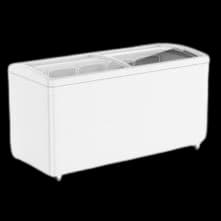
BIS Certification for Freezers under IS 7872:2020 is important to make sure that deep freezers sold in India are safe, reliable, and of good quality. Deep freezers are used in homes, supermarkets, hotels, restaurants, hospitals, laboratories, and other commercial places to store frozen food and other temperature-sensitive products. Therefore, they must work safely, provide proper cooling, and use electricity efficiently.
The IS 7872:2020 standard lays down the requirements for the design, safety, performance, testing, and energy efficiency of deep freezers. Under the applicable BIS Quality Control Order (QCO), manufacturers and importers must obtain BIS Certification before they can manufacture, import, or sell deep freezers in India. Once certified, they can use the ISI Mark on their products, showing that the deep freezer meets Indian quality and safety standards and helping customers trust the product.
What Is BIS Certification for Freezers?
The Bureau of Indian Standards (BIS) is India's national authority responsible for developing and enforcing product quality and safety standards. BIS for Freezers confirms that the product complies with the applicable Indian Standard, ensuring it meets the required safety, quality, and performance requirements before being sold in the Indian market.
Manufacturers who obtain ISI Certification for Freezers are authorized to display the ISI mark on their products. This mark assures consumers, distributors, and regulatory authorities that the freezer has undergone the required testing and factory inspection as per BIS guidelines. A valid BIS License for Freezers demonstrates that the product fully complies with Indian regulatory requirements and is approved for manufacture, import, and sale in India.
Why BIS Certification Matters for Freezers
- Safety and Consumer Protection - Freezers operate continuously using electricity, making electrical insulation, compressor safety, and temperature control essential. BIS-certified products are tested to ensure safe operation and reduce the risk of electrical shocks, overheating, and fire hazards.
- Consistent Performance and Quality - Certified freezers are evaluated for cooling efficiency, temperature stability, energy performance, and durability. BIS Certification for Freezers ensures that products provide reliable cooling and long-lasting performance.
- Compliance with the Applicable Indian Standard - The applicable Indian Standard for freezers sets clear requirements for construction quality, electrical safety, performance, and marking. Certification confirms that the product complies with these uniform standards.
- Market Trust and Brand Credibility - Products carrying the ISI mark inspire confidence among buyers, retailers, and institutional purchasers. BIS certification gives manufacturers a clear competitive advantage.
- Legal Compliance under BIS QCO - The BIS QCO for Freezers makes certification mandatory for applicable products. Non-certified products are prohibited from being manufactured, sold, or imported in India.
BIS Testing & Quality Standards for Deep Freezers
To ensure safe usage, reliable cooling performance, and long service life, deep freezers
are tested under IS 7872:2020 by the Bureau of Indian Standards (BIS). These testing
and inspection requirements are followed during manufacturing to confirm that every
unit meets essential safety and quality expectations before it is sold in the Indian
market.
Electrical Safety and Protection Checks
- Protection against electric shock (R): Ensures user safety from exposed live
parts.
- Insulation strength test (R): Checks ability to withstand high voltage without
breakdown.
- Earth connection test (R): Confirms proper grounding for safety.
- Leakage current assessment (R): Ensures safe current levels during operation.
- Electrical accessories check (S): Verifies safety and compliance of connected
components.
Cooling Performance and Functional Tests
- Temperature pull-down performance (S): Measures how quickly required
cooling is achieved.
- Energy efficiency check (S): Evaluates power consumption during operation.
- Heat rise monitoring (S): Ensures safe temperature behavior during working
conditions.
- Load condition performance (S): Verifies stable functioning under normal
usage load.
Mechanical Strength and Construction Checks
- Structural durability test (S): Ensures body strength under load conditions.
- Door operation endurance test (S): Checks repeated opening and closing
performance.
- Shelf strength test (S): Confirms load-bearing capacity of internal fittings.
- Component inspection (S): Ensures proper quality of fitted parts and assembly.
- Design and build verification (S): Confirms safe construction standards.
Safety, Stability & Environmental Resistance
- Stability check (S): Ensures appliance does not tip or become unstable.
- Moisture resistance test (S): Checks protection against humidity exposure.
- Heat and fire resistance test (S): Ensures safe performance under thermal
stress.
- Corrosion resistance test (S): Confirms durability against rust and
environmental damage.
- Clearance and insulation spacing check (S): Ensures safe internal electrical
separation.
BIS Registration Process for Freezers
 Obtaining BIS Registration for Freezers involves a systematic process to ensure that the product meets the applicable Indian Standard and all regulatory requirements. The general process includes the following steps -
- Online Registration - Manufacturers register on the BIS Manak Online Portal by submitting company details, factory information, and freezer product specifications. Foreign manufacturers must appoint an Authorized Indian Representative (AIR) in India.
- Product Testing - Freezer samples are tested at BIS-approved laboratories to verify compliance with the applicable Indian Standard. The tests evaluate electrical safety, cooling performance, insulation, temperature stability, energy efficiency, durability, and other prescribed safety and performance requirements before BIS certification is granted.
- Application Submission - Manufacturers submit the BIS application along with test reports, technical documents, product specifications, quality control procedures, and factory information. Foreign manufacturers must also provide AIR authorization documents.
- Factory Inspection - BIS officials inspect the manufacturing facility to verify production processes, quality control systems, testing facilities, raw material quality, and compliance with BIS requirements.
- Grant of BIS License -Upon successful evaluation of the application, product testing, and factory inspection, BIS grants the licence under the applicable certification scheme, authorizing the manufacturer to produce and sell certified freezers in the Indian market.
- Use of ISI Mark - After receiving the BIS licence, manufacturers are authorized to affix the ISI Mark along with the CM/L number on the freezer, confirming compliance with the applicable Indian safety and quality standards.
BIS documents Checklist for cold storage cabinets
The following documents are typically required for obtaining BIS approval:
Basic Details: - GST Certificate
- Email ID, Contact Number
- Factory, Office Address
- Rent and Lease Agreement(if applicable)
- Partnership Deed (if partnership firm)
| Product and Packing Details: - Quantity per Package
- Nature of Packing
- Nature of Printing / Marking on Product
|
Testing and Quality Control: - List of testing Equipment
- Calibration Certificates
- QC or Lab In-charge Appointment Letter
- Qualification
| Raw Material Details: - List of Row Materials
- Supplier Details
- Raw Material Invoices
- Raw Material Test Certificates
|
Manufacturing Details: - List of Machinery
- process flow chart
- Layout plan of Factory
| Brand and Certification Documents: - Trademark / Brand Certificate
- Consent Latter From BIS Recognized Laboratory
|
Production Details: - Annual Installed Capacity
- Last Year Production Value
| Additional Documents: - Weekly Off Details
- Hygiene Documents(if applicable)
- Relaxation Latter(if applicable)
- Any Other Relevant Documents
|
Management Details: - Top Management Details
- Concerned Person for BIS Communication
| Required Documents: - Agreement with AIR
- Aadhaar Card with AIR
- AIR Nomination Form
- Required Undertakings
- Scope of License
|
Foreign manufacturers must additionally appoint an Authorized Indian Representative (AIR) to coordinate with the Bureau of Indian Standards (BIS) and manage compliance requirements in India.
Marking Requirements And ISI labeling
When a manufacturer obtains the BIS license, the ISI mark for steel step bolts must be applied clearly and permanently on the product or its packaging. In addition to the ISI Mark, other important details must also be provided on the product or packaging, as specified in the table below. This ensures the product meets all quality and safety standards. .
| Requirement | Details |
|---|
| ISI Mark | Indicates that the product is BIS certified and conforms to standards |
| Standard Number | IS 7872 |
| CML Number | Certification Marks License (CML) number issued by BIS |
| Manufacturer Details | Name of manufacturer or registered trademark |
| Batch / Date | Batch number, heat number, or manufacturing date for traceability |
Note: Marking is typically applied using durable stamping, tagging, or permanent printing to ensure clear identification during handling, storage, and transportation, as per BIS marking requirements.
BIS Licence Validity for refrigeration storage systems
After obtaining BIS approval for the nickel battery, the license is valid for a fixed period and must be maintained by following BIS rules and standards.
| particulars | Details |
|---|
| Initial Validity | Typically 1 to 2 years, depending on BIS approval conditions |
| Renewal | Must be renewed before expiry by submitting the application along with the prescribed fee and updated documents |
| Surveillane | Includes periodic factory inspections and market sample testing conducted by BIS |
| Compliance | Continuous following to standard and applicable Quality Control Orders (QCOs) is mandatory |
| Risk | Non-compliance or failed sample testing may lead to suspension or cancellation of the BIS license |
bis approval Cost For deep freezers
The cost of BIS compliance for the portable batteries includes charges for application, inspection, license, testing, and marking. These fees are paid to BIS as per Scheme I guidelines.
| Charge Type | Indian Manufacturers | Foreign Manufacturers |
|---|
| Application Fee | INR 1,000 | USD 15 |
| Audit Charges | INR 7,000 | USD 3,200 – 5,900 |
| License Fee | INR 1,000 | USD 15 |
| Marking Fee | As applicable | As applicable |
| Testing Charges | As applicable | As applicable |
| EVTL India Consultancy Fee | As per actual | As per actual |
Note:
- Application fee for foreign manufacturers is payable via SWIFT (SAARC countries may pay in INR with applicable GST).
- Audit charges for foreign manufacturers vary based on country/location.
- Marking fee depends on the product category and production volume (MSME benefits may apply).
- Testing charges are paid directly to BIS-approved laboratories.
- Consultancy fees depend on product type and factory location.
Conclusion
Deep freezers certified under IS 7872:2020 are designed to deliver safe cooling
performance, reliable temperature control, and long-lasting durability for both domestic
and commercial use. This standard ensures that every product is properly tested for
electrical safety, energy efficiency, mechanical strength, and overall operational
reliability before reaching the market.
With proper guidance, the certification process becomes more structured and
manageable. Support from an experienced consultant like EVTL India helps streamline
documentation, testing coordination, compliance checks, and approval procedures for
smooth and timely market entry.