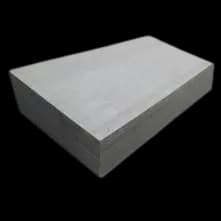
Fibre cement flat sheets are building materials made from a mix of cement, cellulose
fibres, and other additives. They are commonly used in walls, ceilings, partitions, and
cladding in residential and commercial construction. These sheets provide a smooth
surface and are suitable for both interior and exterior applications.
To ensure these sheets meet required quality and performance standards, the Bureau of Indian Standards (BIS) has defined guidelines under IS 14862:2000. Manufacturers must obtain BIS certification before supplying fibre cement sheets in the Indian market, confirming that the product complies with specified requirements for construction use.
Overview of IS 14862:2000 Standard
This is the Indian standard that specifies the requirements for fibre cement sheets used in building and construction applications. It is issued by the Bureau of Indian Standards (BIS) to ensure that the sheets are suitable for use in walls, ceilings, partitions, and similar works.
The standard ensures that the product is:
- Manufactured using proper mix of cement and fibres for required performance
- Suitable for use in interior and exterior construction applications
- Made with correct dimensions and thickness as per standard limits
- Capable of handling normal service conditions in building use
- Properly tested for strength, water resistance, and dimensional accuracy
Who requires BIS certification for fibre cement sheets?
BIS certification as per IS 14862 is required for all entities involved in the production and sale of these cement sheets in India. It’s applicable for :
- Manufacturers – Must obtain BIS certification for cement sheets made in India.
- Importers – Must ensure imported products are BIS certified before sale.
- Suppliers/Distributors – Must sell only BIS-compliant sheets in the market.
BIS Testing & Quality Standards for Fibre Cement Flat Sheets
To ensure proper quality and performance in construction use, the Bureau of Indian Standards has defined testing and inspection requirements under IS 14862:2000, which are carried out during manufacturing and quality checks.
Dimensional and Physical Checks
- Size and Thickness Check (R): Verifies length, width, and thickness within limits .
- Geometrical Accuracy (R): Ensures flatness and proper shape of sheets .
- Density Test (R):Checks apparent density for uniform structure.
Mechanical Performance Testing
- Bending Strength Test (R): Confirms sheet can handle load without breaking .
- Load-Bearing Check (R): Ensures sheets perform properly in application .
Water and Environmental Tests
- Water Impermeability Test (S): Checks resistance to water penetration .
- Soak-Dry Test (S): Evaluates behaviour under moisture cycles .
- Warm Water Test (S): Checks stability under heated water conditions .
- Frost Resistance Test (S):Assesses performance in low temperature conditions .
- Heat-Rain Test (S): Checks performance under combined heat and water exposure .
How to Get BIS License for Fibre Cement Sheets
To obtain the license, the BIS certification process ensures that the product meets the required standard for proper and efficient operation as defined by the Bureau of Indian Standards (BIS). The process includes the following steps:
- Online Registration: Manufacturers register on the BIS Manak Online Portal by submitting company details, factory information, and product specifications. Foreign manufacturers must appoint an Authorized Indian Representative (AIR) in India.
- Testing at BIS-Approved Laboratory: Product samples are tested in BIS-approved laboratories to evaluate strength, water absorption, weather resistance, durability, and overall performance
- Application Submission: The application is submitted along with laboratory test reports, technical documents, manufacturing process details, and factory information. Foreign manufacturers must also provide AIR-related documents.
- Factory Inspection: BIS officials conduct an on-site inspection of the manufacturing unit to verify production processes, quality control systems, safety measures, and compliance with the standard.
- Grant of BIS License: If all requirements are successfully met, BIS issues the certification license under Scheme-I, allowing the manufacturer to produce and sell certified products.
- Use of ISI Mark: After certification approval, the manufacturer is permitted to use the ISI mark along with a CM/L number on the product, confirming compliance with the standard.

Required BIS Documents for Flat Cement Sheets
| Basic Details | - GST Certificate
- Email ID & Contact Number
- Factory & Office Address
- Rent Agreement / Lease Deed (if applicable)
- Partnership Deed (if partnership firm)
|
| Manufacturing Details | - List of machinery
- Process flow chart
- Layout Plan of Factory
|
| Raw Material Details | - List of Raw Materials
- Supplier Details
- Raw Material Invoices
- Raw Material Test Certificates
|
| Testing & Quality Control | - List of Testing Equipment
- Calibration Certificates
- QC / Lab In-charge Appointment Letter & Qualification
|
| Production Details | - Annual Installed Capacity
- Last Year Production Value
|
| Product & Packaging Details | - Quantity per Package
- Nature of Packing
- Nature of Printing / Marking on Product
|
| Management Details | - Top Management Details
- Concerned Person for BIS Communication
|
| Brand & Certification Documents | - Trademark / Brand Certificate
- Consent Letter from BIS Recognized Laboratory
|
| Additional Documents | - Weekly Off Details
- Hygiene Document (if applicable)
- Relaxation Letter (if applicable)
- Any Other Relevant Document
|
Foreign manufacturers must additionally appoint an Authorized Indian Representative (AIR) to coordinate with the Bureau of Indian Standards (BIS) and manage compliance requirements in India.
Marking Requirements and ISI Labeling
After obtaining the BIS license, the ISI mark for cement sheets must be clearly and permanently applied on the product or its packaging. Other required details are provided in the table below. This ensures the product is compliant with applicable quality and safety standards.
| Requirement | Details |
|---|
| ISI Mark | Indicates that the product is BIS certified and conforms to standards |
| Standard Number | IS 14862 |
| CML Number | Certification Marks License (CML) number issued by BIS |
| Manufacturer Details | Name of manufacturer or registered trademark |
| Batch / Date | Batch number, heat number, or manufacturing date for traceability |
Note: Marking should be done using stamping, tags, or permanent printing so the product can be easily identified during handling, storage, and transport, as per BIS requirements.
BIS License Validity for fibre cement sheets
After getting BIS certification, the license is valid for a limited period. Manufacturers must follow BIS rules and maintain product quality to keep the license active.
License Validity Details
| Parameter | Details |
|---|
| Initial Validity | Usually valid for 1 to 2 years, based on BIS approval |
| Renewal | Must be renewed before expiry with required documents and fees |
| Surveillance | BIS conducts factory inspections and may test market samples |
| Compliance | Continuous compliance with IS standards and QCOs is required |
| Risk | May lead to suspension or cancellation of the license |
BIS Approval Cost for Building Materials
The cost of BIS certification includes charges for application, inspection, license, testing, and marking. These fees are paid to BIS as per Scheme I guidelines.
| Charge Type | Indian Manufacturers | Foreign Manufacturers |
|---|
| Application Fee | INR 1,000 | USD 15 |
| Audit Charges | INR 7,000 | USD 3,200 – 5,900 |
| License Fee | INR 1,000 | USD 15 |
| Marking Fee | As applicable | As applicable |
| Testing Charges | As applicable | As applicable |
| EVTL India Consultancy Fee | As per actual | As per actual |
Note:
- Application fee for foreign manufacturers is payable via SWIFT (SAARC countries may pay in INR with applicable GST).
- Audit charges for foreign manufacturers vary based on country/location.
- Marking fee depends on the product category and production volume (MSME benefits may apply).
- Testing charges are paid directly to BIS-approved laboratories.
- Consultancy fees depend on product type and factory location.
conclusion
Fibre cement flat sheets covered under IS 14862:2000 are widely used in construction for walls, ceilings, and partitions. The standard ensures that these sheets are manufactured with the right materials and proper dimensions and are tested for performance under different conditions. BIS certification helps confirm that the product meets these requirements and is suitable for use in building applications. Support from an experienced BIS consultant like EVTL India can make the process easier by handling compliance, documentation, and coordination, helping in faster approval and smooth market entry.