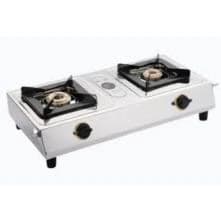
The domestic gas stoves, which use LPG for fuel combustion, are among the most widely used stoves. They regulate the supply of liquefied petroleum gas to the burners for the generation of the required flames. Their characteristics of efficiency, flame stability, durability, and corrosion protection make them appropriate for frequent and continuous use.
IS 4246:2025 outlines the performance and safety requirements that must be met by the domestic gas stoves before certification. For the product license, some of the test criteria include the gas leak test, burner function test, heat output test, safety test, and material quality tests. Fulfilling BIS standards reduces risks associated with improper functioning due to faulty parts and weak flame performance.
What is IS 4246: 2025?
This is the Indian Standard for domestic gas stoves designed to operate with Liquefied Petroleum Gas (LPG). It mentions the safety requirements to ensure safe cooking operations in household environments. As per the BIS (Bureau of Indian Standards), these domestic gas stoves are:
- Assessed for burner efficiency
- Tested for thermal safety
- Evaluated for mechanical strength
- Checked for gas leakage prevention
Eligibility for LPG Gas Stove BIS Approval
BIS authorisation under IS 4246: 2025 is required for businesses involved in manufacturing, importing, or supplying domestic kitchen stoves in India.
Applicable to:
- Manufacturers (India) - Must get BIS approval if the kitchen gas appliance is covered under QCO.
- Foreign Manufacturers - Need certification to export the product to India.
- Importers/Brand Owners - Must ensure that the products are BIS-certified before sale.
- Sellers/Distributors - Should only sell certified gas burners.
Testing and Inspection Requirements
To ensure safe and reliable performance of domestic gas stoves designed for use with LPG, the Bureau of Indian Standards outlines the minimum requirements under IS 4246: 2025. This certification ensures that manufacturers maintain consistent product quality and proper design control. The BIS testing parameters and quality checks for the LPG stove are listed below:
| Test Group | What is Tested | Purpose |
|---|
| Dimensional Check | Burner size, injector jets, gas rail alignment, and overall product dimensions | Ensures proper fitment, assembly accuracy, and standard conformity |
| Gas Soundness Test | Leakage in gas lines, joints, taps, and connections | Ensures safe operation without gas leakage risk |
| Strength & Rigidity Test | Structural stability of stove body, frame, and pan supports | Ensures mechanical strength during regular kitchen usage |
| Gas Consumption Test | Total gas usage and burner-wise consumption rate | Ensures efficient fuel usage and performance consistency |
| Combustion Performance Test | Flame quality, CO emission, and combustion efficiency | Ensures clean burning and safe combustion conditions |
| Flame Stability Test | Flame behavior under varying pressure and operating conditions | Ensures steady flame without flickering or extinguishing |
| Flashback Test | Flame travel back into burner or gas system | Ensures safety against reverse flame hazards |
| Resistance to Draught Test | Flame stability under airflow conditions | Ensures safe operation in ventilated kitchen environments |
| Thermal Efficiency Test | Heat utilization efficiency of burners | Ensures optimal heat output and energy efficiency |
| Fire Hazard & Temperature Test | Surface temperature rise and fire risk evaluation | Ensures safety against overheating and fire hazards |
| Ignition System Test | Auto/manual ignition performance and reliability | Ensures smooth and safe ignition of burners |
| Flame Travel Test | Movement of flame across burner ports | Ensures uniform and controlled flame distribution |
| Soot Formation Test | Carbon deposition during combustion | Ensures clean combustion without excessive soot |
| Noise Level Test | Operational noise during ignition and burning | Ensures user comfort during usage |
| Gas Inlet Connection Test | Strength and safety of inlet fittings | Ensures secure connection to LPG supply |
| Injector Jet Flow Test | Gas flow through injector jets | Ensures correct fuel-air mixing and performance |
| Burner Performance Test | Burner efficiency, flame shape, and output | Ensures consistent heating performance |
Corrosion Resistance Test | Resistance of metal parts to rust and environmental exposure | Ensures long-term durability in kitchen conditions |
| Wear & Operational Test | Repeated usage cycles of knobs, valves, and controls | Ensures long-term functional reliability |
| Finish & Surface Quality Test | Coating, enamel finish, and surface defects | Ensures aesthetic quality and corrosion protection |
Steps for LPG Stove BIS License
Ensures correct fuel-air mixing and performance Ensures consistent heating performance Ensures long-term durability in kitchen conditions Ensures long-term functional reliability Ensures aesthetic quality and corrosion protection The BIS Authorisation process ensures that the kitchen gas meets the required standards for proper and efficient operation. This process is set by the Bureau of Indian Standards (BIS) and includes the following steps:
- Online Registration: Manufacturers register on the BIS Manak portal by submitting company, factory, and product details. Foreign manufacturers must appoint an Authorized Indian Representative (AIR).
- Testing at BIS-Approved Laboratory: Product samples are tested in BIS-approved laboratories for gas leakage detection, burner efficiency, flame stability, thermal performance and structural safety.
- Application Submission : The application is submitted along with test reports, technical documents, and factory details. Foreign manufacturers must also submit AIR-related documents.
- Factory Inspection: BIS officials carry out an on-site inspection of the manufacturing unit to verify the production process, safety measures, and quality control system.
- Grant of BIS License: Once all compliance requirements are successfully verified, BIS grants the certification license under Scheme-I.
- Use of ISI Mark: After approval, the manufacturer is authorized to use the ISI Mark on the product along with a valid CM/L number, confirming that the product meets BIS standards.

Documents List for IS 4246: 2025 License
| Document Category | Documents Required |
|---|
| Basic Details | GST Certificate, Email ID & Contact Number, Factory & Office Address, Rent Agreement / Lease Deed (if applicable),Partnership Deed (if applicable for partnership firms) |
| Manufacturing Details | List of Machinery, Process Flow Chart, Factory Layout Plan |
| Raw Material Details | List of Raw Materials, Supplier Details, Raw Material Invoices, Raw Material Test Certificates |
| Testing & Quality Control | List of Testing Equipment, Calibration Certificates, QC/Lab In-charge Appointment Letter & Qualification |
| Production Details | Annual Installed Capacity, Last Year Production Value |
| Product & Packaging Details | Quantity per Package, Nature of Packing, Product Printing / Marking Details |
| Management Details | Top Management Details, BIS Communication Contact Person |
| Brand & Certification Documents | Trademark / Brand Certificate, Consent Letter from BIS Recognized Laboratory |
| Additional Documents | Weekly Off Details, Hygiene Document (if applicable), Relaxation Letter (if applicable), Any Other Relevant Document |
| Foreign Manufacturer Requirement | Appointment of Authorized Indian Representative (AIR) for BIS coordination and compliance in India |
The Foreign manufacturers must designate an Authorized Indian Representative (AIR) in India. The representative is the local point of contact for the Bureau of Indian Standards (BIS) and is responsible for handling all compliance, documentation, and regulatory obligations within the country.
Marking Requirements & License Validity
Marking Requirements
After the manufacturer obtains a BIS license, the ISI Mark for LPG Domestic Gas Stove must be clearly and permanently marked on its packaging or on the product. Along with the ISI Mark, essential details such as the manufacturer’s identification and licence number (CM/L) must be mentioned. This ensures the product complies with all safety requirements. Further details are mentioned below:
| Requirement | Details |
|---|
| ISI Mark | Indicates that the product is BIS certified and conforms to standards |
| Standard Number | IS 4246: 2025 |
| CML Number | Certification Marks License (CML) number issued by BIS |
| Manufacturer Details | Name of manufacturer or registered trademark |
| Batch / Date | Batch number, heat number, or manufacturing date for traceability |
Note: Marking is typically applied using durable stamping, tagging, or permanent printing to ensure clear identification during handling, storage, and transportation, as per BIS marking requirements.
Domestic Gas Stoves BIS License Validity
| particulars | Details |
|---|
| Initial Validity | Typically 1 to 2 years, depending on BIS approval conditions |
| Renewal | Must be renewed before expiry by submitting the application along with the prescribed fee and updated documents |
| Surveillane | Includes periodic factory inspections and market sample testing conducted by BIS |
| Compliance | Continuous following to standard and applicable Quality Control Orders (QCOs) is mandatory |
| Risk | Non-compliance or failed sample testing may lead to suspension or cancellation of the BIS license |
Fee Structure for Gas Burner BIS Approval
The cost of BIS Approval for a domestic gas stove includes charges for application, inspection, license, testing, and marking. These fees are paid to BIS as per Scheme I guidelines.
| Charge Type | Indian Manufacturers | Foreign Manufacturers |
|---|
| Application Fee | INR 1,000 | USD 15 |
| Audit Charges | INR 7,000 | USD 3,200 – 5,900 |
| License Fee | INR 1,000 | USD 15 |
| Marking Fee | As applicable | As applicable |
| Testing Charges | As applicable | As applicable |
| EVTL India Consultancy Fee | As per actual | As per actual |
Note:
- Application fee for foreign manufacturers is payable via SWIFT (SAARC countries may pay in INR with applicable GST).
- Audit charges for foreign manufacturers vary based on country/location.
- The marking fee is determined based on the product category and production volume (MSME benefits may apply).
- Testing charges are to be paid directly to BIS-recognised laboratories.
- Consultancy fees can vary depending on product type and factory location.
Conclusion
A properly tested gas stove leads to improved safety during the process of cooking. BIS Certification as per IS 4246:2025 standards indicates that the product meets the necessary safety and performance criteria before being sold to customers. Certified gas stoves provide reliable service while working under continuous use in the kitchen. This could minimize risks associated with leaks, uneven burning, and overheating. Companies dealing in the production and supply of LPG Gas Stoves find it helpful to seek the services of EVTL India in processing their BIS Certification process. Such companies will receive help with the preparation of applications, testing of products and scrutiny of relevant compliance documents.