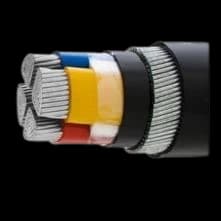
The Crosslinked Polyethylene (XLPE) insulated thermoplastic sheathed cable is extensively employed in power transmission systems, medium voltage distribution, industrial facilities, infrastructure, utilities, and commercial premises due to its excellent electrical properties such as its dielectric strength, heat resistance, excellent current-carrying capability, and long life span. The use of these cables is indispensable because they offer safe, effective and reliable transmission of electricity in harsh conditions.
As a safety measure and to maintain standardization, the use of IS 7098 (Part 2):2011 for XLPE insulated cables having a voltage rating between 3.3 kV and 33 kV is mandatory. There are strict provisions for the quality of conductors, XLPE insulation, sheathing, electric tests, thermal and mechanical stability in the standard. The important thing is to get BIS Certification for XLPE Insulated Thermoplastic Sheathed Cables along with the applicable BIS QCO (Quality Control Order). The ISI mark indicates conformance to the standard and provides more credibility in government projects and infrastructure.
What is IS 7098 (Part 2):2011 for XLPE Insulated Power Cables?
IS 7098 (Part 2):2011 is the Indian Standard that specifies requirements for crosslinked polyethylene insulated thermoplastic sheathed cables used for rated voltages from 3.3 kV up to and including 33 kV. The standard ensures that cables used in medium voltage applications maintain high electrical integrity and operational safety. As per BIS guidelines, XLPE insulated cables are evaluated for:
- Conductor resistance and conductivity performance
- High voltage withstand capability
- Insulation thickness and uniformity
- Thermal endurance and ageing characteristics
- Mechanical and dimensional stability
Who can apply for BIS Certification for XLPE Insulated Thermoplastic Sheathed Cables?
BIS ISI certification under IS 7098 (Part 2):2011 is mandatory for all entities involved in the manufacturing, import, or distribution of medium voltage XLPE insulated cables in India.
Applicable to:
- Manufacturers (India): Required to obtain BIS license under QCO regulations before sale.
- Foreign Manufacturers: Must secure BIS certification for export into India.
- Importers/Brand Owners: Must ensure only BIS-certified cables are marketed.
- Distributors/Sellers: Responsible for selling only compliant and certified products.
Importance of ISI Mark for XLPE Insulated Power Cables
Conformity to IS 7098 (Part 2):2011 guarantees that the XLPE cables are able to meet high levels of safety and performance for use in medium voltage applications.
- Guarantees conformance with BIS safety specifications
- Improves the reliability of insulation properties
- Improves the endurance capabilities of the cable
- Minimizes the chances of electrical failures
- Suitable for power transmission grids
- Increases chances of adoption in public infrastructure works
- Improve the quality of manufacturing
- Improves the credibility of the product
- Guarantees conformity to QCO requirements
BIS Testing Requirements for XLPE Insulated Cables for working voltages 3.3 to 33 kV
To ensure safe and reliable performance, BIS specifies various testing requirements under IS 7098 (Part 2):2011 for crosslinked polyethylene insulated thermoplastic sheathed cables used in medium voltage applications from 3.3 kV up to and including 33 kV. These tests verify the quality of conductors, insulation system, semiconducting layers, sheath materials, and overall cable construction to ensure compliance with the standard. The BIS testing parameters and quality checks for XLPE medium voltage cables are listed below:
| Test Group | What is Tested | Purpose |
| Conductor Tests | Annealing test (Copper), tensile test (Aluminium), wrapping test (Aluminium), conductor resistance, copper purity test | Ensures electrical conductivity, mechanical strength, material purity, and compliance with conductor specifications |
| Armour Material Tests | Thickness, galvanizing quality, resistance, torsion, winding performance, zinc coating uniformity and mass | Ensures mechanical protection, corrosion resistance, and long-term durability of armour |
| Construction & Dimensional Tests | Conductor construction, insulation application, core identification, laying-up of cores, inner sheath, armouring, outer sheath, insulation and sheath thickness | Ensures correct cable structure, dimensional accuracy, and compliance with design specifications |
| Electrical Performance Tests | High voltage test (AC/DC), insulation resistance test, volume resistivity test, partial discharge test | Ensures dielectric strength, insulation integrity, and safe operation under medium voltage conditions |
| Mechanical Strength Tests | Tensile strength and elongation at break of insulation and sheath (before ageing) | Ensures flexibility, mechanical durability, and resistance during installation and service life |
| Thermal & Ageing Tests | Tensile strength and elongation after ageing, thermal stability test, loss of mass test | Evaluates long-term thermal endurance and material stability under heat exposure |
| XLPE Insulation Performance Tests | Hot set test, water absorption (gravimetric) test | Ensures proper crosslinking, moisture resistance, and insulation reliability |
| Heat Resistance & Deformation Tests | Heat shock test, hot deformation test, shrinkage test | Ensures dimensional stability and resistance to thermal deformation |
| Fire & Flammability Performance Tests | Oxygen index, temperature index, flame retardance (single and bunched cables), smoke density, halogen gas evolution test | Ensures fire safety, flame resistance, and reduced toxic gas emission during fire incidents |
| Environmental & Special Tests | Cold bend test, cold impact test, water penetration test (where applicable) | Ensures performance under extreme environmental and installation conditions |
BIS Certification Process for XLPE Cables under IS 7098 (Part 2):2011

The BIS certification process ensures that Crosslinked Polyethylene (XLPE) insulated thermoplastic sheathed cables for working voltages from 3.3 kV up to and including 33 kV comply with all requirements specified under IS 7098 (Part 2):2011. The certification process under Scheme-I of BIS includes the following stages:
- Online Application for Registration :- The manufacturer should register on the BIS portal along with all the information regarding the factory and products. The foreign manufacturer should designate an AIR for the process.
- Product Testing :- The products are tested for electrical strength, insulation qualities, and mechanical qualities.
- Submission of Documentation :- The application should be made with test reports, information about the factory, and other compliance documents.
- Inspection of the Factory by BIS Authorities :- The BIS inspects the factory infrastructure, quality control, and manufacturing process.
- BIS Certificate :- On fulfillment of all requirements, the manufacturer gets a license from the BIS under Scheme-1.
- ISI Logo Marking :- Now, the manufacturer can affix the ISI mark on the crosslinked polyethylene insulated thermoplastic sheathed cables after getting the CM/L number.
Documents Required for BIS Certification of Crosslinked Polyethylene Insulated Thermoplastic Sheathed Cables
| Document Category | Documents Required |
| Basic Details | GST Certificate, Email ID & Contact Number, Factory & Office Address, Rent Agreement / Lease Deed (if applicable), Partnership Deed (if applicable for partnership firms) |
| Manufacturing Details | List of Machinery, Process Flow Chart, Factory Layout Plan |
| Raw Material Details | List of Raw Materials, Supplier Details, Raw Material Invoices, Raw Material Test Certificates |
| Testing & Quality Control | List of Testing Equipment, Calibration Certificates, QC/Lab In-charge Appointment Letter & Qualification |
| Production Details | Annual Installed Capacity, Last Year Production Value |
| Product & Packaging Details | Quantity per Package, Nature of Packing, Product Printing / Marking Details |
| Management Details | Top Management Details, BIS Communication Contact Person |
| Brand & Certification Documents | Trademark / Brand Certificate, Consent Letter from BIS Recognized Laboratory |
| Additional Documents | Weekly Off Details, Hygiene Document (if applicable), Relaxation Letter (if applicable), Any Other Relevant Document |
| Foreign Manufacturer Requirements | Agreement with AIR (Authorized Indian Representative), Aadhaar Card of AIR, AIR Nomination Form, Required Undertakings, Scope of License |
An AIR must be appointed by the foreign manufacturer to act as the local liaison with the Bureau of Indian Standards (BIS). The AIR will be responsible for all regulatory activities in India.
ISI Marking Requirements for XLPE Insulated Thermoplastic Sheathed Cables for voltages from 3.3 kV to 33 kV
Once BIS certification is granted, manufacturers must ensure proper marking on crosslinked polyethylene insulated thermoplastic sheathed cables or packaging as per BIS guidelines.
| Requirement | Details |
| ISI Mark | Indicates BIS compliance |
| Standard Number | IS 7098 (Part 2):2011 |
| CML Number | Certification Marks Licence (CML) number issued by BIS |
| Manufacturer Details | Name of manufacturer or registered trademark |
| Batch / Date | Batch number, heat number or manufacturing date for traceability |
Note: Marking must be durable and clearly visible to ensure traceability throughout distribution and usage.
BIS License Validity and Renewal for XLPE Cables under IS 7098 (Part 2):2011
| Particular | Details |
| Validity | Generally 1-2 years depending on license conditions |
| Renewal | Must be renewed before expiry with updated documents |
| Surveillance | Periodic inspections and sample testing by BIS |
| Compliance | Continuous adherence to BIS standards is mandatory |
| Risk | Non-compliance may lead to suspension or cancellation |
BIS Certification Cost for XLPE Insulated Cables
The cost of BIS Approval for Crosslinked Polyethylene Insulated Thermoplastic Sheathed Cables used for working voltages from 3.3 kV up to and including 33 kV includes application fees, inspection charges, license fees, testing expenses, and marking fees as prescribed under Scheme-I of BIS. The total cost depends on product type, number of variants tested, and BIS-approved laboratory charges, which are generally higher due to additional electrical, partial discharge and high-voltage testing requirements.
| Charge Type | Indian Manufacturers | Foreign Manufacturers |
| Application Fee | INR 1,000 | USD 15 |
| Audit Charges | INR 7,000 | USD 3,200-5,900 |
| License Fee | INR 1,000 | USD 15 |
| Marking Fee | As applicable | As applicable |
| Testing Charges | As applicable | As applicable |
| EVTL India Consultancy Fee | As per actual | As per actual |
Note:
- Application fee for foreign manufacturers is payable via SWIFT (SAARC countries may pay in INR with applicable GST).
- Audit charges for foreign manufacturers vary based on country/location.
- The marking fee is determined based on the product category and production volume (MSME benefits may apply).
- Testing charges are paid directly to BIS-recognised laboratories.
- Consultancy fees vary depending on product type and factory location.
Penalties for Non-Compliance with IS 7098 (Part 2):2011 for XLPE Cables for voltages from 3.3 kV to 33 kV
Cables having cross-linked polyethylene (XLPE) insulated thermoplastic sheath as per the requirements of IS 7098 (Part 2):2011 need to get their ISI Certification from the Bureau of Indian Standards before manufacturing, importing, stocking, distributing or selling of such cables in India. Any kind of violation of the provisions of the BIS Act or QCOs applicable thereunder can invite strict compliance measures according to the BIS Act, 2016. In case of failure to comply with the compulsory ISI Certification norms for medium voltage cables (3.3kV - up to and including 33kV), then the following measures can be taken by the concerned authority:
- Prohibition on manufacture/import/sale/distribution of XLPE cables without BIS certification
- Withdrawing/recalling non-conforming XLPE cables from the market
- Revocation of the BIS license (ISI Mark)
- Seizure/restraint of non-conforming goods
- Legal action and penalties for violation of ISI Certificate Norms
- Surveillance/Inspection Order by BIS
- Exclusion from Government/infrastructure supply contracts
Conclusion
Insulated Thermoplastic Sheathed Crosslinked Polyethylene (XLPE) Cables are highly popular in medium voltage power distribution because of their high level of insulation capability and good electrical performance characteristics. The conformity to the Indian Standard IS 7098 (Part 2):2011 is important for manufacturers since the cables from 3.3 kV up to 33 kV have to comply with a series of criteria related to the safety and reliability of the cable performance. Manufacturers can be awarded BIS Certification for XLPE Insulated Cables according to IS 7098 (Part 2):2011 if the products meet all the standards of the Indian standard. This certificate gives manufacturers access to various government tenders and construction sites. Assistance in obtaining the required certificates can be provided by the certified BIS Consultant EVTI India.