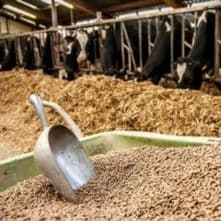
Compound Cattle Feed refers to compound feeds prepared with precise nutrients necessary for
the healthy growth, good reproduction, optimal health, and production of milk by cattle. Due to
the direct impact of cattle feed on the productivity of animals and safety of food products from
cattle, it is necessary for producers of cattle feed to comply with standards set in IS 2052: 2023
for quality control purposes.
As per the Indian Standard, the compounded cattle feed should fulfill certain requirements as
regards ingredients, crude protein, crude fiber, moisture content, minerals, labeling, and
protection from toxicants. Compliance with the relevant BIS requirements and certification
according to IS 2052: 2023 ensures the quality and safety of the product. The ISI mark on
compounded cattle feed BIS assures cattle owners and farmers about conformity with Indian
Standards.
What is IS 2052: 2023 for Compounded Cattle Feed?
This is the Indian Standard that specifies requirements, sampling, and testing methods for
compounded feeds for cattle to ensure balanced nutrition, safety, and quality for livestock. As
per the BIS (Bureau of Indian Standards), compounded cattle feed is:
- Evaluated for safety against contaminants
- Assessed for physical quality
- Tested for nutritional composition
- Checked for proper ingredient compliance
Importance of ISI Mark Certification for Compounded Cattle
Feed
The importance of BIS Certification for compounded feeds for cattle, as per IS 2052: 2023 can
be attributed to the fact that such certification is important for maintaining quality standards in
cattle feed. In other words, the feed has gone through all the tests required as per Indian
Standards.
- Quality Assurance: The cattle feed will meet prescribed nutritional values thus making
it a source of effective and safe nutrition for livestock.
- Regulatory Compliance: It helps manufacturers to meet the Indian regulatory
framework and BIS requirements, hence avoiding any potential complications arising
from this.
- Market Credibility: The ISI Mark makes the manufacturers' products more trusted and
credible to consumers.
- Market Access: The certification makes it easier for the manufacturer to enter the
regulated markets in India and abroad.
- Product Consistency: Quality assurance and testing will lead to consistency in the feed
production process thus producing high-quality and consistent feed.
- Competitive Advantage: BIS-certified feed products are preferred by livestock
producers and dairies, hence gaining a competitive advantage.
Who needs BIS Certification for Compounded Cattle Feed?
BIS authorisation under IS 2052: 2023 is required for businesses involved in manufacturing,
importing, or supplying Dairy Cattle Feed in India.
Applicable to:
- Manufacturers (India) - Must get BIS approval if the cattle nutrition feed is covered
under QCO.
- Foreign Manufacturers - Need certification to export the product to India.
- Importers/Brand Owners - Must ensure that the products are BIS-certified before sale.
- Sellers/Distributors - Should only sell certified animal feed.
Advantages of BIS Certification for Compounded Cattle Feed Manufacturers (IS 2052: 2023)
Certification of Compounded Cattle Feed according to IS 2052: 2023 guarantees conformity of the feed with quality, safety, and nutritional standards laid down in the relevant BIS Quality Conformity Order of cattle feed. A BIS Licence for cattle feed can help in availing the ISI Mark for compounded cattle feed, and this is expected to provide considerable improvement in terms of acceptability and recognition in the livestock feed market.
- Consumer satisfaction: ISI Mark for cattle feed enhances customer trust
- Market penetration: Helps in entering the livestock feed market easily
- Compliance with regulation: Adheres to the IS 2052: 2023 and BIS QCO guidelines
- Competitive advantage: Competitive advantage over other cattle feed manufacturers
- Quality assurance: Quality nutrients present in BIS certified cattle feed
- Enhanced brand value: Brand value through the BIS Licence for cattle feed products
BIS Testing Requirements for Compounded Cattle Feed under IS 2052: 2023
For ensuring the nutrient value, safety and consistency of the cattle compound feeds, the Bureau of Indian Standards (BIS) has laid down certain criteria through IS 2052: 2023. Certification through this process ensures the maintenance of the required standards by the feed manufacturers, along with the provision of balanced nutrient content in the feed to ensure healthy growth and breeding of cattle and their milk production. BIS Testing criteria for Compounded Feeds for Cattle are as follows:
| Test Group | What is Tested | Purpose |
| Moisture Content Test | Percentage of moisture in feed | Ensures shelf life, stability, and prevention of microbial growth |
| Crude Protein Test | Protein content in feed | Ensures nutritional adequacy for cattle growth and milk yield |
| Crude Fat Test | Fat/oil content in feed | Ensures energy value and feed efficiency |
| Crude Fibre Test | Fibre content in feed | Ensures proper digestion and rumen health of cattle |
| Total Nitrogen Test | Nitrogen content (protein indicator) | Ensures correct protein estimation and feed quality |
| Sulphur Test | Sulphur levels in feed | Ensures balanced nutrition and metabolic safety |
| Salt Content Test | Sodium chloride content | Ensures electrolyte balance and prevents toxicity |
| Calcium Test | Calcium level in feed | Ensures bone development and milk production support |
| Total & Available Phosphorus Test | Phosphorus availability | Ensures proper growth, reproduction, and metabolism |
| Urea Content Test | Urea percentage in feed | Ensures safe non-protein nitrogen levels in cattle feed |
| Aflatoxin B1 Test | Mycotoxin contamination level | Ensures feed safety and prevents toxicity in animals |
BIS Approval Process for Dairy Farm Feed

The BIS Authorisation process ensures that the animal husbandry feed meet the required
standards for proper and efficient operation. This process is set by the Bureau of Indian
Standards (BIS) and includes the following steps:
- Online Registration: Manufacturers register on the BIS Manak portal by submitting company, factory, and product details. Foreign manufacturers must appoint an Authorized Indian Representative (AIR).
- Testing at BIS-Approved Laboratory: Product samples are tested in BIS-approved laboratories for physical properties, moisture content, chemical characteristics, dimensional stability, and overall material performance.
- Application Submission: The application is submitted along with test reports, technical documents, and factory details. Foreign manufacturers must also submit AIR-related documents.
- Factory Inspection: The Bureau of Indian Standards officials inspect the manufacturing units to verify the production process, safety measures, and quality control system.
- Grant of BIS License: Upon successful verification of all requirements, BIS grants the certification license under Scheme-I.
- Use of ISI Mark: Once approved, the manufacturer can use the ISI mark on the product with a CM/L number, confirming that the product meets BIS standards.
Required Documentation for BIS Approval of Cattle Feed under IS 2052: 2023
| Document Category | Documents Required |
| Basic Details | GST Certificate, Email ID & Contact Number, Factory & Office Address, Rent Agreement / Lease Deed (if applicable), Partnership Deed (if applicable for partnership firms) |
| Manufacturing Details | List of Machinery, Process Flow Chart, Factory Layout Plan |
| Raw Material Details | List of Raw Materials, Supplier Details, Raw Material Invoices, Raw Material Test Certificates |
| Testing & Quality Control | List of Testing Equipment, Calibration Certificates, QC/Lab In-charge Appointment Letter & Qualification |
| Production Details | Annual Installed Capacity, Last Year Production Value |
| Product & Packaging Details | Quantity per Package, Nature of Packing, Product Printing / Marking Details |
| Management Details | Top Management Details, BIS Communication Contact Person |
| Brand & Certification Documents | Trademark / Brand Certificate, Consent Letter from BIS Recognized Laboratory |
| Additional Documents | Weekly Off Details, Hygiene Document (if applicable), Relaxation Letter (if applicable), Any Other Relevant Document |
| Foreign Manufacturer Requirements | Agreement with AIR (Authorized Indian Representative), [Aadhaar Redacted], AIR Nomination Form, Required Undertakings, Scope of License |
The Foreign manufacturers are required to appoint an Authorized Indian Representative (AIR) in India. The representative is the local point of contact for the Bureau of Indian Standards (BIS) and takes care of all rules and compliance work in India.
BIS ISI Mark Usage and Certification Validity for Compounded Feeds for Cattle
Once a manufacturer obtains BIS approval, the ISI Mark for cattle nutrition feed must be clearly and permanently marked on its packaging or on the product. Along with the ISI Mark, key details such as the manufacturer’s identification and licence number (CM/L) must be marked. This ensures the product complies with all nutritional standards. Further details are mentioned below:
| Requirement | Details |
| ISI Mark | Indicates that the product is BIS certified and conforms to standards |
| Standard Number | IS 2052: 2023 |
| CML Number | Certification Marks Licence (CML) number issued by BIS |
| Manufacturer Details | Name of manufacturer or registered trademark |
| Batch / Date | Batch number, heat number, or manufacturing date for traceability |
Note: Marking is typically applied using durable stamping, tagging, or permanent printing to ensure clear identification during handling, storage, and transportation, as per BIS marking requirements.
BIS License Validity Period for Compounded Cattle Feed
| Particulars | Details |
| Validity | Typically 1 to 2 years, depending on BIS approval conditions |
| Renewal | Must be renewed before expiry by submitting the application along with the prescribed fee and updated documents |
| Surveillance | Includes periodic factory inspections and market sample testing conducted by BIS |
| Compliance | Continuous following to standard and applicable Quality Control Orders (QCOs) is mandatory |
| Risk | Non-compliance or failed sample testing may lead to suspension or cancellation of the BIS license |
BIS Registration, Testing and Licensing Fees for Cattle Feed under IS 2052: 2023
The cost of BIS Approval for Animal Feed includes charges for application, inspection, license, testing, and marking. These fees are paid to BIS as per Scheme I guidelines.
| Charge Type | Indian Manufacturers | Foreign Manufacturers |
| Application Fee | INR 1,000 | USD 15 |
| Audit Charges | INR 7,000 | USD 3,200 - 5,900 |
| License Fee | INR 1,000 | USD 15 |
| Marking Fee | As applicable | As applicable |
| Testing Charges | As applicable | As applicable |
| EVTL India Consultancy Fee | As per actual | As per actual |
Note:
- Application fee for foreign manufacturers is payable via SWIFT (SAARC countries may pay in INR with applicable GST).
- Audit charges for foreign manufacturers vary based on country/location.
- The marking fee is determined based on the product category and production volume (MSME benefits may apply).
- Testing charges are to be paid directly to BIS-recognised laboratories.
- Consultancy fees can vary depending on product type and factory location.
Challenges in obtaining BIS License for Cattle Feed Manufacturers
Compliance with BIS Certification for Compounded Feeds for Cattle according to IS 2052: 2023 is important to get the BIS ISI Mark for cattle feed. But manufacturers usually experience difficulties in the course of obtaining certifications owing to rigorous quality, testing, and documentation standards established under the respective BIS QCO for cattle feed. Awareness of potential issues will make the process of certification easier and guarantee successful certification, a continuous license and the acceptability of BIS-certified cattle feeds on the market. BIS ISI Mark Compliance Pitfalls for Compounded Cattle Feeds are listed below:
- Incomplete documentation for ISI Mark approval for cattle feed
- Nutritional content non-compliance with IS 2052: 2023
- Aflatoxin contamination resulting in non-compliance with BIS QCO for cattle feed
- Incorrect labeling and misuse of the BIS ISI Mark on cattle feed packages
- Un-calibrated testing devices impacting cattle feed BIS License
- Inefficient quality control system for the production of BIS-certified cattle feeds
- Poor documentation of batch records for cattle feed BIS License
- Non-compliance with factory inspection procedures under BIS QCO for compounded cattle feed
Conclusion
Compounded feeds for cattle are crucial in maintaining proper nutrition, health, good growth, and high milk yield in animals. The consumption of high-quality cattle feed helps improve the productivity of the livestock sector. BIS certification of compounded feeds for cattle assures that the producers are following the required standard regarding nutritional value, safety, quality, and labeling. It will make sure that the feed offered by the producer is reliable and safe.
BIS Certification for Compounded Feeds for Cattle indicates conformity with the quality standards set in India. Manufacturers can add the ISI mark on their product after obtaining certification, which will help in enhancing the reliability of the cattle feed among farmers and dairy owners. It is also beneficial for businesses to ensure compliance with quality standards while making profits through sales. Any business that is planning to apply for BIS certification according to IS 2052: 2023 can benefit from our consultancy service. At EVTL India, we can help businesses easily obtain BIS certification for their products.