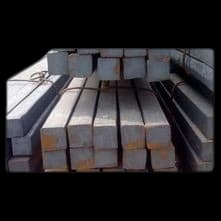
Unalloyed and Alloyed Steel Ingots and Semi-finished Products are often used as basic raw
materials in re-rolling plants for producing Bars, Rods, Structural Steel and many other grades
of Construction Steels. The quality of such Steel is important for determining its performance
and efficiency as an application in infrastructure, the automobile and engineering industry. Due
to their significance, certain quality parameters have been defined in accordance with BIS IS
14650:2023.
According to the Indian Standard, Steel Ingots and Semi-Finished Products should fulfill certain
parameters regarding chemical composition, mechanical properties, internal soundness, size
specifications and surface quality. Conformity to the BIS QCO for Steel Ingots and Semi-finished
Products and acquiring BIS Certification helps achieve Indian safety and quality standards. The
ISI mark on the steel Ingot shows that the product is reliable for use in re-rolling purposes.
What is IS 14650:2023 for Steel Ingots and Semi-Finished
Products?
IS 14650:2023 specifies requirements for unalloyed and alloyed steel ingots, billets, blooms,
and slabs intended for re-rolling purposes in downstream steel manufacturing industries. The
standard ensures that raw steel materials used for further processing meet defined quality and
performance expectations. As per BIS guidelines, steel ingots and semi-finished products are:
- Tested for chemical composition
- Evaluated for mechanical properties
- Checked for internal soundness and defects
- Verified for dimensional accuracy
- Assessed for surface quality and uniformity
Key Benefits of ISI Mark Certification for Steel Ingots
ISI Mark Certification under BIS Certification for Unalloyed and Alloyed Steel Ingot and
Semi-Finished Products for Re-Rolling Purposes (IS 14650:2023) is a mark of the fact that the
products have reached the required standards of Indian quality, safety, and performance. The
certification increases the credibility of the products and helps the manufacturers to win the trust
of their customers. Some benefits of the ISI Certification for Re-Rolling Purposes Unalloyed and
Alloyed Steel Ingot:
- Compliance with the quality standards set by IS 14650:2023.
- Conformity to BIS Certification Requirements.
- Increase the credibility and consistency of the product.
- Win customer trust through the ISI Mark.
- Help to enter the Indian market easily.
- Reduction of the chances of quality-related complaints and rejections.
- Builds up brand image.
- Quality control becomes easier.
- Increased acceptance in government/industrial purchasing programs.
- Conformity of Unalloyed Steel Ingots, Alloyed Steel Ingots and Semi-Finished Steel
Products for Re-rolling Purposes.
Eligibility Criteria for BIS Certification of Steel Ingots
BIS Certification under IS 14650:2023 applies to manufacturers involved in the production and
supply of steel ingots and semi-finished steel products for re-rolling applications.
Applicable To:
- Indian Manufacturers - Required to obtain BIS certification before supplying in the
domestic market if covered under QCO
- Foreign Manufacturers - Must obtain BIS certification before exporting to India through
the BIS scheme
- Importers/Brand Owners - Must ensure only BIS-certified steel products are sold or
distributed
- Distributors/Sellers - Should procure only certified raw material for compliance and
quality assurance
BIS Testing Requirements for Steel Ingots Under IS 14650:2023
Bureau of Indian Standards (BIS) has developed strict standards in IS 14650:2023 Unalloyed and Alloyed Steel Ingots and Semi Finished Products for Re Rolling Purposes to ensure the quality and standard of the products made up of steel, which will be suitable for the process of re-rolling. This guarantees that manufacturers follow the Indian standards and manufacture products that meet all necessary specifications in terms of mechanics, chemistry and dimensions.The BIS Testing Approvals for Unalloyed and Alloyed Steel Ingots and Semi-Finished Products for Re-Rolling Purposes are mentioned below:
| Test Group | What is Tested | Purpose |
| Chemical Composition Test | Carbon, Sulphur, Phosphorus, Manganese, Silicon, and alloying elements | Ensures steel grade conformity and compliance with specified product standard |
| Ladle/Check Analysis | Composition of molten steel or finished cast product | Ensures uniform chemical quality across heat/cast |
| Dimensional & Tolerance Test | Length, width, thickness, shape and tolerances | Ensures correct size, shape and suitability for re-rolling processes |
| Freedom from Defects Test | Surface cracks, porosity, shrinkage, internal flaws | Ensures defect-free material for safe downstream processing |
| Macro Examination Test | Internal structure and grain flow | Ensures soundness of steel and absence of harmful discontinuities |
| Sulphur Print Test | Sulphur distribution in steel | Ensures internal homogeneity and detects segregation |
| Inclusion Content Test | Non-metallic inclusions in steel | Ensures cleanliness and improves mechanical properties |
| Tensile Properties Test | Yield strength, tensile strength, elongation | Ensures mechanical strength and performance reliability |
| Bend Test | Resistance to bending deformation | Ensures ductility and suitability for rolling applications |
| Hardness Test | Surface hardness of steel | Ensures wear resistance and material strength consistency |
| Surface Quality Inspection | Surface finish and visible defects | Ensures usability without additional processing |
| Chemical Analysis (Instrumental/ Wet method) | Elements like C, Mn, P, S, Si, Cr, Ni, Mo, V etc. | Ensures compliance with specified alloy grade composition |
| Nitrogen Content Test | Nitrogen level in steel (where applicable) | Ensures control of embrittlement and mechanical stability |
Step-by-Step BIS Certification Process for Steel Ingots under IS 14650:2023

The BIS certification process ensures that Unalloyed and Alloyed Steel Ingots and Semi-Finished Products for Re-Rolling Purposes, as specified under IS 14650:2023, meet the required quality and performance standards. This certification process helps ensure product consistency, reliability and suitability for re-rolling and further steel manufacturing applications.The process includes the following steps:
- Online Registration :- Manufacturers register on the BIS Manak portal by submitting company, factory and product details. Foreign manufacturers must appoint an Authorized Indian Representative (AIR).
- Testing at BIS-Approved Laboratory :- Product samples are tested in BIS-approved laboratories for chemical composition, mechanical properties, dimensional accuracy and internal quality parameters as per IS requirements.
- Application Submission :- The application is submitted along with test reports, technical documents and factory details. Foreign manufacturers must also submit AIR-related documents.
- Factory Inspection :- Inspection officials from BIS visit the factory to assess the manufacturing process and quality control practices.
- Grant of BIS License :- Provided compliance with all conditions is achieved successfully, BIS grants the BIS license under Scheme I.
- Use of ISI Mark :- With the approval, the company is authorized to use the ISI mark on their products, accompanied by the appropriate CM/L number.
Documents Checklist for IS 17043 (Part 2): 2024 License
| Document Category | Documents Required |
| Basic Details | GST Certificate, Email ID & Contact Number, Factory & Office Address, Rent Agreement / Lease Deed (if applicable), Partnership Deed (if applicable for partnership firms) |
| Manufacturing Details | List of Machinery, Process Flow Chart, Factory Layout Plan |
| Raw Material Details | List of Raw Materials, Supplier Details, Raw Material Invoices, Raw Material Test Certificates |
| Testing & Quality Control | List of Testing Equipment, Calibration Certificates, QC/Lab In-charge Appointment Letter & Qualification |
| Production Details | Annual Installed Capacity, Last Year Production Value |
| Product & Packaging Details | Quantity per Package, Nature of Packing, Product Printing / Marking Details |
| Management Details | Top Management Details, BIS Communication Contact Person |
| Brand & Certification Documents | Trademark / Brand Certificate, Consent Letter from BIS Recognized Laboratory |
| Additional Documents | Weekly Off Details, Hygiene Document (if applicable), Relaxation Letter (if applicable), Any Other Relevant Document |
| Foreign Manufacturer Requirements | Agreement with AIR (Authorized Indian Representative), [Aadhaar Redacted], AIR Nomination Form, Required Undertakings, Scope of License |
The Foreign manufacturers are required to appoint an Authorized Indian Representative (AIR) in India. The person is the local point of contact for the Bureau of Indian Standards (BIS) and handles all compliance and regulatory requirements in India.
ISI Marking Rules for General Purpose Footwear in India
Once a manufacturer obtains BIS approval, the ISI Mark for general footwear must be clearly and permanently written on its packaging or on the product. Along with the ISI Mark, essential details such as the manufacturer’s identification and licence number (CM/L) must be marked. This ensures the product complies with all safety and performance standards. Additional details are mentioned below:
| Requirement | Details |
| ISI Mark | Indicates that the product is BIS certified and conforms to standards |
| Standard Number | IS 17043 (Part 2): 2024 |
| CML Number | Certification Marks Licence (CML) number issued by BIS |
| Manufacturer Details | Name of manufacturer or registered trademark |
| Batch / Date | Batch number, heat number, or manufacturing date for traceability |
Note: Marking is typically applied using durable stamping, tagging, or permanent printing to ensure clear identification during handling, storage, and transportation, as per BIS marking requirements.
BIS License Validity for General Purpose Shoes
| Particulars | Details |
| Validity | Typically 1 to 2 years, depending on BIS approval conditions |
| Renewal | Must be renewed before expiry by submitting the application along with the prescribed fee and updated documents |
| Surveillance | Includes periodic factory inspections and market sample testing conducted by BIS |
| Compliance | Continuous following to standard and applicable Quality Control Orders (QCOs) is mandatory |
| Risk | Non-compliance or failed sample testing may lead to suspension or cancellation of the BIS license |
BIS Approval Fee Structure for IS 17043:2024 General Purpose Shoes
The cost of a BIS license for General Purpose Footwear includes charges for application, inspection, license, testing, and marking. These fees are paid to BIS as per Scheme I guidelines.
| Charge Type | Indian Manufacturers | Foreign Manufacturers |
| Application Fee | INR 1,000 | USD 15 |
| Audit Charges | INR 7,000 | USD 3,200 - 5,900 |
| License Fee | INR 1,000 | USD 15 |
| Marking Fee | As applicable | As applicable |
| Testing Charges | As applicable | As applicable |
| EVTL India Consultancy Fee | As per actual | As per actual |
Note:
- Application fee for foreign manufacturers is payable via SWIFT (SAARC countries may pay in INR with applicable GST).
- Audit charges for foreign manufacturers vary based on country/location.
- The marking fee is determined based on the product category and production volume (MSME benefits may apply).
- Testing charges are to be paid directly to BIS-recognised labs.
- Consultancy fees may vary depending on product type and manufacturing location.
Penalties for Non-Compliance with IS 17043 (Part 2):2024 for Shoes for General Purpose
The general purpose shoes shall conform to IS 17043 (Part 2):2024 standard and get BIS certification prior to its manufacture, import and sale in India. Non-compliance to the BIS guidelines and relevant QCO regulations shall attract serious actions as provided under the BIS Act, 2016.
- Prohibition on sale or import of such shoes
- Seizure or disposal of non-conforming products
- Withholding or cancellation of BIS license or ISI marking
- Penalty provisions of BIS Act, 2016 may be enforced
- Regulatory actions may be initiated for breach of BIS regulations
Conclusion
General-purpose shoes are widely used because they offer comfort and durability. The IS 17043 (Part 2): 2024, guarantees that general purpose shoes satisfy all the required quality and safety parameters. It will help to avoid problems like sole bonding, lack of strength in materials, and early wear and tear of the products. It also ensures uniform quality across different manufacturers in the footwear industry.
BIS certification is required for manufacturers to sell shoes for general purposes in India. This also increases the product reliability, consumer confidence and market acceptance. Manufacturers can take expert help to ease the certification process. EVTL India provides complete assistance, including documentation, application filing and testing coordination. This makes the BIS approval process for the manufacturers smooth and hassle-free.