
SIMS 2.0 & BIS Certification: Complete 2026 Guide for Steel Importers in India
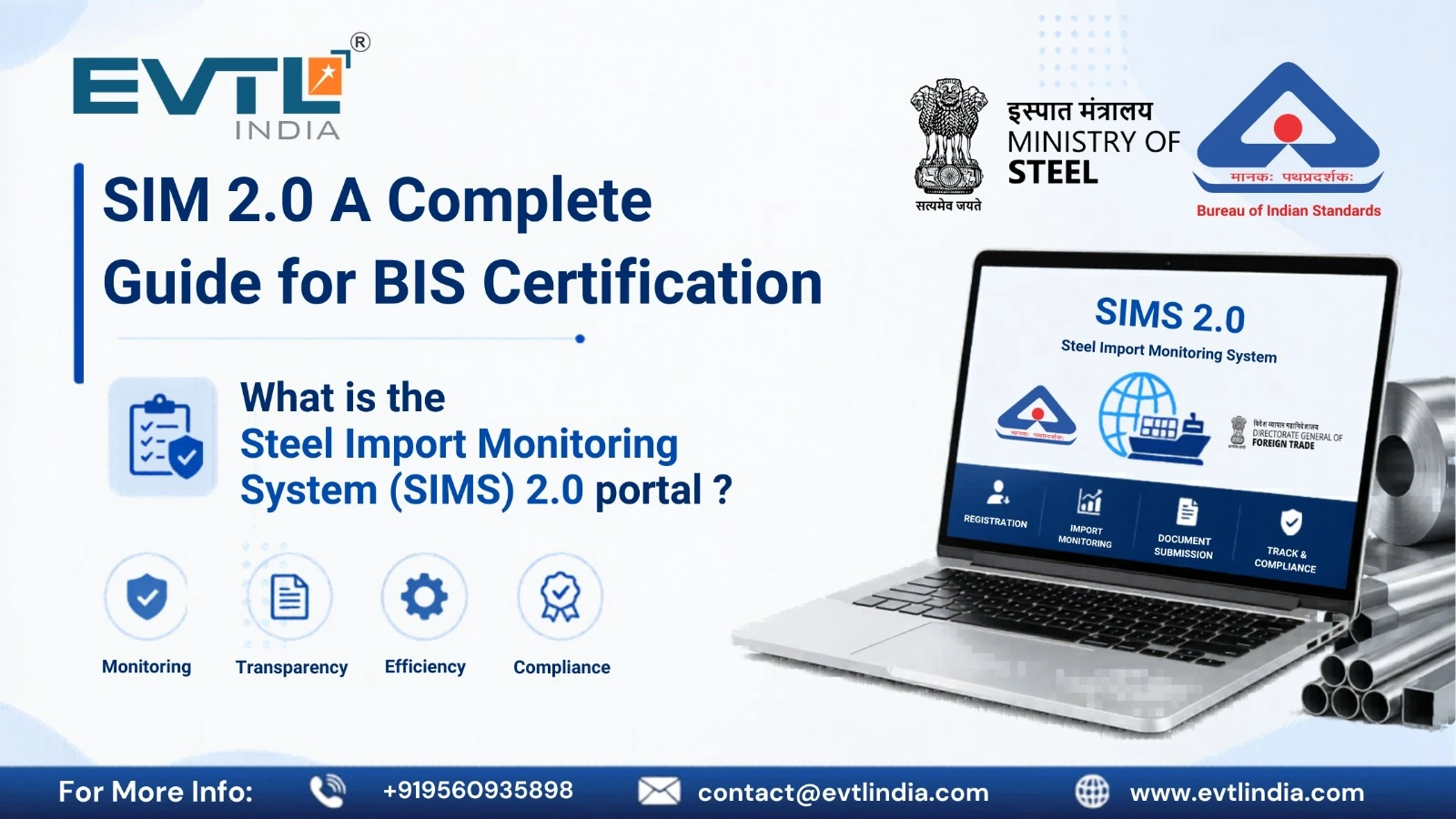
India’s steel import system has become more regulated and digital with the introduction of SIMS 2.0 by the Government of India. Importers are now required to complete mandatory pre-import registration before their shipments arrive, ensuring better tracking and compliance.
SIMS 2.0, developed by the Directorate General of Foreign Trade (DGFT), collects advanced shipment details such as product specifications, quantity, and country of origin. Along with this, BIS certification under Quality Control Orders (QCOs) is mandatory for many steel products to ensure quality and safety.
Together, SIMS 2.0 and BIS compliance create a transparent system that helps monitor imports, prevent substandard materials, and support smooth trade in India.
What is SIMS 2.0?
The Steel Import Monitoring System (SIMS) 2.0 is an online registration and monitoring platform introduced by the Directorate General of Foreign Trade (DGFT) under the Ministry of Commerce & Industry. It was officially launched on 25 July 2024, replacing the earlier SIMS 1.0 system.
SIMS 2.0 is designed to collect advanced information about steel imports, maintain a real-time database, and help the government monitor import trends and make effective policy decisions. It improves transparency and ensures better regulation of steel imports in India.
It is important to note that SIMS 2.0 is not an approval or licensing system. Instead, it is a mandatory pre-import registration requirement, meaning importers must register their shipment details before the goods arrive in India.
Is SIMS 2.0 Mandatory?
Yes, SIMS 2.0 is mandatory for most steel imports into India. All steel products falling under Chapters 72, 73, and 86 of the ITC (HS) classification are required to be registered under the SIMS portal before import.
The import policy for these products is categorized as “Free, but subject to compulsory registration under SIMS”, which means no separate license is needed, but prior registration is Mandatory.
Without SIMS registration, importers may face delays in customs clearance, and in some cases, the shipment may not be cleared until proper compliance is completed.
Key Update (2025–2026 Regulatory Changes)
Recent updates to SIMS 2.0, effective from 5 August 2025, have made the system more strict and compliance-focused.
Key important changes are:
- Mandatory Advance Registration – Importers must register their steel shipments before arrival in India.
- Country-wise Timeline System – Different minimum time limits are defined based on the country of export.
- Accurate Data Submission – Correct HS Code, product details, quantity, and value must be declared without errors.
- Stronger Monitoring System – Government can now track imports in real time for better control and policy decisions.
- Higher Compliance Requirement – Any mismatch or late registration can lead to delays or issues in customs clearance.
What Information is Required in SIMS 2.0?
Under SIMS 2.0, importers are required to submit complete and accurate shipment details before import.
The key information includes:
- Product Description & HS Code – Correct classification of the steel product
- Quantity and Value – Total weight and declared import value
- Country of Origin – Where the product is manufactured
- Expected Date of Arrival – Planned arrival of shipment in India
- Manufacturer Details – Name and address of the foreign manufacturer
This information helps the government maintain an updated database of steel imports, enabling better monitoring, transparency, and policy planning.
SIMS 2.0 Registration Process (Step-by-Step)
The SIMS 2.0 registration process is simple but requires accurate details.
Follow these steps:
Step 1: Login – Access the DGFT/SIMS portal using your IEC (Import Export Code) with OTP or DSC authentication.
Step 2: Enter Product Details – Fill in the correct 8-digit HS Code, steel category, and technical specifications of the product.
Step 3: Add Shipment Details – Provide country of origin, quantity, value, and expected date of arrival.
Step 4: Upload Documents – Submit required documents such as invoice or purchase order and Mill Test Certificate (MTC).
Step 5: Pay Registration Fee – Pay the applicable fee based on CIF value (minimum around ₹500).
Step 6: Generate Registration Number – After submission, a SIMS Registration Number (URN) is generated, which is mandatory for customs clearance.
Advance Registration Timeline
SIMS 2.0 requires pre-arrival registration, meaning you must register your shipment before it reaches India.
Key rules to follow:
- Registration Window – You can apply up to 60 days before shipment arrival.
- Minimum Timeline (Country-wise):
- Nepal & Bhutan: At least 2 days before arrival
- UAE / Oman: At least 4 days before arrival
- ASEAN countries: At least 5 days before arrival
- Other countries: Generally 3 days before arrival
- Best Practice – Always register 10–15 days in advance to avoid delays, errors, or last-minute issues.
Exemptions Under HS Code
Certain products classified under HS Code 7204 (steel scrap) are exempt from the revised SIMS 2.0 timeline requirements. As a result, these products may not be subject to the same strict advance registration timelines as other steel imports.
However, this exemption applies only if the HS Code classification is accurate and valid.
Always verify the HS Code carefully to ensure proper compliance and avoid delays or penalties.
Role of BIS Certification in Steel Imports
SIMS 2.0 registration alone is not sufficient for importing steel into India. Many steel products are also required to have BIS certification under Quality Control Orders (QCOs) to ensure compliance with Indian standards.
Why BIS Certification is Mandatory
- Ensures product quality and safety
- Prevents import of substandard materials
- Mandatory for legal sale and use in India
If BIS certification is required but not available, the shipment may be held, rejected, or not cleared at customs.
Process for Compliance
To successfully import steel into India in 2026, importers should follow these steps:
- Application to BIS – Submit application with product and manufacturer details
- Factory Inspection – BIS officials inspect the manufacturing facility
- Product Testing – Samples are tested in BIS-approved laboratories
- Compliance Verification – Documents and quality systems are evaluated
- License Issuance – BIS grants certification if all requirements are met
Documents Required for SIMS + BIS
To ensure smooth registration and compliance, importers must keep the following documents ready:
- IEC Certificate – Import Export Code of the importer
- Invoice / Purchase Order – Details of the transaction
- Mill Test Certificate (MTC) – Confirms product quality and specifications
- Product Specification Sheet – Technical details of the steel product
- BIS License Certificate (if applicable) – Mandatory for products covered under QCO
Make sure all documents are accurate and consistent to avoid delays or rejection during registration or customs clearance.
Common Mistakes to Avoid
Importers often face delays and penalties due to small but critical errors. Avoid these common mistakes:
- Wrong HS Code → Incorrect classification can lead to penalties, shipment rejection, or compliance issues. Always verify the correct HS Code based on product specifications.
- Late Registration → Failing to register on SIMS 2.0 within the required timeline may result in delays at customs and additional costs.
- Mismatch in Data → Any difference between SIMS details and actual shipment (quantity, value, or product description) can trigger customs verification or hold.
- Ignoring BIS Requirements → If BIS certification is mandatory and not available, the shipment may be blocked or rejected at the port.
Penalties for Non-Compliance
Non-compliance with SIMS 2.0 and BIS regulations can have serious business impacts, such as:
- Shipment Hold at Port – Goods may be stopped until compliance is completed
- Demurrage & Storage Charges – Delays can increase overall import costs
- Re-export or Rejection – Non-compliant goods may need to be sent back
- Financial Penalties – Authorities may impose fines for incorrect or missing information
Benefits of SIMS 2.0
SIMS 2.0 brings several advantages for both importers and the government:
- Improved Transparency – All import data is recorded and monitored digitally
- Faster Customs Clearance – Proper registration reduces delays during clearance
- Better Planning – Importers can plan shipments more efficiently with defined timelines
- Real-Time Monitoring – Government can track import trends and prevent irregularities
- Support to Domestic Industry – Helps control unfair imports and promotes local manufacturing
Future of Steel Imports in India
The steel import system in India is evolving toward a more advanced and sustainable framework. Key future trends include:
- Complete Digitalization – End-to-end online compliance systems with minimal manual intervention
- Real-Time Tracking Systems – Enhanced monitoring of shipments through integrated platforms
- Stronger BIS Enforcement – More products likely to come under mandatory certification
- Sustainability Focus – Introduction of green steel norms and carbon footprint tracking
How EVTL India Can Help
EVTL India offers complete support to steel importers in managing SIMS 2.0 and BIS compliance with ease. Our team of experts ensures that all regulatory requirements are handled accurately and on time, reducing the risk of delays or penalties.
Our Services
- BIS Certification (FMCS) – Assistance for foreign manufacturers to obtain BIS approval
- SIMS 2.0 Registration – End-to-end support for correct and timely registration
- Documentation & Compliance – Preparation and verification of all required documents
- End-to-End Import Assistance – Guidance from application to final customs clearance
With EVTL India, you get a smooth, hassle-free, and fully compliant import process, allowing you to focus on growing your business without regulatory stress.
Conclusion
SIMS 2.0 has transformed steel imports in India into a more structured, transparent, and compliance-driven system. Importers are now required to focus on timely registration, accurate HS classification, proper documentation, and BIS certification wherever applicable.
Failure to comply with these requirements can lead to shipment delays, penalties, and increased costs. On the other hand, businesses that follow the correct process benefit from smoother customs clearance, reduced risks, and better operational efficiency.
With the right guidance, this process becomes much easier. EVTL India supports importers with SIMS 2.0 registration, BIS certification (FMCS), and complete compliance assistance, ensuring a smooth and hassle-free import experience.
Disclaimer
This content is for informational purposes only. Refer to official DGFT notifications for latest updates.