
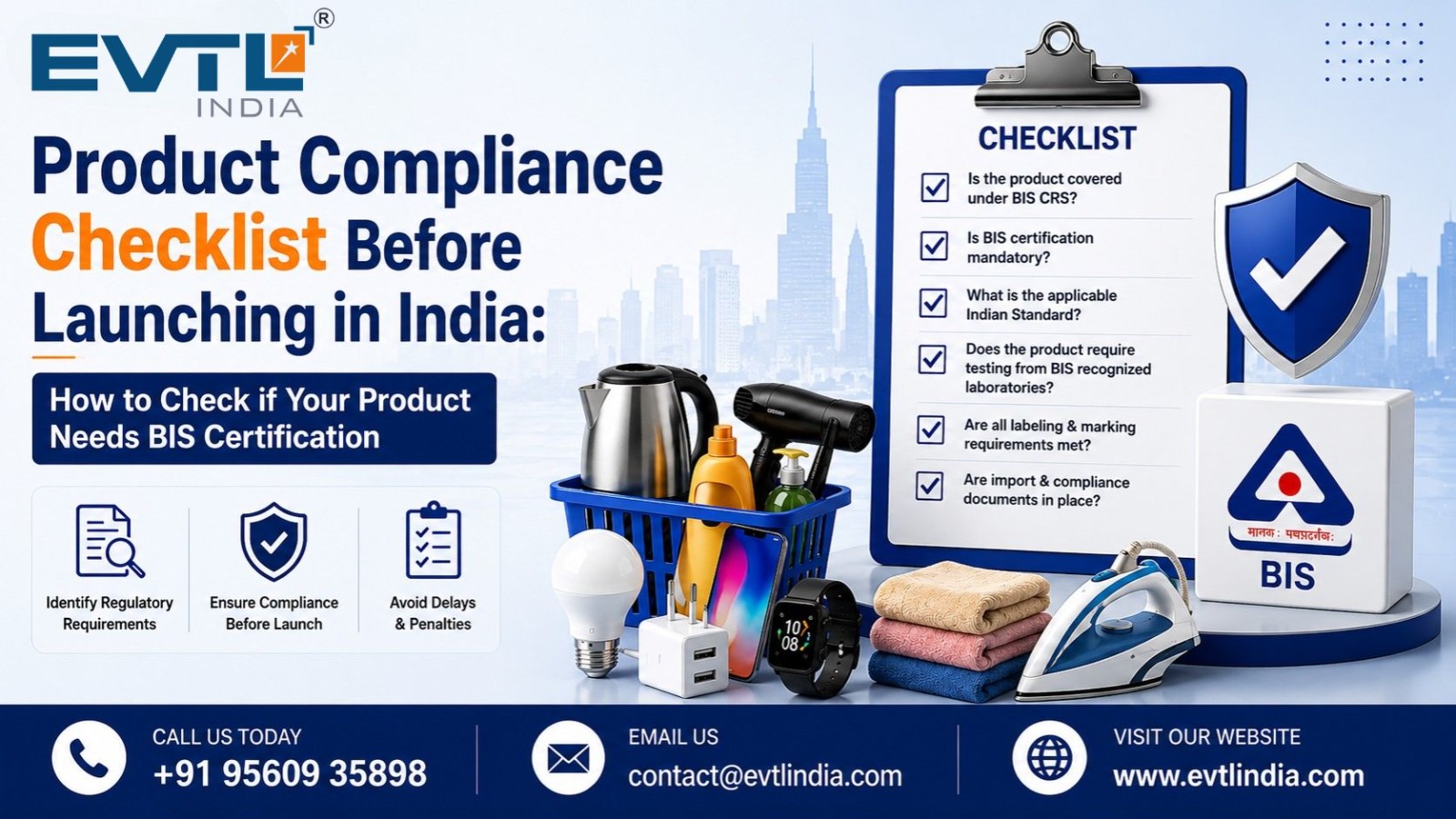
Product Compliance Checklist Before Launching in India: How to Check if Your Product Needs BIS Certification
Many manufacturers and importers invest significant time and resources in product development only to discover that their products require mandatory BIS approval before entering the Indian market. As a result, shipments may be delayed at customs, products may fail compliance checks, certification applications may be rejected, and businesses may face costly penalties.
Understanding Product Compliance in India is therefore essential for manufacturers, importers, startups, e-commerce sellers, and foreign companies. A well-planned compliance strategy helps businesses identify applicable certification requirements, avoid regulatory challenges, reduce approval timelines, and achieve a successful product launch.
In this comprehensive guide, we will explain the complete Product Compliance Checklist Before Launching in India, including BIS Certification requirements, BIS CRS Registration, FMCS Certification, Scheme X Compliance, Quality Control Orders, product testing, factory inspection readiness, documentation requirements, and labeling obligations.
What is Product Compliance in India?
Product compliance refers to the process of ensuring that a product meets all applicable Indian safety, quality, performance, testing, labeling, and certification requirements before it is manufactured, imported, distributed, or sold.
The Government of India has introduced mandatory regulations to improve product quality, consumer safety, and industry standards. These regulations apply to thousands of products across sectors such as electronics, electrical equipment, chemicals, steel, footwear, toys, machinery, renewable energy products, and consumer goods.
Compliance requirements may include - BIS Certification, BIS CRS Registration, FMCS Certification, Scheme X Certification, Quality Control Order (QCO) Compliance, Product Testing, Factory Inspection, Product Labeling Requirements, Import Compliance Requirements, WPC Approval, TEC Approval, BEE Registration.
A product launch should only proceed after all applicable compliance requirements have been identified and fulfilled.
Why Product Compliance is Important Before Launching a Product
Many businesses view compliance as a regulatory formality that can be addressed after manufacturing or import planning. However, in today's regulatory environment, product compliance plays a crucial role in determining whether a product can be legally sold in the Indian market. Compliance directly affects product launch timelines, customs clearance, certification approvals, brand reputation, and overall business growth.
As the Government of India continues to introduce new Quality Control Orders (QCOs) and expand mandatory certification requirements, manufacturers and importers must ensure that their products comply with all applicable regulations before entering the market. Failing to identify these requirements at an early stage can lead to costly delays, shipment issues, certification rejection, and unexpected compliance challenges.
Failure to comply with mandatory regulations such as BIS Certification, BIS CRS Registration, FMCS Certification, Scheme X Certification, and applicable Quality Control Orders (QCOs) can result in: Customs clearance delays, Shipment detention, Product seizure, BIS application rejection, Regulatory penalties, Product recalls, Market restrictions, Loss of customer trust, Additional testing and compliance costs, Delayed product launches
For manufacturers, importers, startups, e-commerce sellers, and foreign companies, compliance planning should begin during the product development stage rather than after production is complete. A proactive compliance strategy helps businesses avoid regulatory risks, reduce certification timelines, and ensure a smooth product launch in India.
At EVTL India, we help businesses identify applicable compliance requirements before product launch, reducing the risk of certification delays and costly compliance mistakes.
Step 1: Check Whether Your Product Requires BIS Certification
Before launching a product in India, businesses must determine whether it falls under any mandatory compliance requirements. Many products require BIS Certification, BIS CRS Registration, FMCS Certification, or Scheme X Certification before they can be legally sold or imported.
Ignoring certification requirements can lead to shipment delays, retesting costs, customs issues, and postponed product launches.
Common Certification Schemes
Expert Tip - Always verify compliance requirements before production or import planning. Early assessment helps avoid costly mistakes and certification delays.
Step 2: Verify Applicable Quality Control Orders (QCOs)
A Quality Control Order (QCO) makes compliance with a specific Indian Standard mandatory. Since new QCOs are introduced regularly, businesses should verify whether their product falls under any applicable order before entering the market.
A timely QCO review helps businesses avoid customs delays, compliance issues, and market-entry disruptions.
Step 3: Identify the Correct Indian Standard (IS Number)
Every regulated product must comply with a specific Indian Standard (IS Number). The selected standard determines product specifications, testing requirements, safety criteria, and labeling obligations.
Verify Before Proceeding
- Applicable IS Number
- Product Category
- Testing Requirements
- Safety Requirements
- Labeling Requirements
Selecting the correct standard from the beginning helps reduce certification risks and approval delays.
Step 4: Conduct Product Testing
Product testing verifies whether a product meets the requirements of the applicable Indian Standard. Successful testing is essential for obtaining certification approval.
Proper testing preparation reduces retesting costs and improves approval timelines.
Step 5: Documentation Checklist for BIS Certification
Accurate documentation is essential for a smooth certification process. Incomplete or incorrect documents can result in regulatory queries and approval delays.
Documentation Checklist for BIS Certification
How EVTL India Helps
EVTL India provides end-to-end support for BIS Certification, BIS CRS Registration, FMCS Certification, and Scheme X Certification, helping manufacturers and importers achieve faster approvals with accurate documentation and compliance guidance.
Step 6: BIS Final Factory Inspection Checklist
For products requiring factory inspection, BIS evaluates whether the manufacturer can consistently produce products that comply with applicable standards. Proper preparation helps avoid inspection observations and certification delays.
BIS Factory Inspection Checklist
A factory that is inspection-ready generally experiences a smoother certification process and faster approval timelines.
Step 7: Product Labeling and Marking Compliance
Product labeling is often overlooked during the compliance process. Even after successful testing and certification, incorrect labeling can create regulatory issues and delay market entry.
Proper labeling ensures compliance with applicable standards and helps avoid regulatory objections.
Step 8: Compliance Checklist for Importers
Importers should complete compliance verification before products are shipped to India. Waiting until goods arrive at customs can result in delays and additional costs.
A proactive compliance strategy helps importers achieve smoother customs clearance and faster market entry.
Step 9: Compliance Checklist for Foreign Manufacturers
Foreign manufacturers exporting products to India must meet additional compliance requirements before entering the market.
How EVTL India Can Help
EVTL India assists manufacturers, importers, and foreign companies with BIS Certification, BIS CRS Registration, FMCS Certification, Scheme X Certification, QCO Compliance, Documentation, Product Testing, and Factory Inspection Preparation, helping businesses launch compliant products in the Indian market.
Compliance Requirements Beyond BIS Certification
Many businesses assume that BIS Certification is the only approval required for selling products in India. However, depending on the product category, additional regulatory approvals may also apply. Identifying these requirements before product launch helps avoid delays, penalties, and market-entry challenges.
Common Compliance Requirements
Understanding all applicable approvals at the planning stage helps businesses achieve smoother market entry and regulatory compliance.
Common Reasons BIS Applications Get Rejected or Delayed
Most certification delays occur due to avoidable compliance mistakes. Proper planning and documentation can significantly improve approval timelines.
Common Causes of Delays
- Incorrect Indian Standard (IS) selection
- Incomplete documentation
- Failed product testing
- Incorrect product labeling
- Poor factory preparedness
Businesses that address these issues early generally experience faster certification approvals and fewer regulatory challenges.
How EVTL India Helps Manufacturers, Importers, and Foreign Companies
Navigating product compliance requirements in India can be complex, especially with changing regulations and multiple certification schemes. EVTL India provides end-to-end support to help businesses obtain approvals efficiently and launch products with confidence.
Our Key Services
- BIS Certification Assistance
- BIS CRS Registration Support
- FMCS Certification Consulting
- Scheme X Certification Guidance
- Product Compliance Assessment
- Documentation & Testing Support
Whether you are a manufacturer, importer, startup, or foreign company, EVTL India helps simplify the certification process and reduce compliance risks.
Why Businesses Choose EVTL India
EVTL India supports businesses throughout the compliance journey, from identifying applicable certifications to obtaining final approvals. Our team helps clients avoid common mistakes, reduce certification timelines, and stay compliant with the latest regulatory requirements.
With expertise in BIS Certification, BIS CRS Registration, FMCS Certification, Scheme X Certification, and Product Compliance in India, EVTL India enables businesses to focus on growth while we manage the compliance process.
Final Product Launch Compliance Checklist
Before launching your product in India, ensure the following requirements have been completed -
Conclusion
Launching a product in India is not just about manufacturing and marketing—it is also about ensuring full regulatory compliance before the product reaches the market. Businesses must evaluate applicable requirements such as BIS Certification, BIS CRS Registration, FMCS Certification, Scheme X Certification, Quality Control Orders (QCOs), product testing, factory inspections, and labeling compliance to avoid delays, penalties, and market-entry challenges.
A well-planned compliance strategy helps manufacturers, importers, startups, and foreign companies reduce risks, accelerate approvals, and launch products successfully in the Indian market.
As a trusted BIS Certification Consultant, EVTL India provides end-to-end support for BIS Certification, BIS CRS Registration, FMCS Certification, Scheme X Certification, Product Compliance Assessment, Documentation Support, Testing Coordination, and Factory Inspection Readiness. Our team works closely with manufacturers and importers to simplify complex compliance requirements and ensure a smooth certification journey.
Whether you are launching a new product, importing goods into India, or expanding your business into regulated markets, EVTL India helps you achieve compliance with confidence and bring your products to market faster.