
PESO License for High Speed Diesel (HSD)
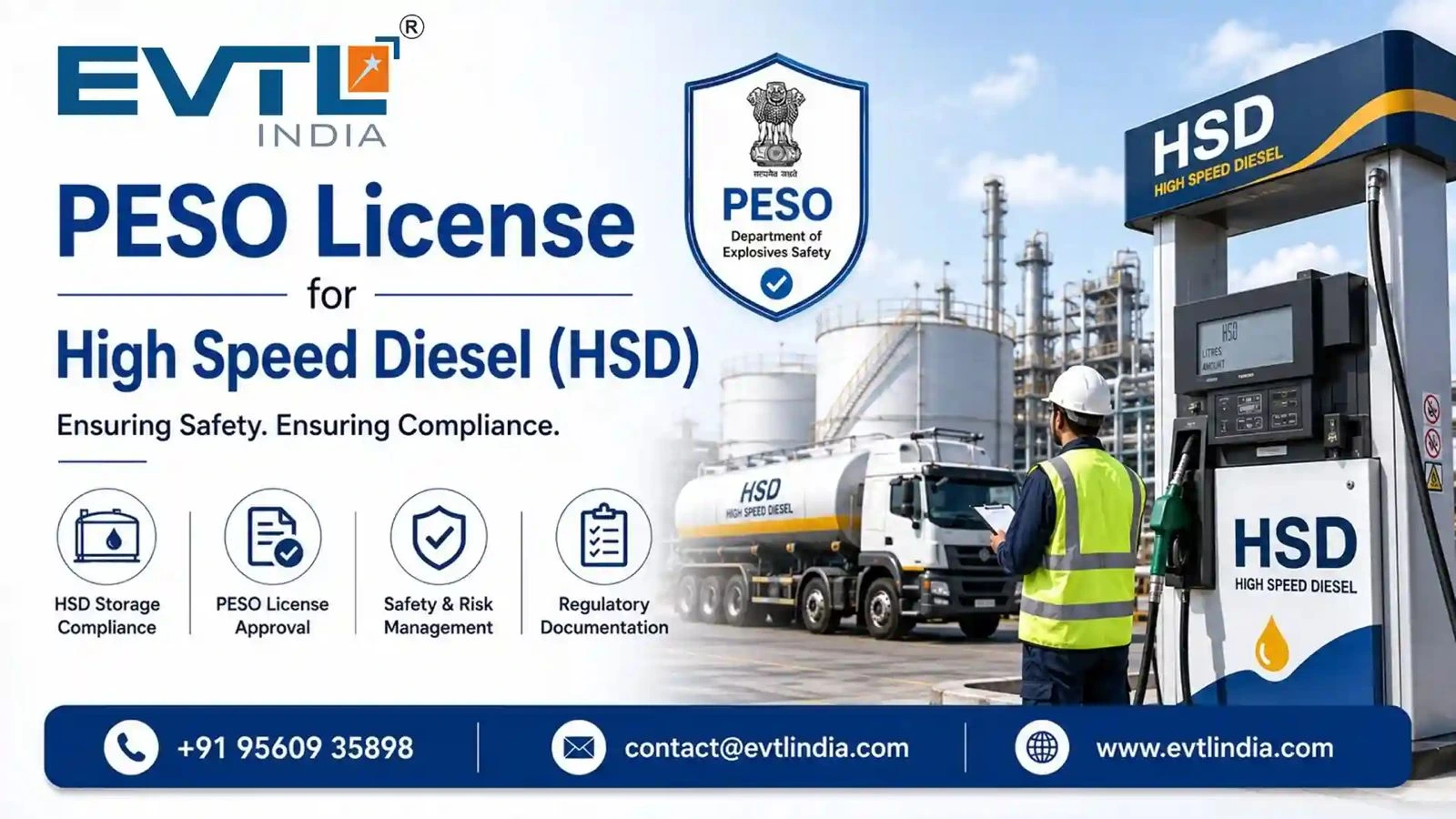
High Speed Diesel (HSD) is one of the most widely used fuels in India and plays a crucial role across various sectors, including transportation, power generation, manufacturing, construction, mining, and logistics. It is commonly used in commercial vehicles, diesel generators, heavy machinery, and industrial equipment. Since diesel is a petroleum-based product and falls under the category of hazardous substances, its storage, handling, transportation, and distribution are regulated to ensure safety and environmental protection. A PESO License for High Speed Diesel is a mandatory approval issued by the Petroleum and Explosives Safety Organization (PESO) for businesses involved in the storage, sale, transportation, or dispensing of HSD. PESO functions under the Department for Promotion of Industry and Internal Trade (DPIIT), Ministry of Commerce and Industry, Government of India, and is responsible for enforcing safety regulations related to petroleum products, explosives, and other hazardous materials.
Organizations dealing with High Speed Diesel beyond prescribed limits must obtain the necessary PESO approval before commencing operations. Whether it is a fuel station, industrial diesel storage facility, road tanker operation, bulk storage installation, or diesel dispensing unit, compliance with PESO regulations is essential to ensure safe operations and meet legal requirements
What is a PESO License for High Speed Diesel (HSD)?
A PESO License for High Speed Diesel (HSD) is an official approval issued to ensure the safe storage, transportation, dispensing, and handling of diesel in compliance with the Petroleum Rules, 2002. Since High Speed Diesel is a petroleum product, its storage and use are regulated to prevent accidents, fire hazards, and environmental risks.
The license confirms that the facility, storage tanks, dispensing systems, firefighting arrangements, electrical installations, safety distances, and overall infrastructure meet the safety standards prescribed by the Petroleum and Explosives Safety Organisation (PESO). It is generally mandatory for businesses involved in bulk storage, commercial distribution, transportation, or large-scale industrial use of High Speed Diesel.
Key Highlights of PESO License for HSD
- Applicable to businesses involved in the storage, transportation, distribution, or handling of High Speed Diesel.
- Ensures compliance with petroleum safety regulations and operational safety requirements.
- Required for storage tanks, road tankers, fuel dispensing units, industrial diesel installations, and fuel stations, depending on the nature of operations.
- Involves submission of technical drawings, safety plans, equipment specifications, and other supporting documents.
- PESO authorities may conduct site inspections and verify safety arrangements before granting approval.
- Helps organizations maintain safe operations, minimize risks, and comply with statutory requirements.
- Reduces the likelihood of legal penalties, operational disruptions, and safety-related incidents.
Obtaining a PESO License demonstrates that the facility is designed and operated in accordance with prescribed petroleum safety standards, ensuring the secure handling of High Speed Diesel throughout its lifecycle.
Why is a PESO License for High Speed Diesel Required?
Although High Speed Diesel (HSD) is less flammable than petrol, it is still classified as a petroleum product and must be handled with proper safety measures. Improper storage, fuel leakage, inadequate ventilation, defective electrical installations, unauthorized storage tanks, poor site planning, or the absence of fire protection systems can result in serious safety hazards, environmental damage, and operational risks.
A PESO License for High Speed Diesel is required to ensure that diesel storage, transportation, and dispensing facilities comply with the safety requirements prescribed under the Petroleum Rules, 2002. The license verifies that the infrastructure, equipment, and operational practices are designed to safely handle HSD while protecting people, property, and the environment. It also provides legal authorization for businesses involved in diesel-related activities.
Key Benefits of a PESO License for HSD
- Provides legal approval for the storage, transportation, and handling of High Speed Diesel.
- Helps minimize the risk of fire, fuel leakage, and other safety incidents.
- Ensures that storage tanks, dispensing systems, and site layouts comply with prescribed safety standards.
- Reduces the chances of penalties, regulatory actions, and business disruptions.
- Enhances credibility with government authorities, customers, insurers, and business partners.
- Supports safe and uninterrupted operations for industries, fuel stations, logistics companies, infrastructure projects, and other diesel-dependent businesses.
Obtaining a PESO License demonstrates a company's commitment to safety, regulatory compliance, and responsible petroleum handling practices, helping ensure smooth and legally compliant business operations.
Importance and Benefits of Obtaining a PESO License for High Speed Diesel (HSD)
Note: A PESO License for High Speed Diesel is not only a legal requirement for many businesses but also an essential tool for maintaining safety, operational efficiency, and long-term regulatory compliance.
Process for Obtaining a PESO License for High Speed Diesel (HSD)
The procedure for obtaining a PESO License for High Speed Diesel depends on factors such as the nature of the activity, storage capacity, site location, and equipment involved. However, most applications follow a systematic approval process to ensure compliance with petroleum safety regulations.
- Assessment of Business Activity: The first step involves evaluating the intended use of High Speed Diesel, such as storage, transportation, dispensing, distribution, or industrial consumption. This helps determine the applicable licensing requirements.
- Collection of Required Documents: Relevant documents are gathered, including business registration records, land or lease documents, site details, tank specifications, safety certificates, and technical information related to the proposed installation.
- Preparation of Layout Plans: Detailed site drawings are prepared showing storage tanks, safety clearances, boundary lines, access routes, dispensing facilities, firefighting arrangements, and surrounding structures as per regulatory requirements.
- Verification of Tank and Equipment Standards: Storage tanks, pipelines, dispensing units, electrical installations, valves, and other safety-related equipment are reviewed to ensure they comply with prescribed technical and safety standards.
- Application Compilation: The appropriate application form is selected and prepared along with all supporting documents. The application must align with the relevant provisions of the Petroleum Rules, 2002.
- Submission of Application: The completed application is filed through the designated online portal along with technical drawings, declarations, and supporting documentation.
- Scrutiny by PESO Authorities: PESO officials examine the submitted documents, drawings, and technical details. Additional information or corrections may be requested if any deficiencies are identified.
- Site Inspection and Verification: Depending on the nature of the application, PESO may conduct an inspection to verify that the actual installation, equipment, and safety measures match the submitted plans and regulatory requirements.
- Rectification of Non-Compliance (If Required): If any observations or deficiencies are noted during document review or inspection, the applicant must implement corrective measures and submit the necessary compliance reports.
- Grant of License: Once all requirements are satisfactorily fulfilled and compliance is confirmed, PESO issues the license for the storage, handling, transportation, or dispensing of High Speed Diesel.
Common Documents Required
The documentation requirements may vary depending on the type of license, nature of the project, and storage or operational activities involved. However, the following documents are generally required for most applications -
- Business registration and establishment documents
- Identity and address proof of the applicant or authorized signatory
- Ownership documents, lease deed, or rental agreement for the project site
- Approved site layout and location plan
- Details and specifications of storage tanks
- Tank manufacturing or fabrication certificates (where applicable)
- Information related to safety distances and clearances
- Firefighting and emergency safety arrangement details
- Electrical installation and safety compliance certificates
- No Objection Certificate (NOC) from local authorities, if required
- Information regarding petroleum storage capacity
- Signed declarations, undertakings, and compliance statements
- Copies of previous approvals or licenses, if available
- Technical drawings, equipment specifications, and installation details
Challenges of Obtaining a PESO License for HSD Without Professional Assistance
Securing a PESO License for High Speed Diesel (HSD) can be a complex process for businesses that are unfamiliar with petroleum regulations and safety requirements. The approval procedure involves more than just submitting an application; it requires compliance with various technical, safety, and legal standards. Even minor errors in documentation, site planning, or equipment specifications can result in delays, objections, or rejection of the application.
Common Challenges Include:
- Choosing the wrong license category may lead to application rejection or the need for re-submission.
- Errors in site layout plans or technical drawings can result in regulatory objections.
- Incomplete or incorrect documentation may significantly delay the approval process.
- Improper design of storage tanks or facility layouts may fail to meet inspection requirements.
- Limited understanding of petroleum safety regulations and technical terminology can create compliance issues.
- Obtaining required No Objection Certificates (NOCs) and fulfilling local authority requirements can be challenging.
- Delayed responses to clarification requests from the licensing authority can extend approval timelines.
- Non-compliant electrical installations, fire protection systems, or safety measures may lead to inspection failures.
- Failure to monitor renewal deadlines can affect the validity of the license and business continuity.
- Non-compliance with applicable regulations may result in penalties, operational restrictions, or legal complications.
Professional guidance helps businesses navigate these requirements efficiently, reduce compliance risks, and improve the likelihood of obtaining timely approval.
Conclusion
A PESO License for High Speed Diesel (HSD) is an essential regulatory approval for businesses involved in the storage, transportation, dispensing, or handling of diesel. Since High Speed Diesel is a petroleum product, strict safety measures and compliance requirements must be followed to protect people, property, and the environment from potential hazards. Obtaining the license ensures that storage facilities, tanks, dispensing systems, electrical installations, and firefighting arrangements meet the safety standards prescribed under the Petroleum Rules, 2002. It not only provides legal authorization for diesel-related operations but also helps businesses reduce operational risks, avoid regulatory penalties, and maintain uninterrupted operations. The licensing process involves technical documentation, site planning, safety assessments, and regulatory verification, making accuracy and compliance critical at every stage. Businesses that proactively follow PESO requirements can improve workplace safety, strengthen their reputation, support insurance compliance, and create a strong foundation for future expansion.
With professional guidance from EVTL India, businesses can simplify the licensing process, ensure compliance with applicable petroleum safety regulations, and reduce the chances of delays or rejections during approval. Expert support helps organizations efficiently manage documentation, technical requirements, and regulatory coordination. Ultimately, a PESO License for High Speed Diesel is more than a legal requirement—it is a commitment to safe petroleum handling, responsible operations, and long-term business sustainability. Organizations that obtain and maintain the required approval can operate with greater confidence while meeting all applicable safety and regulatory obligations.