
IS/IEC 62368-1:2023 Safety Standard for Audio, Video & ICT Equipment
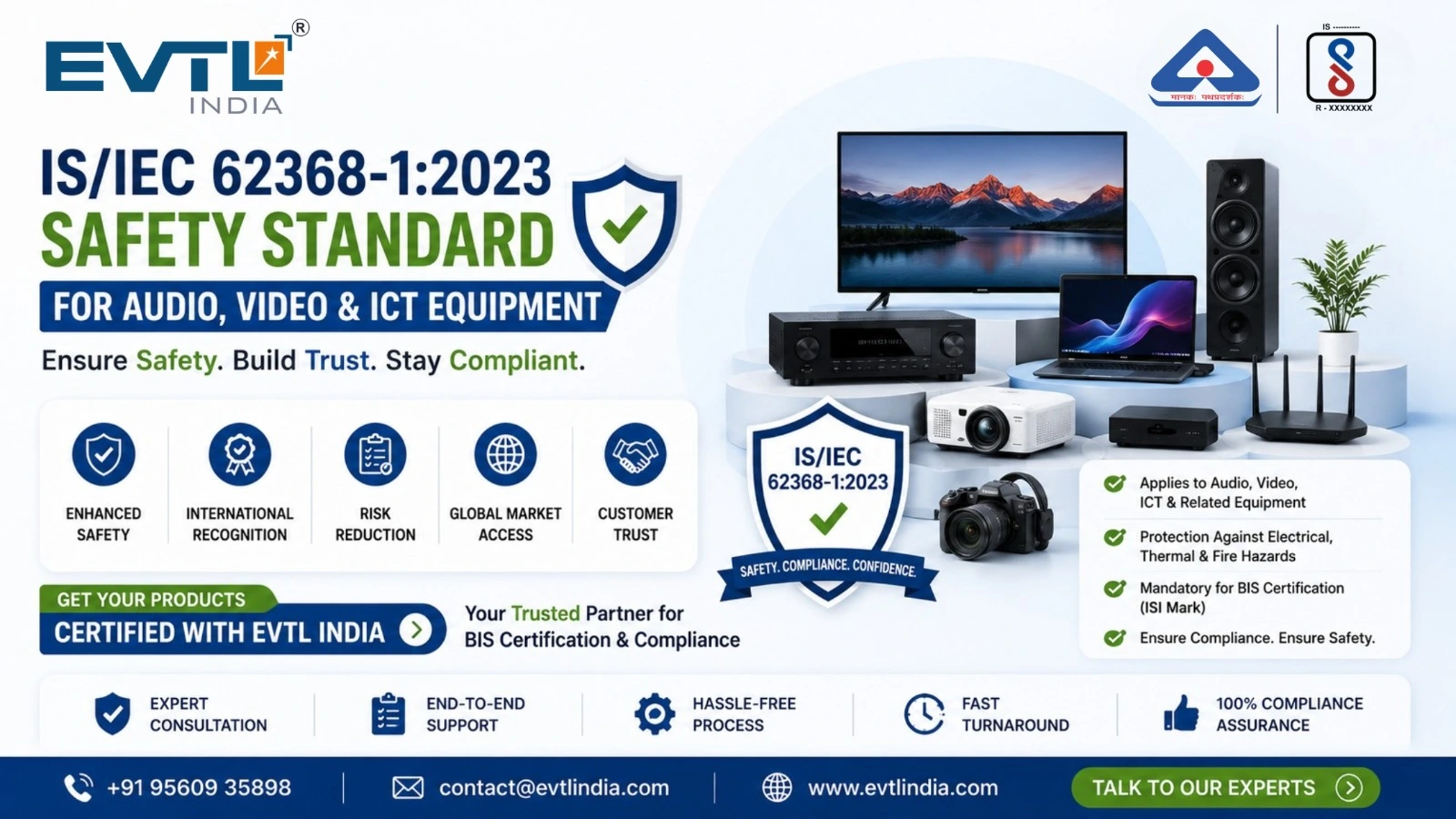
IS/IEC 62368-1:2023 is a safety standard adopted by the Bureau of Indian Standards (BIS) for Audio, Video, Information, and Communication Technology (ICT) equipment. The standard applies to a wide range of electronic products such as televisions, computers, laptops, speakers, monitors, networking devices, adapters, and multimedia equipment. It is designed to ensure product safety by protecting users from hazards like electric shock, fire, overheating, and mechanical injuries.
This standard follows a Hazard-Based Safety Engineering (HBSE) approach, which identifies potential energy sources in electronic equipment and provides safeguards to reduce associated risks. IS/IEC 62368-1:2023 replaces older separate safety standards for IT and audio-video products with a unified framework suitable for modern technologies.
Compliance with this standard is essential for manufacturers and importers to obtain BIS certification, meet Indian regulatory requirements, ensure product reliability, and enhance consumer confidence in electronic and ICT products.
Scope of IS/IEC 62368-1:2023
IS/IEC 62368-1:2023 is a safety standard for Audio/Video, Information and Communication Technology (ICT), and electronic products that work on voltage up to 600V. This standard follows the Hazard-Based Safety Engineering (HBSE) approach, which focuses on identifying possible dangers, preventing injuries, and protecting users through proper safety measures. This standard covers many types of products, such as:
- Audio and video equipment
- Information technology equipment
- Communication and networking devices
- Consumer electronic products
- Office and business equipment
- Power adapters and external power supplies
- Smart and connected electronic devices
IS/IEC 62368-1:2023 applies to products used in homes, offices, commercial places, and industries. It provides safety requirements to protect users from electric shock, fire, heat, mechanical injuries, radiation, and chemical hazards. This standard is important for BIS certification and regulatory compliance in India. It helps ensure that electronic products meet modern international safety standards before they are manufactured, imported, or sold in the Indian market.
Key Safety Requirements under IS/IEC 62368-1:2023
IS/IEC 62368-1:2023 focuses on protecting users from hazards caused by electrical, mechanical, thermal, chemical, and radiation energy sources in audio/video, ICT, and electronic equipment. The standard follows the Hazard-Based Safety Engineering (HBSE) approach to identify risks and apply proper safeguards. The key safety requirements under this standard include:
Protection Against Electric Shock: Equipment must be designed to prevent users from coming into contact with dangerous live parts. Proper insulation, grounding, and protective barriers are required.
- Fire Hazard Protection: Products must minimize the risk of fire caused by overheating, short circuits, or electrical faults. Fire-resistant materials and temperature control measures are used.
- Thermal Safety Requirements: The equipment should not produce excessive heat that may cause burns or damage. Accessible surfaces must remain within safe temperature limits.
- Mechanical Safety: Moving parts, sharp edges, and unstable structures must be controlled to avoid injuries during normal use or maintenance.
- Radiation Protection: The standard includes limits for optical, acoustic, and other forms of radiation to ensure user safety.
- Safeguards Against Energy Sources: Energy sources are classified according to their hazard levels, and suitable safeguards must be applied to reduce the risk of pain, injury, or fire.
- Chemical Safety: Hazardous substances and materials used in equipment should not create health or environmental risks during operation.
- Safety During Normal and Abnormal Conditions: Equipment must remain safe not only in normal operation but also during fault conditions such as overload, component failure, or power fluctuations.
- Proper Construction and Design: Products must be designed with reliable components, secure wiring, adequate spacing, and durable enclosures to maintain long-term safety.
- Marking and User Instructions: Clear warning labels, safety markings, installation instructions, and operating guidelines must be provided for safe usage.
BIS CRS Registration under IS/IEC 62368-1:2023
Many products covered under IS/IEC 62368-1:2023 fall under the BIS Compulsory Registration Scheme (CRS). Under this scheme, manufacturers are required to obtain BIS registration before launching their products in the Indian market.
- Product testing from BIS-recognized laboratories
- Preparation of technical documents
- Submission of application to BIS
- Verification and review by BIS authorities
- Grant of BIS registration certificate
Both Indian and foreign manufacturers are eligible to apply for BIS CRS registration. Foreign manufacturers are also required to appoint an Authorized Indian Representative (AIR) for regulatory coordination in India.
Products Commonly Covered under IS/IEC 62368-1:2023
IS/IEC 62368-1:2023 covers a wide range of Audio/Video, Information Technology, and Communication Technology equipment used in homes, offices, industries, and commercial environments. This standard applies to electronic products that operate with a rated voltage not exceeding 600V and ensures protection against electrical, fire, thermal, and mechanical hazards. The following products are commonly covered under standards:
These products are required to comply with IS/IEC 62368-1:2023 to ensure user safety, product reliability, and regulatory compliance for manufacturing, import, and sale in India.
Testing Requirements under IS/IEC 62368-1:2023
IS/IEC 62368-1:2023 specifies various testing requirements to ensure the safety and reliability of Audio/Video, Information and Communication Technology (ICT), and electronic equipment.
The testing process is based on the Hazard-Based Safety Engineering (HBSE) approach, which focuses on identifying energy sources and verifying that proper safeguards are provided to protect users from injury, fire, or electric shock. The following are the major testing requirements:
Conclusion
IS/IEC 62368-1:2023 is an important safety standard for audio, video, information technology, and communication equipment in India. It ensures that electronic products are safe for users and protects them from risks such as electric shock, fire, overheating, radiation, and mechanical injuries. The standard follows the Hazard-Based Safety Engineering (HBSE) approach, which focuses on identifying hazards and applying proper safety measures. Compliance with this standard is necessary for manufacturers and importers to obtain BIS CRS registration and legally sell products in India. It also helps improve product quality, reliability, and customer trust. As the demand for electronic and smart devices continues to grow, this standard plays a major role in ensuring safe and reliable products in the Indian market. EVTL India provides expert consultancy support for compliance and certification.