
India Removes BIS Certification Restrictions for ASEAN Manufacturers
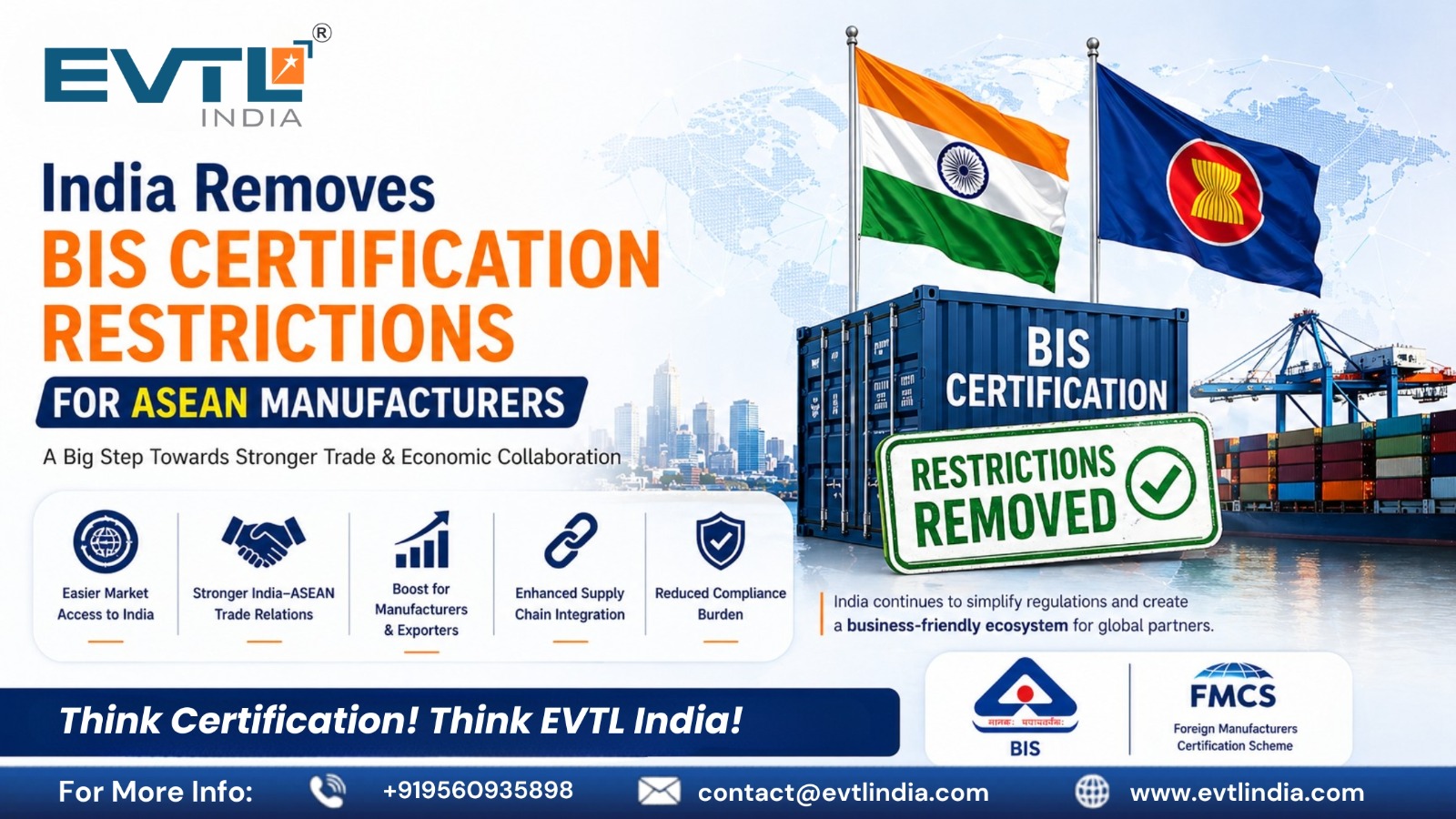
India has taken a significant step toward strengthening trade relations with Southeast Asian nations by removing certain BIS certification restrictions for ASEAN manufacturers. This decision is expected to boost international trade, simplify market entry procedures, and create better business opportunities for manufacturers exporting products to India from ASEAN countries such as Vietnam, Thailand, Indonesia, Malaysia, Singapore, and the Philippines.
The Bureau of Indian Standards (BIS) is the national standards body of India responsible for ensuring product quality, safety, and compliance. Many products imported into India require mandatory BIS certification under schemes such as CRS (Compulsory Registration Scheme), ISI Certification, and FMCS (Foreign Manufacturers Certification Scheme). These certifications are essential for manufacturers who want to legally sell their products in the Indian market.
Previously, several ASEAN manufacturers experienced delays, additional scrutiny, and operational challenges during the BIS certification approval process. These restrictions affected product registrations, factory inspections, and certification renewals, creating uncertainty for exporters and Indian importers. The recent policy change by the Indian government aims to remove these barriers and facilitate smoother trade operations.
Major Relief for ASEAN Manufacturers
The removal of BIS certification restrictions is considered a major relief for foreign manufacturers operating in ASEAN countries. Companies that previously faced delays in approval or renewal processes can now expect faster processing and simplified compliance procedures. This move will help manufacturers reduce operational disruptions and improve supply chain efficiency.
For exporters, time plays a crucial role in international business. Delays in certification often result in shipment hold-ups, increased costs, and missed market opportunities. By easing these restrictions, India is helping ASEAN businesses expand their presence in one of the world’s fastest-growing consumer markets.
Strengthening India–ASEAN Trade Relations
India and ASEAN nations share strong economic and strategic partnerships. The latest decision reflects India’s commitment to strengthening regional trade cooperation and promoting smoother cross-border business activities. ASEAN countries are important trading partners for India, especially in sectors such as:
- Electronics and IT Products
- Electrical Appliances
- Automotive Components
- Industrial Machinery
- Consumer Goods
- Chemicals and Steel Products
With easier BIS certification procedures, manufacturers from these industries can now access the Indian market more efficiently.
Support for “Ease of Doing Business”
The Indian government has continuously focused on improving the country’s business environment through regulatory reforms and trade-friendly policies. Removing unnecessary certification restrictions aligns with the government’s “Ease of Doing Business” initiative. Simplified BIS procedures will help international manufacturers by:
- Reducing approval delays
- Improving transparency in compliance procedures
- Supporting faster product launches in India
- Enhancing trade efficiency
- Encouraging foreign investment and manufacturing partnerships
This decision also benefits Indian importers and distributors who rely on international suppliers for quality products and raw materials.
BIS Certification Still Remains Mandatory
Although certain restrictions have been removed, BIS certification itself remains mandatory for products covered under Quality Control Orders (QCOs). Manufacturers must still comply with Indian Standards and complete all required certification procedures before selling products in India. Depending on the product category, manufacturers may still need to:
- Conduct product testing in BIS-recognized laboratories
- Submit technical documentation
- Undergo factory inspections
- Appoint an Authorized Indian Representative (AIR)
- Obtain BIS licenses under applicable schemes
Therefore, compliance with Indian quality and safety standards continues to be essential
Opportunities for ASEAN Exporters
The policy change creates new opportunities for ASEAN manufacturers looking to expand into the Indian market. India’s growing economy, rising consumer demand, and expanding industrial sector make it an attractive destination for international businesses.
Manufacturers can now focus more on market expansion and product development instead of dealing with prolonged certification uncertainties. Businesses that act quickly and complete their compliance requirements efficiently can gain a competitive advantage in the Indian market.
Conclusion
India’s decision to remove BIS certification restrictions for ASEAN manufacturers marks a positive development in international trade and regulatory cooperation. The move will help strengthen India–ASEAN economic relations, improve ease of doing business, and support smoother certification procedures for foreign manufacturers.
While BIS compliance remains mandatory, the simplified regulatory approach will encourage more ASEAN companies to enter the Indian market with confidence. This initiative is expected to benefit manufacturers, importers, distributors, and consumers alike by promoting better trade opportunities, improved product availability, and stronger regional partnerships.