Growing Demand for Infrared Devices and the Importance of BIS Certification
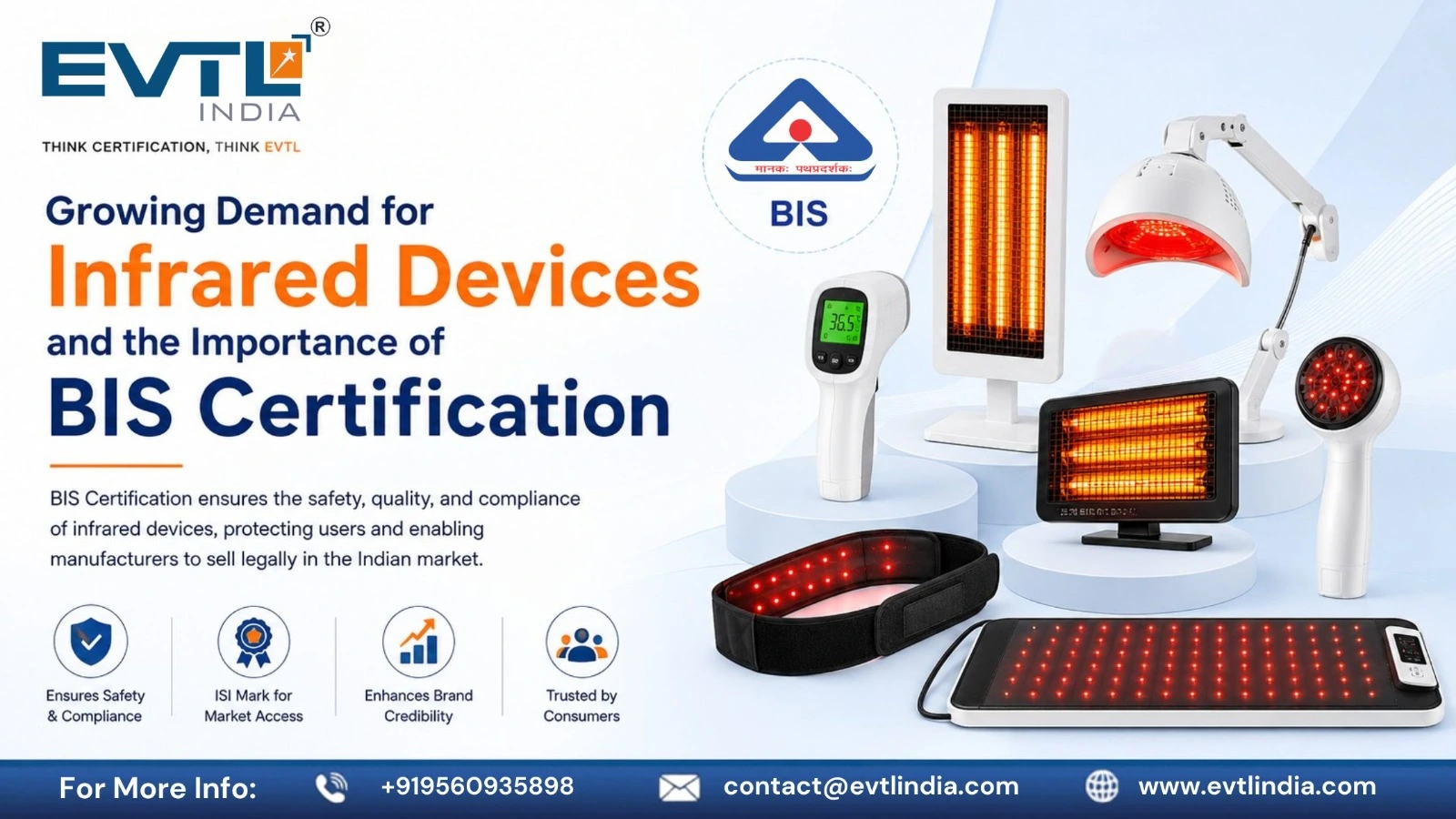
Infrared devices are becoming more popular in many industries because they help in sensing, monitoring, and detecting objects and temperature accurately. These devices are widely used in healthcare, security systems, automobiles, consumer electronics, industrial machines, and smart home products. Products like infrared thermometers, motion sensors, night vision cameras, and medical monitoring devices are in high demand due to the growing use of smart and contactless technology. Infrared technology helps improve convenience, automation, and energy efficiency in different applications. As the demand for these products increases in India, BIS Certification has become important for manufacturers and importers to meet Indian regulatory requirements before selling their products in the market. BIS Certification also helps improve product reliability and customer trust.
Rising Demand for Infrared Devices in India
The demand for infrared (IR) devices in India is growing very fast due to the development of smart cities, modernization in the defense sector, and increasing use of advanced medical technologies. The infrared handheld devices market is expected to grow at a strong rate of more than 10% annually. Because of this growing demand, manufacturers are focusing on producing compact, affordable, and energy-efficient infrared devices suitable for the Indian market.
Major Sectors Driving the Demand for Infrared Devices in India
- Security and Surveillance: With the expansion of smart city projects and increasing public safety concerns, infrared and thermal cameras are widely used for security and surveillance purposes. These devices help in border security, critical infrastructure protection, night vision monitoring, and public area surveillance.
- Industrial Automation and Maintenance: Many industries in India are adopting infrared thermal imaging technology for predictive maintenance. These devices help detect electrical faults, overheating equipment, and machine problems in real time, reducing downtime and improving operational efficiency. For example, utility companies like Adani Electricity are using mobile thermal cameras at multiple locations in Mumbai to monitor the health of power grids.
- Healthcare Sector: The use of infrared devices in healthcare is also increasing rapidly. Infrared technology is used in non-invasive medical diagnostics such as thermal breast cancer screening and contactless temperature measurement. The healthcare and biomedical industry has become one of the fastest-growing sectors for infrared detector applications.
- Consumer Electronics: The growing popularity of IoT (Internet of Things) and smart technologies has increased the use of infrared sensors and LEDs in consumer electronics. These devices are commonly used in smart home systems, wearable devices, remote controls, motion sensors, and proximity sensing applications.
Why Infrared Devices Need BIS Certification
As infrared devices are electrical and electronic products, they must comply with Indian safety and quality standards before being sold in the Indian market. BIS Certification ensures that these products meet the required safety, performance, and reliability requirements prescribed by the Bureau of Indian Standards (BIS).
Many infrared devices fall under the Compulsory Registration Scheme (CRS) introduced by the Ministry of Electronics and Information Technology (MeitY). Under this scheme, manufacturers and importers must obtain BIS Registration before launching their products in India.
BIS Certification for infrared devices helps ensure -
- Electrical safety
- Protection against overheating and fire risks
- Product quality and performance
- Consumer safety
- Compliance with Indian regulations
- Standardized manufacturing practices
Without BIS approval, manufacturers and importers may face product seizures, penalties, customs clearance issues, or restrictions on selling products in India.
Regulatory Framework: CRS and ISI Mark Schemes
Depending on the specific category of the infrared device, manufacturers must navigate different compliance pathways under the Bureau of Indian Standards:
For electronics under the Compulsory Registration Scheme (CRS), manufacturers are legally barred from importing, launching, or selling products in the Indian market without obtaining a valid registration number and printing the standard BIS recognition mark on their packaging.
Importance of BIS Compliance for Manufacturers and Importers
As the Indian government continues to strengthen product quality regulations, BIS Certification has become an essential requirement for businesses dealing with electronic products. Infrared device manufacturers and importers must ensure regulatory compliance to avoid legal complications and maintain smooth market operations.
Obtaining BIS Certification provides several business advantages -
- Legal authorization to sell products in India
- Improved consumer trust
- Better product credibility
- Easier customs clearance
- Reduced risk of regulatory penalties
- Increased market competitiveness
For foreign manufacturers, BIS Registration is especially important because imported electronic products are regularly monitored by Indian authorities for compliance with applicable standards.
Common Challenges in BIS Certification for Infrared Devices
Many businesses face challenges during the BIS registration process due to technical and regulatory requirements. Some common issues include -
- Incorrect product categorization
- Testing report mismatches
- Delays in documentation preparation
- Labeling compliance errors
- Difficulty understanding BIS guidelines
- Delays in factory and product verification
- Coordination issues with BIS-recognized laboratories
Proper planning and professional compliance support can help businesses complete the certification process more efficiently.
Conclusion
The demand for infrared devices in India is increasing rapidly across industries such as healthcare, security, industrial automation, and consumer electronics. As businesses continue adopting smart and contactless technologies, the use of infrared products is expected to grow even more in the coming years. However, with this growing market demand, manufacturers and importers must also ensure that their products comply with Indian safety and quality regulations. BIS Certification plays an important role in helping infrared devices meet the required standards before entering the Indian market. It not only supports legal compliance but also improves product reliability, customer confidence, and market acceptance. Although the certification process may involve technical and regulatory challenges, proper planning and professional compliance support from companies like EVTL India can help businesses complete the certification process smoothly and expand their presence in the Indian market successfully.