
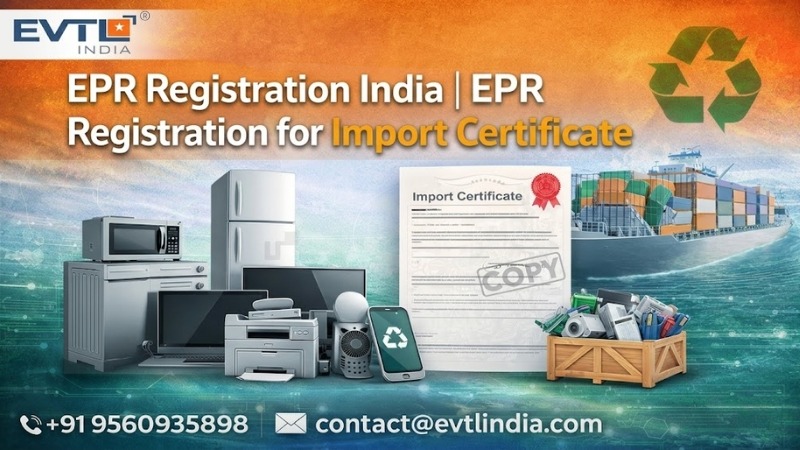
EPR Registration Consultant India | EPR Registration for Import Certificate
Extended Producer Responsibility (EPR) is an important environmental policy that places the responsibility of managing product waste on producers, importers, and brand owners (PIBOs). In simple terms, if you introduce a product into the market, you are also responsible for its safe disposal or recycling once it reaches the end of its life.
In India, EPR compliance is governed by rules such as the E-Waste Management Rules, Plastic Waste Management Rules, and Battery Waste Management Rules, issued by the Ministry of Environment, Forest and Climate Change and implemented by the Central Pollution Control Board. These regulations ensure that businesses actively contribute to environmental protection and sustainable waste management.
Any business involved in manufacturing, importing, or selling products covered under these rules must obtain an EPR certificate from CPCB before starting operations. For importers, this becomes even more crucial, as an EPR Registration for Import Certificate is mandatory for smooth customs clearance and legal entry of products into the Indian market.
Why Do Importers Need An EPR Registration Certificate?
Importers need an EPR Registration Certificate because it is a mandatory legal requirement for bringing regulated products into India. Under EPR rules, anyone introducing products like electronics, plastic packaging, or batteries into the market is also responsible for managing the waste generated from those products.
The Central Pollution Control Board requires importers to obtain EPR authorization to ensure they have a proper system in place for collection, recycling, or disposal of post-consumer waste. Without this registration, importers may face shipment delays, penalties, or even rejection at customs.
In simple terms, an EPR certificate is essential for:
- Customs clearance – shipments can be held or denied without it
- Legal compliance – avoids fines and regulatory action
- Market entry – allows smooth sale and distribution in India
- Environmental responsibility – ensures proper waste management
Having an EPR Registration not only keeps importers compliant but also helps them operate responsibly and build a sustainable business presence in the Indian market.
EPR Registration Process : Step-by-step
Understanding the EPR registration process in India helps you appreciate where a consultant adds the most value. The procedure involves multiple government portals, technical documentation, and strict compliance timelines.
Category Identification : Determine which EPR rule applies — e-waste, plastic, battery, tyre, or used oil — based on your product classification.
Portal Registration: Create an account on the relevant CPCB EPR portal and submit company KYC, product details, and import volume data.
Document Submission: Upload required documents including IEC code, GST certificate, authorisation letters, product HSN codes, and quantity projections.
Target Assignment: CPCB assigns annual collection and recycling targets based on your declared import/sale quantities.
PRO/Recycler Tie-up: Partner with a CPCB-registered Producer Responsibility Organisation (PRO) or certified recycler to fulfil targets.
Certificate Issuance: Upon verification, CPCB issues the EPR Registration Certificate, valid for the financial year with annual renewal.
Documents Required For EPR Registration For Import Certificate
A competent EPR registration consultant ensures all documentation is accurate, complete, and formatted to CPCB's standards — significantly reducing the risk of rejection or queries.
EPR Registration For Importers : Special Considerations
EPR (Extended Producer Responsibility) registration is mandatory for importers bringing products like electronics, plastics, or batteries into India. It is regulated by the Central Pollution Control Board.
Key Points:
- IEC is Mandatory: Importers must have an Import Export Code from the Directorate General of Foreign Trade.
- Correct Product Classification: Products must be accurately categorized under E-Waste, Plastic, or Battery rules.
- Import Data Required: You must declare past and projected import quantities—this decides your EPR targets.
- Responsibility Without Manufacturing: Even though you don’t manufacture, you are responsible for waste collection and recycling.
- Registration Before Import: EPR authorization must be obtained before importing goods into India.
- Plastic Packaging Complexity: Requires detailed categorization and reporting.
- Annual Compliance: Includes return filing, recycling targets, and record maintenance.
Conclusion
EPR Registration for Importers is a mandatory step for ensuring legal compliance and smooth business operations in India. Regulated by the Central Pollution Control Board, it is essential for customs clearance, market entry, and avoiding penalties. Importers must accurately classify products, submit proper documentation, and meet annual recycling targets.
Given the complexities involved, an experienced EPR Registration Consultant can streamline the process, reduce errors, and ensure timely approvals. Beyond compliance, EPR also reflects a company’s commitment to environmental responsibility and sustainable business practices. By securing an EPR Registration Certificate, importers not only fulfill legal requirements but also build a credible and responsible presence in the Indian market while contributing to effective waste management.