Drone License in India 2026: Fees, Training Costs & Registration Charges
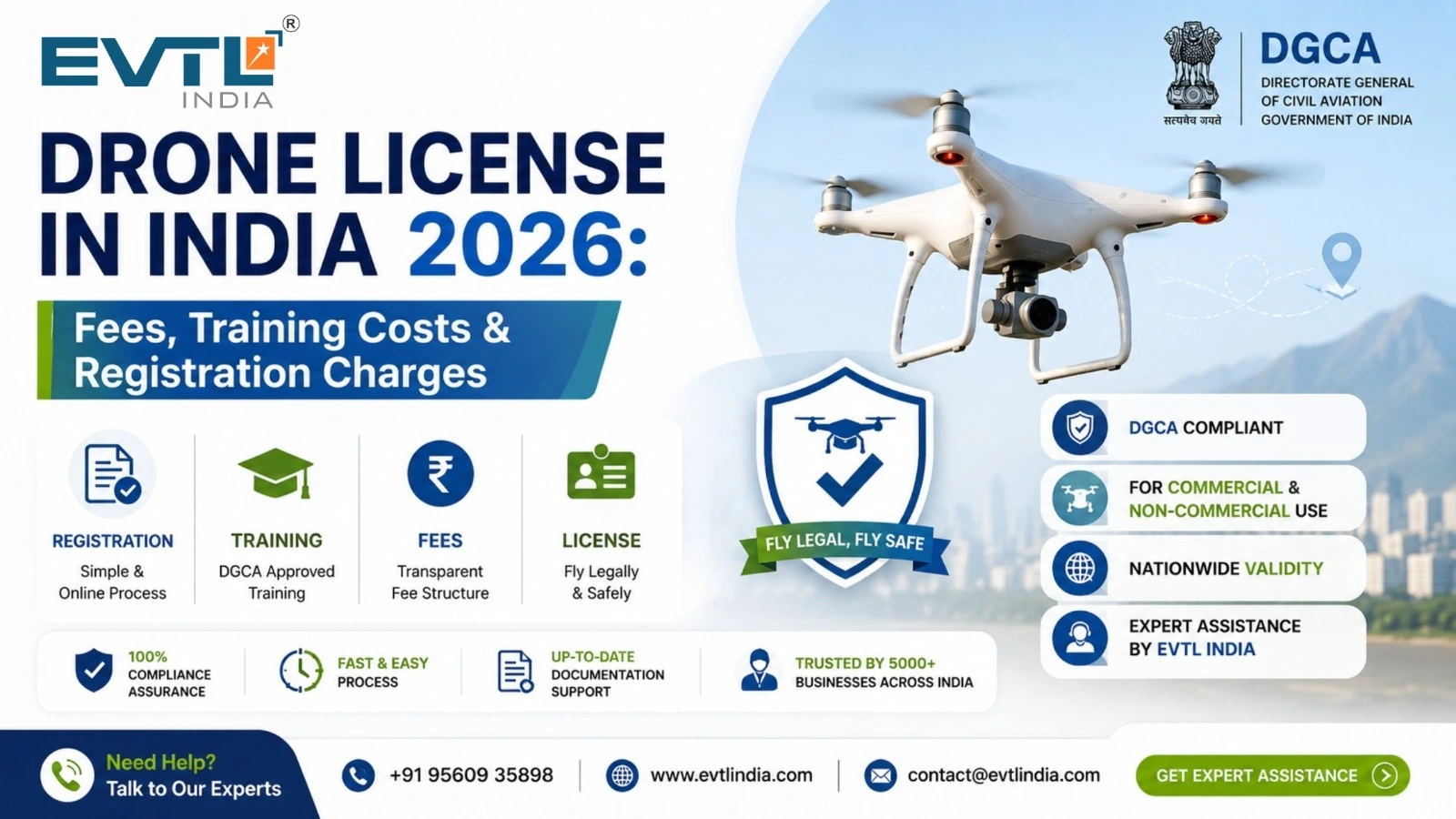
India’s drone industry is expanding rapidly in 2026, driven by applications in agriculture, surveillance, logistics, infrastructure, real estate, and filmmaking. Government support through progressive drone regulations has further boosted adoption, making drones a key part of modern commercial operations. With this growth, the demand for certified drone pilots is rising significantly across both private and public sectors.
To operate drones legally for commercial use, obtaining a DGCA-approved Remote Pilot Certificate (RPC), commonly known as a drone license, is mandatory. This certification ensures pilots are trained in airspace rules, safety protocols, and operational standards set by the Directorate General of Civil Aviation (DGCA).
As opportunities increase, drone piloting is becoming a promising career. Commercial drone demand is also expanding in mapping, inspection, and delivery services across India, creating new skilled job opportunities nationwide in 2026 across sectors quickly growing.
What is a Drone License in India?
The DGCA Remote Pilot Certificate (RPC) is an official license issued by the Directorate General of Civil Aviation (DGCA), Government of India, which authorizes individuals to operate drones legally for specific categories of operations. It is mandatory for anyone who wants to fly drones for commercial or professional purposes in India, except for certain very small categories of drones.
To obtain an RPC, a candidate must complete training from a DGCA-approved drone training organization. The training includes theoretical knowledge such as airspace rules, weather conditions, safety procedures, and practical flight training. After successful completion, the certificate is issued through the DigitalSky platform, which is DGCA’s centralized online system for drone registration and compliance. The RPC ensures that drone pilots are trained, responsible, and aware of aviation safety regulations, reducing risks to people, property, and air traffic.
Drone License Requirement Based on Categories
In India, whether you need a drone license called a Remote Pilot Certificate (RPC) issued by DGCA depends on the type of drone you are using and how you use it. As drone use is growing in many industries, it is important to know the rules for legal and safe flying. Drone Categories and License Rules
- Nano Drone (Below 250g) - Nano drones are very small and light. They are mostly used for fun and personal use. In most cases, you do not need a drone license for these drones, especially if you fly them indoors or in safe, low-risk areas. However, you still need to follow basic safety rules.
- Micro Drone (250g to 2kg) - Micro drones are a bit larger and can be used for both fun and work. If you use them only for recreation, a license may not always be needed. But if you use them for business or commercial work, you must have a Remote Pilot Certificate (RPC) and follow DGCA rules.
- Small Drone (2kg to 25kg) - Small drones are commonly used in business, photography, agriculture, and inspections. For these drones, a drone license is required for both commercial and professional use. They must also be registered on the DigitalSky platform.
- Medium & Large Drone (Above 25kg) - These drones are used in advanced industries like logistics, defense, and large-scale operations. They require strict DGCA approval, proper training, special permissions, and continuous compliance with regulations.
Process to Get a Drone License
Getting a drone license in India means obtaining a Remote Pilot Certificate (RPC) issued under the regulations of the Directorate General of Civil Aviation. Here is the stepwise process:
- Choose DGCA-Approved RPTO: Select a DGCA-approved Remote Pilot Training Organization (RPTO). These institutes are authorized to provide official drone pilot training.
- Complete Drone Pilot Training: Enroll in the training program and complete both theoretical and practical sessions, including flight operations, safety rules, and drone handling.
- Pass Practical & Theory Exam: After training, you must clear the assessment, which includes both written (theory) and flying (practical) tests conducted by the RPTO.
- Apply on DigitalSky Portal: Submit your application through the DigitalSky Platform along with required documents and training completion details.
- Get Remote Pilot Certificate (RPC): Once verified, DGCA issues your Remote Pilot Certificate, which legally allows you to operate drones as per your certified category.
Requirements for Becoming a Certified Drone Pilot
Documents Required for Drone License
DGCA Drone Training Fees and Charges Breakdown
The cost of getting a drone license in India (officially called the Remote Pilot Certificate RPC issued by DGCA) in 2026 depends on the training institute, drone category, and course package you choose.
Renewal Rules for Remote Pilot Certificate (RPC)
- Validity period of RPC: The Remote Pilot Certificate (RPC) is generally valid for 10 years from the date of issue.
- Renewal process: Renewal is done through the DigitalSky platform by submitting an application before expiry. Some cases may require refresher training from a DGCA-approved RPTO.
- Renewal fees: Fees vary by training institute but are usually lower than the original training cost.
- Importance of compliance: Timely renewal ensures legal drone operations and helps avoid penalties while keeping pilots updated with DGCA rules and safety standards.
Conclusion
India’s drone industry is growing very fast in 2026. There is a high demand for trained drone pilots in areas like farming, delivery services, security, construction, and media work. To fly a drone legally, you must get a DGCA-approved Remote Pilot Certificate (RPC). This certificate ensures that you are properly trained in safety rules, flying rules, and how to operate drones safely in the airspace. To get the license, you need to complete DGCA-approved training, pass written and practical exams, and register on the DigitalSky platform. The cost depends on the training institute and drone type. The license is valid for up to 10 years and must be renewed on time. Companies like EVTL India also help in the certification and compliance process. Overall, a drone license is important for legal use and also opens good career opportunities in India.