
Cross Recessed Screws (Quality Control) Amendment Order, 2026: Complete Guide for Manufacturers, Importers & BIS Certification Requirements
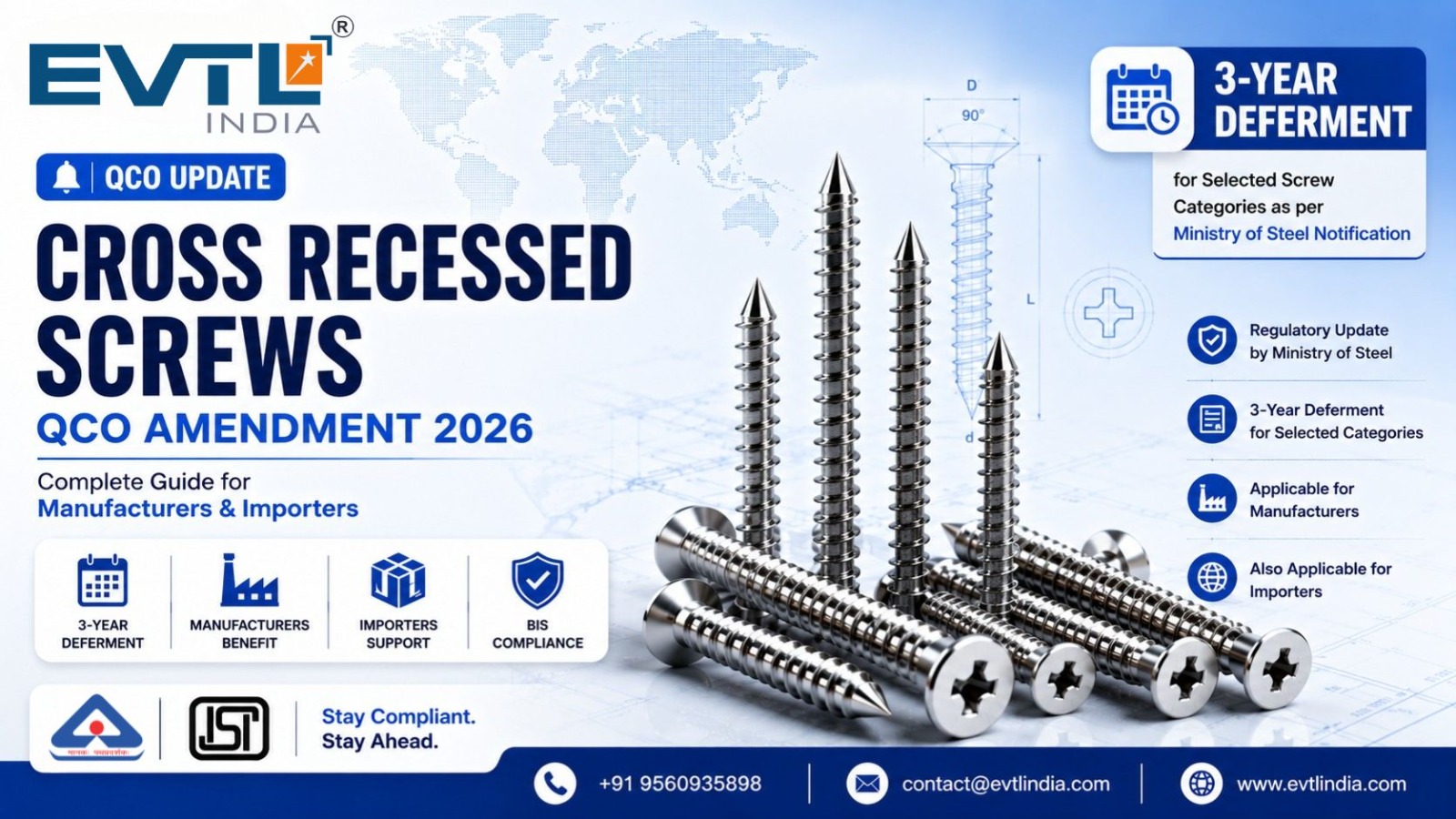
The Government of India continues to strengthen product quality and safety through the implementation of various Quality Control Orders (QCOs) across different industrial sectors. These orders make compliance with applicable Indian Standards mandatory, ensuring that only quality products are manufactured, imported, distributed, and sold in the Indian market. For manufacturers and importers dealing with industrial fasteners, the Cross Recessed Screws (Quality Control) Order is one such important regulation that requires close attention.
Operating without compliance with the Cross Recessed Screws (Quality Control) Amendment Order, 2026 can lead to regulatory violations, legal penalties, market restrictions, and inability to sell products in the Indian market. Non-compliance may result in product seizure, shipment rejection, and potential damage to business reputation. Manufacturers and importers who fail to obtain the required BIS Certification once the deferment period expires cannot legally manufacture, import, or distribute these products.
Additionally, organizations that fail to meet prescribed quality standards may find it difficult to establish credibility among customers, distributors, and regulatory authorities. To provide additional implementation time for selected product categories, the Ministry of Steel has notified the Cross Recessed Screws (Quality Control) Amendment Order, 2026. Obtaining BIS Certification for cross recessed screws helps businesses demonstrate compliance with approved quality regulations and technical requirements. The amendment grants a three-year deferment for specific categories of cross recessed screws while maintaining the overall objective of improving product quality, standardization, and consumer safety. By following regulatory standards and preparing during the deferment period, companies can enhance product quality, strengthen market acceptance, and build a reputation as responsible and reliable manufacturers in the fastener industry.
What is the Cross Recessed Screws Amendment Order, 2026
The Cross Recessed Screws (Quality Control) Amendment Order, 2026 has been issued by the Ministry of Steel under the provisions of Section 16 of the Bureau of Indian Standards Act, 2016. The notification was published vide S.O. 3298(E) dated 20 June 2026 and came into force immediately upon publication in the Official Gazette. The amendment modifies certain provisions of the earlier Cross Recessed Screws (Quality Control) Order, 2025, which was originally notified on 27 August 2025 through S.O. 3927(E).
The primary objective of this amendment is to provide additional time for industry stakeholders to align their manufacturing processes, testing capabilities, documentation practices, and quality management systems with the applicable Indian Standards. Importantly, the amendment does not revoke, suspend, or withdraw the original Quality Control Order. Instead, it postpones mandatory implementation for only selected product categories for a period of three years.
Key Features
- Issued by the Ministry of Steel to provide additional implementation time for selected cross recessed screw categories.
- Grants a three-year deferment from mandatory BIS enforcement for specific products covered under the earlier QCO.
- Does not revoke or suspend the original Quality Control Order but postpones enforcement for selected categories.
- Applies only to the products specified in the amendment notification: IS 18507:2024, IS 18508:2024, and IS 18509:2023.
- All remaining products covered under the Cross Recessed Screws QCO continue to require compliance with applicable BIS requirements.
- BIS surveillance, market inspections, and regulatory enforcement remain applicable for products not covered by the deferment.
- Provides additional preparation period for manufacturers to complete product testing, documentation, and certification activities.
Understanding the Cross Recessed Screws Amendment Order, 2026
The Cross Recessed Screws (Quality Control) Amendment Order, 2026 has been issued by the Ministry of Steel under the provisions of Section 16 of the Bureau of Indian Standards Act, 2016. The amendment modifies certain provisions of the earlier Cross Recessed Screws (Quality Control) Order, 2025. The primary objective of this amendment is to provide additional time for industry stakeholders to align their manufacturing processes, testing capabilities, documentation practices, and quality management systems with the applicable Indian Standards.
Key Highlights of the Amendment Order
- Three specific categories of cross recessed screws have received a three-year deferment from mandatory BIS enforcement.
- The deferment applies only to the products specified in the amendment notification.
- All remaining products covered under the Cross Recessed Screws QCO continue to require compliance with applicable BIS requirements.
- Manufacturers and importers should use this transition period to complete product testing, documentation, and certification activities.
- BIS surveillance, market inspections, and regulatory enforcement remain applicable for products that are not covered by the deferment.
- The amendment does not compromise Indian product quality standards but provides additional implementation time to facilitate industry readiness.
Why Is this Amendment Order Important
The fastener industry consists of thousands of manufacturers ranging from large multinational companies to MSMEs. Implementing mandatory BIS certification across all product categories simultaneously can create practical challenges, particularly for businesses that require time to upgrade manufacturing infrastructure, conduct product testing, establish quality management systems, and complete regulatory documentation. Recognizing these challenges, the Government has introduced the three-year deferment for selected categories of cross recessed screws. This additional preparation period allows businesses to transition smoothly toward compliance without disrupting manufacturing operations or supply chains.
Key Reasons for This Amendment -
- Provides additional time for industry stakeholders to prepare for mandatory BIS compliance.
- Allows manufacturers to upgrade manufacturing infrastructure and facilities.
- Enables businesses to conduct comprehensive product testing without supply chain disruption.
- Facilitates the establishment of quality management systems aligned with Indian Standards.
- Reduces immediate compliance pressure for affected manufacturers and importers.
- Ensures continued focus on product quality, safety, and standardization objectives.
- Supports the fastener industry in maintaining competitiveness while meeting regulatory requirements.
- Promotes smoother industry transition toward full regulatory implementation.
Key Features of this Amendment Order, 2026
The Cross Recessed Screws (Quality Control) Amendment Order, 2026 introduces important regulatory changes affecting selected screw categories. The amendment provides a structured approach to compliance while maintaining Government commitment to product quality and standardization.
Key Features -
- Grants a three-year deferment from mandatory BIS enforcement for three specified product categories.
- Postpones the mandatory implementation date while the Quality Control Order remains in force.
- Applies specifically to IS 18507:2024, IS 18508:2024, and IS 18509:2023 products.
- Does not remove or cancel the requirement for BIS certification but delays enforcement.
- Allows manufacturers and importers additional time to upgrade production systems.
- Enables businesses to complete product testing and obtain BIS certification proactively.
- Maintains regulatory enforcement for products not covered under the deferment.
- Supports industry readiness and compliance preparation during the transition period.
Products Covered Under the Three-Year Deferment
Under the Cross Recessed Screws (Quality Control) Amendment Order, 2026, the Ministry of Steel has deferred the mandatory implementation of BIS certification for three specific categories of cross recessed screws. Instead of becoming immediately subject to mandatory certification requirements, these products have been granted an additional three years for compliance preparation. The deferment provides manufacturers, importers, and foreign manufacturers additional time to establish compliant manufacturing processes, conduct testing, prepare documentation, and obtain BIS certification before enforcement becomes mandatory for these products.
It is important to note that this relaxation applies only to the above three standards. Products covered under other Indian Standards within the Cross Recessed Screws Quality Control Order continue to remain subject to applicable compliance requirements.
Understanding the Three Deferred Standards
- IS 18507:2024 – Drywall Screws: Drywall screws are specially designed fasteners used for fixing gypsum boards, plasterboards, drywall panels, and other lightweight construction materials to wooden or metal framing systems. These screws are widely used in residential, commercial, and industrial interior construction projects. The introduction of IS 18507:2024 establishes quality requirements relating to dimensions, material properties, mechanical strength, surface finish, corrosion resistance, and overall product performance. Manufacturers dealing in drywall screws should use the deferment period to ensure that their manufacturing facilities, testing procedures, and quality systems comply with the prescribed Indian Standard before mandatory enforcement begins.
- IS 18508:2024 – Chipboard Screws: Chipboard screws are commonly used for fastening particle boards, MDF boards, plywood, engineered wood panels, and furniture components. These screws play an important role in the furniture manufacturing, modular kitchen, interior design, woodworking, and construction industries. IS 18508:2024 specifies the technical requirements for these products, helping ensure consistency in quality, strength, durability, and safety. Although enforcement has been deferred, manufacturers are encouraged to begin compliance planning at the earliest to avoid delays once the mandatory implementation date arrives.
- IS 18509:2023 – Cross Recessed Countersunk Head Wood Screws: Cross Recessed Countersunk Head Wood Screws are widely used in woodworking, furniture manufacturing, joinery, modular interiors, construction, and various engineering applications where a flush surface finish is required. The Indian Standard IS 18509:2023 defines specifications related to product dimensions, thread configuration, mechanical performance, finish, and quality requirements. The three-year deferment allows businesses to gradually upgrade production systems and complete BIS certification without disrupting existing manufacturing operations.
What Does the Three-Year Deferment Actually Mean
One of the biggest misconceptions surrounding the amendment is that the Government has removed the requirement for BIS certification. This is not correct. The amendment does not cancel or withdraw the Quality Control Order. Instead, it only postpones the mandatory enforcement date for the three specified product categories. This means that manufacturers may continue preparing for compliance during the deferment period while businesses should invest in testing, documentation, and quality management systems. The applicable Indian Standards remain in force and mandatory BIS certification will become applicable once the deferment period ends.
Key Points to Understand -
- The amendment does not exempt products from BIS certification requirements.
- Mandatory enforcement for the three specified categories is postponed for three years only.
- Businesses should treat this as an opportunity to prepare rather than delay compliance planning.
- The applicable Indian Standards remain in force throughout the deferment period.
- Manufacturers are expected to use the transition period to upgrade facilities and systems.
- BIS certification will become mandatory once the deferment period expires.
- Companies should begin preparation activities immediately to avoid last-minute complications.
Impact on Manufacturers, Importers, and Foreign Manufacturers
The amendment has a significant impact on stakeholders involved in the production and supply of cross recessed screws. Different categories of businesses are affected in different ways and should prepare accordingly during the transition period.
Impact on Different Stakeholders -
- Domestic Manufacturers – Indian manufacturers receive additional time to upgrade manufacturing processes, improve quality control systems, conduct product testing, develop technical documentation, prepare for BIS licence applications, and align production with applicable Indian Standards. This additional preparation period helps businesses avoid last-minute compliance challenges.
- Importers – Importers supplying cross recessed screws to the Indian market should carefully monitor the implementation timeline. Although mandatory certification has been deferred for the specified products, importers should begin coordinating with overseas manufacturers to ensure that future BIS compliance requirements can be met without affecting imports or supply chains. Early planning helps prevent shipment delays, customs issues, and regulatory non-compliance.
- Foreign Manufacturers – Foreign manufacturers exporting cross recessed screws to India should utilize this transition period effectively. They should review applicable Indian Standards, assess manufacturing compliance, prepare technical documentation, identify BIS-recognized testing requirements, and plan factory readiness for future certification. Taking proactive steps during the deferment period can significantly reduce approval timelines when BIS certification becomes mandatory.
BIS Certification Requirements for Cross Recessed Screws
Although the Cross Recessed Screws (Quality Control) Amendment Order, 2026 provides a three-year deferment for selected products, businesses should understand that BIS certification remains the ultimate compliance requirement once the deferment period expires. Before manufacturing, importing, or selling products covered under a mandatory Quality Control Order (QCO), businesses are generally required to obtain a valid BIS licence under the applicable certification scheme. The certification process ensures that products conform to the relevant Indian Standard and meet the prescribed quality, safety, and performance requirements.
Key Certification Activities -
- Identifying the applicable Indian Standard (IS) for your product category.
- Preparing product specifications and comprehensive technical documentation.
- Testing products at BIS-recognized laboratories where applicable.
- Implementing effective quality control systems in manufacturing facilities.
- Filing the BIS application with all required documents and test reports.
- Undergoing factory assessment or audit as per certification scheme requirements.
- Addressing observations and queries raised during the certification process.
- Obtaining the BIS licence before mandatory enforcement becomes applicable.
Starting these activities during the deferment period can significantly reduce compliance risks and help businesses avoid last-minute delays.
How Businesses Should Prepare During the Deferment Period
The three-year deferment should be viewed as a preparation period rather than a delay in compliance. Businesses that begin planning early are generally better positioned to achieve timely certification and uninterrupted market access. Manufacturers and importers should consider the following steps to prepare effectively and ensure smooth transition to mandatory compliance.
- Review Product Applicability: Verify whether your products fall under IS 18507:2024, IS 18508:2024, or IS 18509:2023 and determine how the amendment affects your business operations and timelines.
- Strengthen Quality Management Systems: Evaluate existing manufacturing and inspection processes to ensure they align with the applicable Indian Standard and identify areas requiring upgrades.
- Maintain Complete Technical Documentation: Prepare updated technical drawings, material specifications, manufacturing process records, test reports, quality manuals, and production control documents. Well-organized documentation simplifies the certification process.
- Plan Product Testing: Identify the applicable testing requirements and schedule product testing well in advance. Early testing helps detect compliance gaps before mandatory implementation.
- Monitor Regulatory Updates: Keep track of future notifications issued by the Ministry of Steel and the Bureau of Indian Standards (BIS), as implementation timelines or compliance requirements may be updated.
- Seek Professional Compliance Support: Working with an experienced BIS certification consultant can help businesses understand regulatory requirements, prepare documentation correctly, coordinate testing, and manage the certification process more efficiently.
Why Early BIS Compliance Is Important
Many businesses postpone certification activities until regulatory deadlines approach. However, early compliance offers several operational and commercial advantages that contribute to long-term business success and market competitiveness.
Benefits of Early Compliance Preparation -
- Reduce the risk of production interruptions and supply chain disruptions.
- Avoid unexpected regulatory delays and market access restrictions.
- Improve product quality and consistency through enhanced testing and quality systems.
- Build customer confidence through certified and compliant products.
- Strengthen brand credibility and market reputation.
- Enhance readiness for future regulatory inspections and compliance audits.
- Gain a competitive advantage in the market against delayed competitors.
- Identify and address compliance gaps early, reducing last-minute risks.
- Support uninterrupted business operations and market access throughout transition period.
- Build expertise and internal capabilities for ongoing compliance management.
Instead of treating compliance as a legal obligation, forward-looking businesses use it as a strategic investment in long-term growth and market credibility.
Timeline, Cost, and Compliance Process for Certification
The time required to obtain BIS Certification for cross recessed screws depends on several factors, including product category, completeness of submitted documents, testing requirements, and factory inspection schedules. Proper planning and complete documentation can help streamline the approval process and minimize delays.
Tips for Faster Approval Process
- Ensure that all documents are complete, accurate, and submitted in the prescribed format.
- Maintain updated testing certificates and compliance records from recognized laboratories.
- Verify that all regulatory and quality requirements are fulfilled before the factory inspection stage.
- Address any observations or queries raised by BIS authorities promptly to avoid unnecessary delays.
- Coordinate closely with BIS-approved testing laboratories for timely completion of required tests.
Benefits of Early Preparation for Cross Recessed Screws Certification
Businesses that proactively prepare for BIS Certification during the deferment period gain significant advantages in terms of operational efficiency, market access, and competitive positioning. Early preparation offers multiple benefits beyond mere regulatory compliance.
Key Benefits of Early Preparation
- Assured Quality Compliance – Ensures that products meet prescribed quality and safety requirements of applicable Indian Standards.
- Reduced Compliance Risk – Identifies and addresses compliance gaps early, minimizing last-minute corrections and delays.
- Improved Business Reputation – Enhances company image and increases confidence among customers and distributors.
- Regulatory Compliance – Helps organizations meet applicable legal obligations under the Quality Control Order framework.
- Operational Reliability – Supports consistent manufacturing and supply of compliant fastener products.
- Greater Market Acceptance – Certified products enjoy better market credibility and customer preference.
- Enhanced Credibility – Builds trust among customers, suppliers, distributors, and government agencies.
- Uninterrupted Market Access – Ensures continued ability to manufacture and sell products after mandatory enforcement begins.
- Competitive Advantage – Early compliance provides market advantage against businesses that delay preparation.
- Supply Chain Security – Prevents potential disruptions to supply chains and customer relationships.
- Business Continuity – Supports long-term and sustainable business operations through proactive compliance.
- International Credibility – Strengthens position for exporting products to international markets with quality certification.
Obtaining early BIS Certification for cross recessed screws not only helps businesses comply with future regulatory requirements but also improves product quality, reliability, and professional standing in the marketplace.
Major Challenges in Compliance with Cross Recessed Screws Standards
Manufacturers may face various challenges while preparing for BIS Certification for cross recessed screws if the requirements of the applicable standards are not properly met or understood. Addressing these challenges proactively can help streamline the compliance process and minimize delays.
- Variation in product dimensions not meeting precise specifications of applicable Indian Standards.
- Difficulty in sourcing high-quality raw materials that meet required material standards.
- Inadequate testing facilities and calibrated equipment for conducting required quality tests.
- Incomplete or poorly organized technical documentation and production records.
- Gaps in quality management systems and process controls.
- Failure to meet mechanical strength or performance requirements in product testing.
- Issues with surface finish, coating quality, or corrosion resistance of products.
- Difficulty in coordinating with BIS-recognized laboratories for testing.
- Lack of trained personnel with knowledge of Indian Standards requirements.
- Supply chain complexity affecting raw material availability and consistency.
- Cost implications of facility upgrades and testing procedures.
Conclusion
The Cross Recessed Screws (Quality Control) Amendment Order, 2026 provides a valuable opportunity for manufacturers, importers, and foreign manufacturers to prepare for future BIS compliance. By granting a three-year deferment for IS 18507:2024, IS 18508:2024, and IS 18509:2023, the Government has given industry stakeholders additional time to upgrade manufacturing systems, complete product testing, strengthen quality management practices, and obtain the required BIS certification.
However, businesses should remember that this amendment is not an exemption from compliance. It is a temporary extension intended to facilitate smoother implementation while maintaining the Government's commitment to product quality, safety, and standardization. Organizations that begin preparing during the deferment period will be better positioned to achieve timely certification, avoid operational disruptions, and maintain uninterrupted access to the Indian market.
The amendment reinforces that product quality remains a national priority. Manufacturers are expected to use the deferment period proactively to meet all applicable BIS requirements before mandatory enforcement begins. With proper planning, complete documentation, timely testing, and professional compliance support, companies can ensure smooth transition to mandatory BIS Certification once the three-year deferment period expires.