Cosmetics Manufacturing License Consultant in India
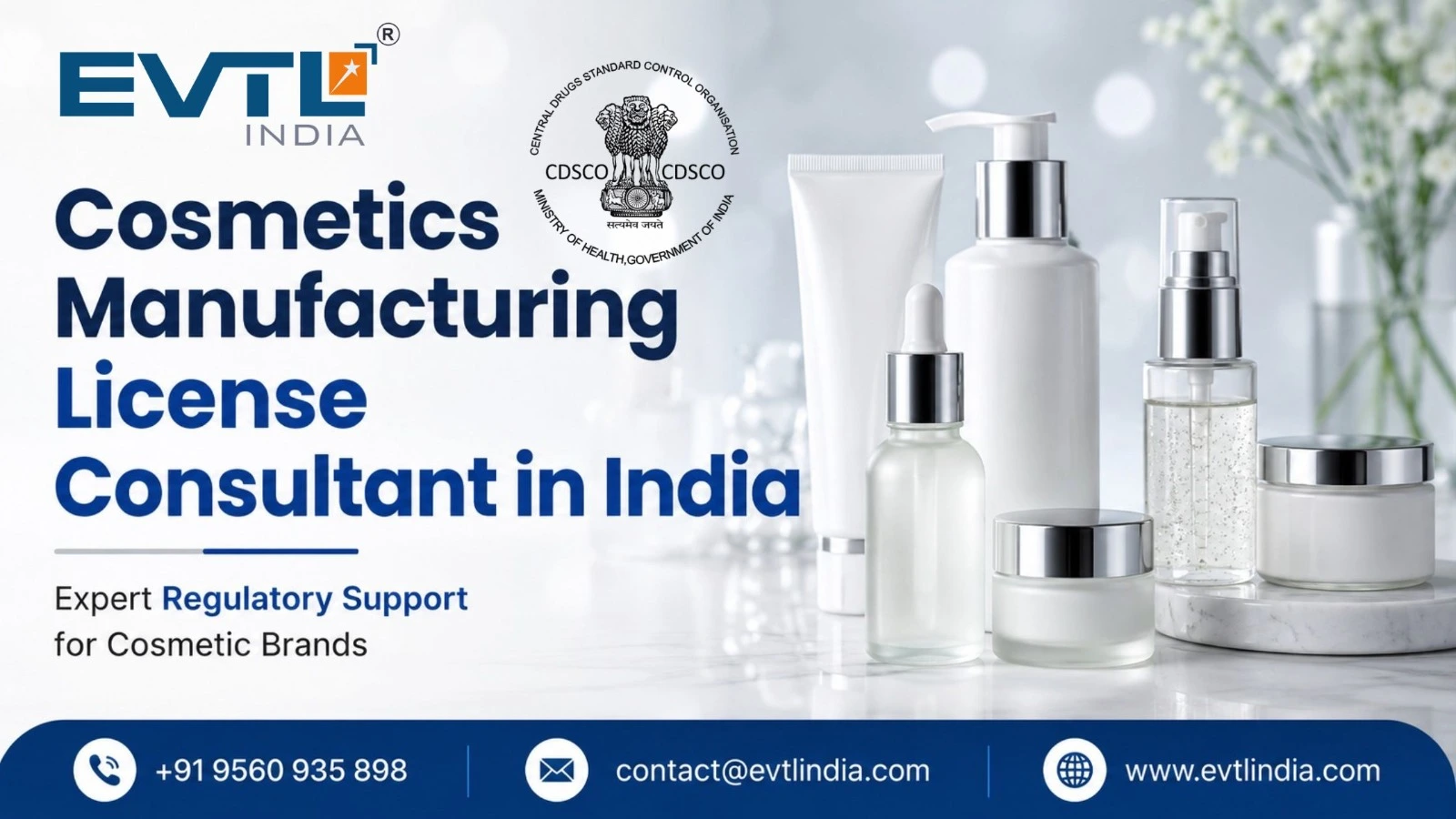
The cosmetics industry in India is growing rapidly with increasing demand for skincare products, hair care products, beauty items, herbal cosmetics, organic formulations, and personal care products. Businesses involved in manufacturing cosmetic products must comply with various legal and regulatory requirements before selling their products in the Indian market. One of the most important requirements is obtaining a Cosmetics Manufacturing License.
A Cosmetics Manufacturing License is mandatory for manufacturers engaged in producing cosmetics such as creams, lotions, shampoos, perfumes, soaps, makeup products, face washes, hair oils, and other beauty products. The license is regulated under the Drugs and Cosmetics Act, 1940 and Drugs and Cosmetics Rules, 1945. Manufacturers who fail to obtain proper approval may face legal penalties, product seizure, and restrictions on business operations.
A Cosmetics Manufacturing License Consultant in India helps businesses complete the licensing process smoothly by providing guidance on documentation, regulatory compliance, factory setup requirements, and approval procedures.
What is a Cosmetics Manufacturing License?
A Cosmetics Manufacturing License is an official approval issued by the State Licensing Authority under the Drugs and Cosmetics Act. This license allows manufacturers to legally manufacture cosmetic products in India.
The license ensures that cosmetic products are manufactured under hygienic conditions and comply with quality and safety standards prescribed by Indian authorities. The licensing process also verifies whether the manufacturing unit has proper machinery, technical staff, testing facilities, and storage systems.
Manufacturers cannot legally produce or market cosmetic products without obtaining this approval from the concerned authority.
Importance of Cosmetics Manufacturing License in India
Obtaining a Cosmetics Manufacturing License offers several advantages to manufacturers and businesses operating in the cosmetics sector.
- Legal Authorization: The license provides legal permission to manufacture cosmetic products in India without regulatory violations.
- Product Quality Compliance: The licensing process ensures that products are manufactured according to prescribed safety and hygiene standards.
- Business Credibility: Licensed cosmetic manufacturers gain better trust among distributors, retailers, consumers, and business partners.
- Market Expansion: Many distributors, online marketplaces, and retailers prefer working with licensed cosmetic manufacturers.
- Consumer Safety: The license ensures that cosmetic products are safe for public use and manufactured under controlled conditions.
Types of Cosmetics Manufacturing Licenses
Different types of licenses may apply depending on the nature of the manufacturing activity.
- Loan License for Cosmetics Manufacturing: This license is issued when a company manufactures cosmetic products using another licensed manufacturing facility.
- Direct Manufacturing License: This license is issued to businesses that own and operate their own cosmetic manufacturing unit.
- Repacking License: Businesses involved in repacking cosmetic products may also require regulatory approval from the licensing authority.
Documents Required for Cosmetics Manufacturing License
Businesses applying for a Cosmetics Manufacturing License in India must submit various legal, technical, and facility-related documents to the State Licensing Authority under the Cosmetics Rules, 2020. The documents help authorities verify the manufacturing setup, technical competency, safety standards, and regulatory compliance of the cosmetic manufacturing unit.
Basic Company Documents
- Certificate of Incorporation, Partnership Deed, or Proprietorship Proof
- PAN Card of the company or proprietor
- GST Registration Certificate
- Address proof of the manufacturing unit
- Identity proof of directors, partners, or proprietor
- Board Resolution or Authorization Letter (if applicable)
Manufacturing Premises Documents
- Ownership proof or Rent/Lease Agreement of the premises
- Factory layout plan and site blueprint
- Key plan of the manufacturing facility
- Approved building plan, if required by local authorities
- NOC from Pollution Control Board
- Fire Safety Certificate, if applicable
Technical Staff Documents
- Qualification certificates of competent technical staff
- Pharmacy Diploma or Degree certificates
- Registration Certificate under the Pharmacy Act, 1948, if applicable
- Appointment letter of technical staff or registered pharmacist
- Affidavit stating full-time employment of competent person
- Bio-data or resume of technical personnel
Production & Quality Control Documents
- List of manufacturing machinery and equipment
- Section-wise list of plant and machinery
- Standard Operating Procedures (SOPs)
- Site Master File
- Manufacturing process details
- Quality Control testing procedures
- Details of laboratory equipment and testing facilities
Product-Related Documents
- List of cosmetic products proposed for manufacturing
- Product formulation details
- Product specifications and ingredient details
- Label artwork or draft label copies
- Packaging material details
- Product category information
Legal & Compliance Documents
- Duly filled application form (Form COS-5 or applicable form)
- Government fee payment receipt or challan copy
- Self-declaration regarding compliance with Cosmetics Rules
- Affidavit of non-conviction under Drugs and Cosmetics Act
- GMP compliance documents
- Any additional undertaking required by the State Licensing Authority
Additional Documents (If Applicable)
- Power of Attorney for authorized representative
- Import-related documents for foreign collaboration units
- Environmental clearance certificates
- Water testing reports
- Electricity bill or utility proof of premises
The licensing authority may request additional documents depending on the type of cosmetic products, manufacturing capacity, and state-specific compliance requirements. The manufacturing premises are also inspected to verify hygiene standards, Good Manufacturing Practices (GMP), equipment installation, and technical staffing before granting the license.
Cosmetics Manufacturing License Process in India
The process for obtaining a Cosmetics Manufacturing License generally involves several regulatory steps.
- Application Preparation: The consultant prepares the application along with technical documents and compliance details.
- Document Submission: The completed application is submitted to the State Drug Control Department.
- Factory Inspection: Regulatory officers inspect the manufacturing facility to verify hygiene standards, machinery setup, storage conditions, and quality control systems.
- Compliance Verification: Authorities examine technical staff qualifications, product details, and manufacturing capabilities.
- License Approval: After successful verification and inspection, the Cosmetics Manufacturing License is issued to the applicant.
Role of Cosmetics Manufacturing License Consultant
A Cosmetics Manufacturing License Consultant helps businesses manage complex regulatory procedures efficiently. Many manufacturers face difficulties in understanding compliance requirements, preparing technical documents, and handling inspections.
A professional consultant helps in:
- Documentation preparation
- Application filing
- Regulatory compliance guidance
- Factory setup support
- Coordination with authorities
- Inspection preparation
- Query handling
- Faster approval management
Consultants also help businesses understand labeling requirements, packaging rules, and product safety standards applicable to cosmetic products.
Who Needs a Cosmetics Manufacturing License?
The following businesses generally require a Cosmetics Manufacturing License in India:
- Cosmetic product manufacturers
- Herbal cosmetic manufacturers
- Ayurvedic cosmetic manufacturers
- Organic skincare product manufacturers
- Hair care product manufacturers
- Beauty product startups
- Third-party cosmetic manufacturers
- Contract manufacturing companies
Both small-scale and large-scale cosmetic manufacturers must comply with licensing regulations before commencing operations.
Challenges Faced by Cosmetic Manufacturers
Many businesses face operational and regulatory challenges during the approval process, including:
- Incomplete documentation
- Improper factory setup
- Lack of qualified technical staff
- Delays in inspection approval
- Product formulation issues
- Non-compliance with labeling standards
Professional consultancy support helps businesses reduce errors and complete the process more efficiently.
Conclusion
The Cosmetics Manufacturing License is an essential regulatory requirement for businesses involved in manufacturing cosmetic and beauty products in India. The license confirms that the products are manufactured according to prescribed hygiene, quality, and safety standards under Indian regulations. A Cosmetics Manufacturing License Consultant in India helps manufacturers simplify the approval process by providing expert support in documentation, application filing, regulatory compliance, and inspection preparation.
EVTL India assists cosmetic manufacturers in obtaining the required approvals efficiently while ensuring compliance with applicable regulatory requirements. With proper professional guidance, cosmetic manufacturers can obtain approvals smoothly and focus on expanding their business in the growing Indian cosmetics market.