CDSCO Registration for Ventilators
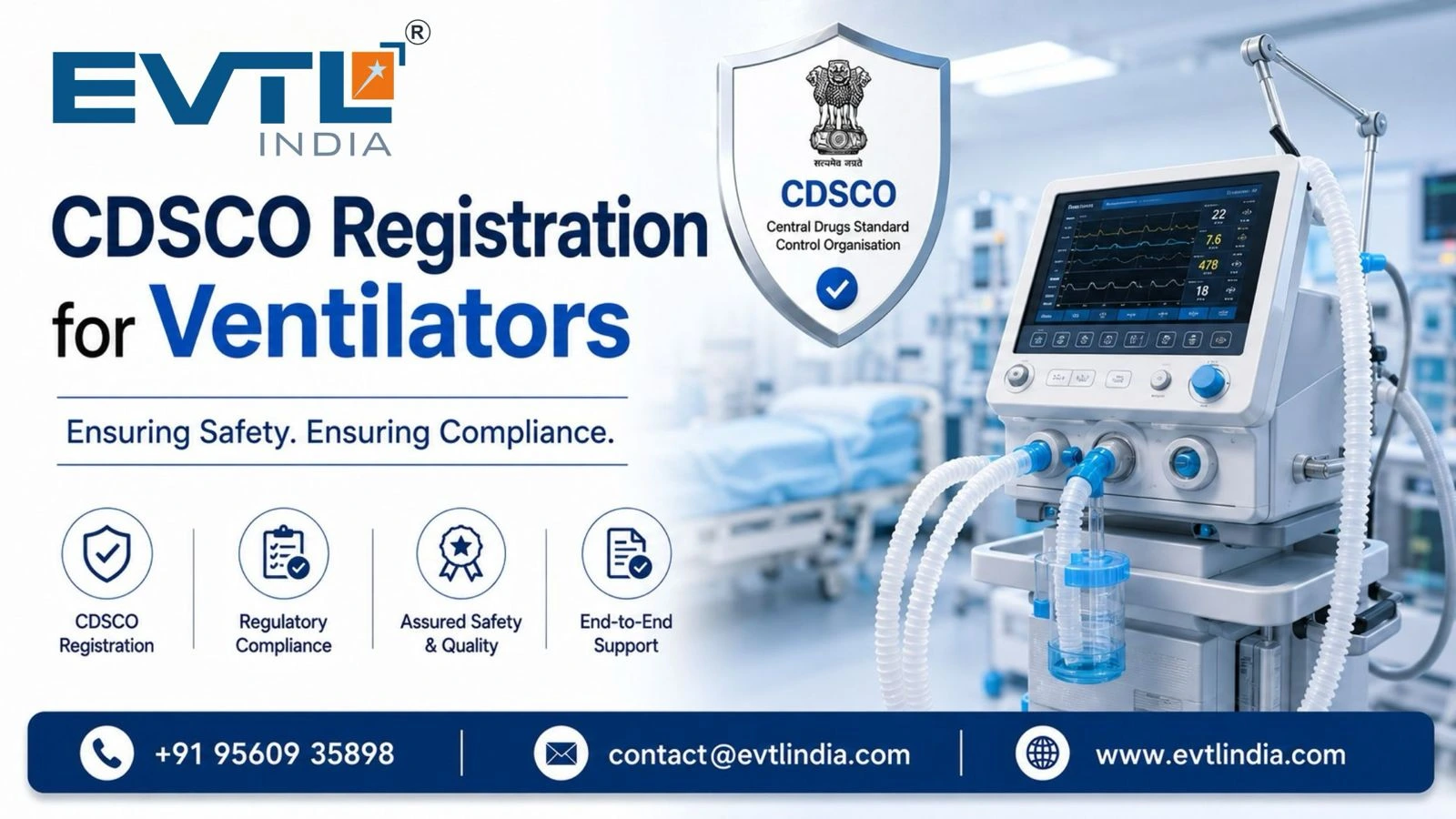
Ventilators are essential medical devices widely used in hospitals, intensive care units (ICUs), emergency departments, and specialized respiratory care facilities. These devices provide critical breathing support to patients suffering from severe respiratory conditions, making their safety, reliability, and performance extremely important. Before a ventilator can be introduced into the Indian healthcare market, it must comply with the regulatory requirements established by the relevant authorities. In India, medical devices are governed under the Drugs and Cosmetics Act, 1940 and the Medical Devices Rules, 2017. The Central Drugs Standard Control Organization (CDSCO) classifies medical devices into different risk categories, ranging from Class A (low risk) to Class D (high risk), based on their intended use and potential impact on patient health.
CDSCO Registration for Ventilators is a mandatory regulatory requirement for manufacturers and importers who wish to manufacture, import, distribute, or sell these devices in India. The registration process helps ensure that ventilators meet the prescribed standards for quality, safety, and effectiveness. It also promotes patient protection, strengthens confidence among healthcare providers, and enables businesses to operate legally within the Indian medical device industry.
What is CDSCO Registration for Ventilators?
CDSCO Registration for Ventilators is a regulatory approval process that allows ventilators to be legally manufactured, imported, marketed, and distributed in India. The Central Drugs Standard Control Organization (CDSCO) serves as the national authority responsible for regulating medical devices and ensuring that they comply with the requirements laid down under the Medical Devices Rules, 2017.
Ventilators are life-supporting medical devices designed to assist or control a patient’s breathing when natural respiration is inadequate or impaired. Due to their critical role in patient care, these devices are subject to stringent regulatory scrutiny. CDSCO evaluates various aspects of the product, including its intended medical use, technical specifications, safety features, performance validation, manufacturing practices, labeling requirements, and supporting technical documentation before granting approval.
Key Highlights:
- CDSCO registration is mandatory for the legal manufacture, import, sale, and distribution of ventilators in India.
- The registration requirement applies to domestic manufacturers, importers, foreign manufacturers, Authorized Indian Representatives (AIRs), and distributors.
- For imported ventilators, applications are generally submitted through Form MD-14, and the import licence is issued in Form MD-15 via the SUGAM portal.
- For domestically manufactured Class C and Class D ventilators, licence applications are filed through Form MD-7 or MD-8, while approvals are granted in Form MD-9 or MD-10, depending on the applicable category.
- Approval is granted based on accurate device classification, complete documentation, compliance with regulatory standards, and successful review by CDSCO.
Why Is CDSCO Registration for Ventilators Necessary?
CDSCO Registration for Ventilators is essential because ventilators are critical life-support medical devices used to assist or maintain a patient’s breathing function. Any malfunction related to the device’s design, software, alarm mechanism, oxygen supply system, pressure regulation, power backup, or overall performance can directly impact patient safety. The registration process helps ensure that only safe, effective, and quality-compliant ventilators are introduced into the Indian healthcare market.
Under the Medical Devices Rules, 2017, medical devices in India are regulated by CDSCO. The regulations cover instruments, equipment, software, implants, accessories, and other products intended for diagnosis, monitoring, treatment, or life-sustaining purposes. Since ventilators are used to support respiratory functions in critical care settings, they fall under the category of regulated medical devices and require appropriate regulatory approval before manufacture, import, sale, or distribution.
Key Reasons for CDSCO Registration
- Ensures that ventilators meet prescribed safety, quality, and performance requirements.
- Helps prevent the circulation of substandard or non-compliant devices in the healthcare sector.
- Verifies that the product is manufactured under an established quality management system.
- Assists hospitals and healthcare facilities in procuring approved and dependable equipment.
- Reduces the risk of regulatory actions, import delays, product seizures, or compliance-related penalties.
- Enhances trust among hospitals, government buyers, distributors, and healthcare professionals.
- Supports wider market acceptance, including participation in institutional purchases and public tenders.
- Demonstrates the manufacturer’s commitment to patient safety and regulatory compliance.
Importance and Benefits of CDSCO Registration for Ventilators
Process of CDSCO Registration for Ventilators
The CDSCO registration process for ventilators involves several regulatory and documentation steps to ensure the device meets the safety, quality, and performance requirements prescribed under the Medical Devices Rules, 2017.
- Determine Device Classification: The first step is to identify the correct risk category of the ventilator. CDSCO classifies medical devices into Class A, Class B, Class C, and Class D based on the level of risk associated with their use. Ventilators are generally categorized as higher-risk devices due to their life-supporting function.
- Identify the Applicant Category: The applicant must determine whether the registration is being sought for domestic manufacturing, foreign manufacturing, or import purposes. The applicable forms, licensing pathway, and supporting documents vary depending on the applicant type.
- Appoint an Indian Authorized Agent (For Imports): Foreign manufacturers intending to market ventilators in India must appoint an Indian Authorized Agent (IAA). The authorized agent acts as the official representative before CDSCO and manages the regulatory submission process.
- Compile Technical Documentation: A comprehensive technical dossier must be prepared containing information such as product specifications, intended use, design details, accessories, components, performance data, risk assessment reports, test certificates, labeling information, and user manuals.
- Arrange Quality Management Documents: Applicants must provide evidence that the ventilators are manufactured under a recognized quality management system. Certifications such as ISO 13485 are commonly required to demonstrate compliance with medical device quality standards.
- Register on the SUGAM Portal: All CDSCO medical device applications are submitted through the SUGAM online portal. Applicants or their authorized representatives must create an account and select the appropriate application category before filing.
- Submit the Application in the Prescribed Form: The application must be filed using the relevant CDSCO form. For imported ventilators, Form MD-14 is used to apply for an import licence, while the approval is issued in Form MD-15. Domestic manufacturers must apply through the applicable manufacturing licence forms based on device classification.
- Upload Supporting Documents and Pay Fees: All required documents, certificates, declarations, and government fee details must be uploaded accurately. Any inconsistency in product information, manufacturer details, labeling, or model specifications may result in regulatory observations.
- CDSCO Evaluation and Query Resolution: The regulatory authority reviews the submitted application and may seek additional information or clarification. Applicants must respond promptly with revised documents or explanations to address any deficiencies identified during the review process.
- Grant of Licence or Registration Approval: Once the application satisfies all regulatory requirements, CDSCO issues the applicable licence or approval. After obtaining approval, the ventilator can be legally manufactured, imported, marketed, and distributed within India.
- Ongoing Regulatory Compliance: Approval is not the final step. Manufacturers and importers must continue complying with CDSCO requirements, including proper labeling, adverse event reporting, maintenance of technical records, management of product changes, and adherence to quality standards throughout the product lifecycle.
Documents Required for CDSCO Registration for Ventilators
The documentation requirements may differ depending on whether the application is for manufacturing or import. However, the following documents are commonly required -
Applicant company registration and legal documents
- Manufacturing facility information
- Device Master File (DMF)
- Plant Master File (PMF)
- Detailed product description and intended use
- Model numbers and product variants
- Technical specifications and design details
- Risk management and risk analysis reports
- Safety, performance, and clinical evaluation data (where applicable)
- Product testing and validation reports
- Quality Management System (QMS) certificates such as ISO 13485
- Free Sale Certificate or Market Authorization Certificate (for imported devices, where applicable)
- Power of Attorney for the Indian Authorized Agent (for foreign manufacturers)
- Product labels, packaging artwork, and Instructions for Use (IFU)
- Sterilization validation documents (if applicable)
- Shelf-life, stability, and packaging information (if applicable)
- Declarations, undertakings, and regulatory compliance statements as required by CDSCO
Proper preparation of these documents helps reduce regulatory objections and facilitates a smoother approval process for ventilator registration in India.
Securing CDSCO Registration for Ventilators without expert guidance can be a complex task due to the stringent regulatory requirements involved. Ventilators are advanced life-support medical devices that combine hardware, software, sensors, alarm systems, and respiratory control functions. Any error in documentation, device classification, or application submission may result in delays, regulatory objections, or rejection of the application.
Common Challenges Include:
- Determining the correct risk classification and regulatory pathway for the ventilator.
- Understanding the differences between import licenses, manufacturing licenses, test licenses, and other regulatory approvals.
- Errors while submitting applications through the SUGAM online portal.
- Preparing complete and accurate Device Master Files (DMF) and Plant Master Files (PMF).
- Collecting and organizing required technical, safety, and performance evaluation reports.
- Inconsistencies between product labels, invoices, brochures, certificates, and model specifications.
- Responding effectively to CDSCO observations, queries, or deficiency letters.
- Delays in obtaining regulatory and quality documents from overseas manufacturers.
- Limited understanding of the responsibilities and obligations of an Indian Authorized Agent for imported devices.
- Risk of application rejection due to incorrect formats, expired certificates, incomplete declarations, or missing information.
- Difficulty in managing post-approval obligations, product modifications, license updates, and ongoing regulatory compliance.
Because of these complexities, many manufacturers and importers prefer working with experienced regulatory consultants to ensure accurate documentation, timely submissions, and smooth approval of their ventilator registration applications.
Conclusion
Obtaining CDSCO Registration for Ventilators is an essential requirement for manufacturers, importers, and distributors aiming to legally market and supply ventilators in India. Since ventilators are critical life-support medical devices, the registration process helps ensure that they meet the prescribed standards of safety, quality, and performance before reaching healthcare facilities and patients. Regulatory compliance not only enables smooth market entry but also enhances product credibility, strengthens trust among hospitals and healthcare professionals, and supports long-term business growth. As the registration process involves technical documentation, quality certifications, regulatory evaluations, and ongoing compliance obligations, expert guidance can help simplify the procedure and minimize the risk of delays or rejections. Evtl India provides comprehensive regulatory support to help businesses efficiently obtain CDSCO Registration for Ventilators and achieve compliance with applicable medical device regulations in India.