CDSCO Registration for Surgical Equipment | CDSCO Licence Consultant India

 27 July 2026
CDSCO Registration for Surgical Equipment | CDSCO Licence Consultant India
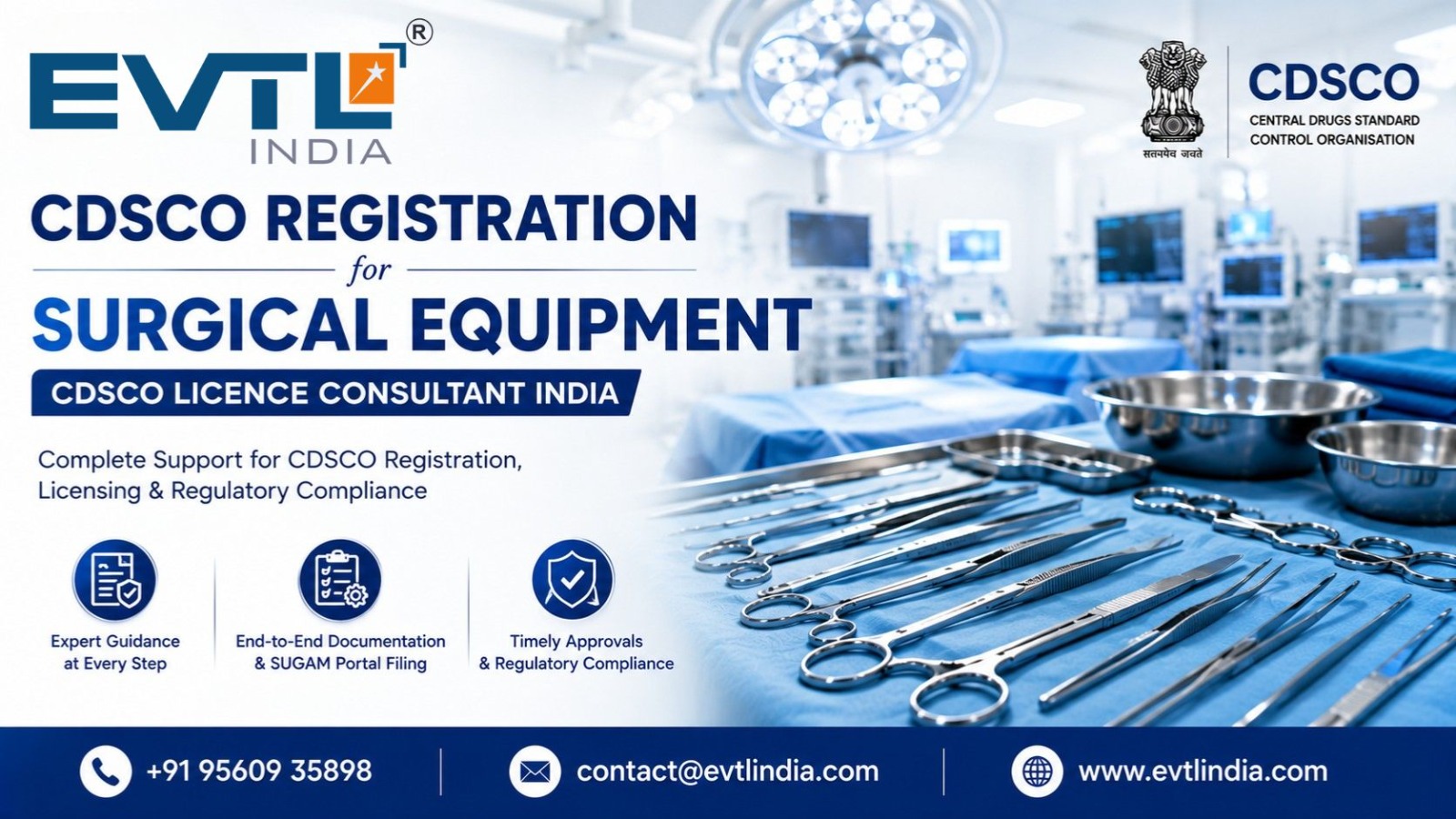
CDSCO Registration for Surgical Equipment is required for manufacturers, importers, and foreign manufacturers dealing with notified surgical equipment in India. Surgical equipment includes products such as surgical instruments, orthopedic instruments, endoscopic devices, powered surgical equipment, electrosurgical equipment, and other medical devices used during surgical procedures. These products are regulated by the Central Drugs Standard Control Organisation (CDSCO) under the Medical Devices Rules, 2017.

Before any notified surgical equipment can be manufactured, imported, or marketed in India, the appropriate CDSCO licence must be obtained. The type of licence depends on the device's intended use and risk classification. The registration process includes identifying the correct device classification, preparing the required documents, submitting the application through the CDSCO SUGAM Portal, and complying with the applicable regulatory requirements.

This guide explains everything you need to know about CDSCO Registration for Surgical Equipment, including the types of surgical equipment covered under CDSCO, device classification, licence types, applicable forms, required documents, registration process, fees, timeline, licence validity, and how EVTL India can help you complete the registration process smoothly.

What is CDSCO Registration for Surgical Equipment?

CDSCO Registration for Surgical Equipment is the process of getting the required licence from the Central Drugs Standard Control Organisation (CDSCO) to manufacture, import, or sell notified surgical equipment in India. It is regulated under the Medical Devices Rules, 2017 to ensure that surgical equipment meets the required safety, quality, and performance standards before it reaches the market.

The type of licence depends on the device, its intended use, and its risk classification. Manufacturers and importers may need a manufacturing licence or an import licence before their products can be legally sold in India.

Getting the required CDSCO licence helps businesses comply with Indian medical device regulations and legally market their products. It also ensures that surgical equipment used in hospitals, clinics, and healthcare facilities is safe and reliable for patients and healthcare professionals. Proper CDSCO approval reduces the risk of regulatory action, supports smooth market access, and builds trust in the quality of the product.

Surgical Equipment Covered Under CDSCO

Under the Medical Devices Rules, 2017, surgical equipment includes medical devices and surgical instruments used during surgical procedures to diagnose, treat, repair, remove, or support tissues and organs. These devices may be reusable or single-use, sterile or non-sterile, powered or non-powered. CDSCO classifies them based on their intended use and risk level. Some of the major types of surgical equipment covered under CDSCO are listed below.

1. General Surgical Instruments General surgical instruments are used in both routine and specialised surgical procedures. They are mainly used for cutting, holding, clamping, or handling tissues.

  • Surgical Scissors
  • Forceps
  • Clamps
  • Retractors
  • Needle Holders
  • Scalpels
  • Curettes
  • Bone Chisels

2. Orthopedic Surgical Equipment These instruments are used during bone, joint, and muscle surgeries such as fracture fixation and joint replacement.

  • Bone Cutters
  • Reamers
  • Bone Holding Forceps
  • Orthopedic Drills

3. Endoscopic Surgical Equipment These devices are used in minimally invasive surgeries performed through small incisions.

  • Endoscopes
  • Laparoscopic Instruments
  • Trocars
  • Cannulas

4. Powered Surgical Equipment Powered surgical equipment uses electricity, batteries, or pneumatic systems to improve precision during surgery.

  • Surgical Drills
  • Surgical Saws
  • Surgical Staplers
  • Powered Bone Cutters

5. Electrosurgical Equipment These devices use electrical energy to cut tissue and control bleeding during surgery.

  • Electrosurgical Units (ESU)
  • Bipolar Devices
  • Monopolar Devices

6. Cardiovascular Surgical Equipment These instruments are used during heart and blood vessel surgeries.

  • Vascular Clamps
  • Cardiac Retractors
  • Vascular Cannulas
  • Cardiac Surgical Instruments
  • Aortic Punches
  • Cardiovascular Suturing Instruments

7. Neurosurgical Equipment Neurosurgical equipment is designed for procedures involving the brain, spinal cord, and nervous system.

  • Cranial Drills
  • Dura Scissors
  • Brain Retractors
  • Neurosurgical Forceps
  • Micro Needle Holders
  • Cranial Rongeurs

8. ENT Surgical Equipment ENT surgical equipment is used for procedures involving the ear, nose, throat, head, and neck.

  • Nasal Speculums
  • Ear Forceps
  • Laryngeal Mirrors
  • Tonsil Forceps
  • Nasal Scissors
  • Sinus Surgery Instruments

Note: The CDSCO licence and device classification depend on factors such as the intended use, duration of use, invasiveness, sterility, whether the device is powered, and its risk classification (Class A, B, C, or D). Manufacturers and importers should identify the correct classification before applying for the appropriate CDSCO licence.

CDSCO Classification of Surgical Equipment

Under the Medical Devices Rules, 2017, the Central Drugs Standard Control Organisation (CDSCO) classifies surgical equipment into four risk categories—Class A, Class B, Class C, and Class D. The classification depends on factors such as the device's intended use, level of invasiveness, duration of use, sterility, and the risk it may pose to the patient.

Choosing the correct device classification is an important step because it determines the applicable regulatory requirements and the type of CDSCO licence required for the product.

ClassRisk LevelExamples
Class ALow RiskReusable surgical instruments such as scissors, forceps, clamps, retractors, and needle holders
Class BLow to Moderate RiskSterile surgical instruments, suction tubes, drainage catheters, and other short-term invasive devices
Class CModerate to High RiskPowered surgical equipment, electrosurgical devices, laparoscopic equipment, and other active surgical devices
Class DHigh RiskImplantable surgical devices, cardiovascular devices, neurosurgical devices, and life-supporting surgical equipment

Note: The final classification of a surgical device depends on its intended use and the CDSCO classification rules under the Medical Devices Rules, 2017. Manufacturers and importers should confirm the correct classification before applying for a CDSCO manufacturing or import licence.

Who Needs CDSCO Registration for Surgical Equipment?

Any business involved in manufacturing, importing, or selling notified surgical equipment in India must comply with the Medical Devices Rules, 2017. Depending on the nature of the business, the required CDSCO licence may vary.

  • Indian Manufacturers: Indian manufacturers of notified surgical equipment must obtain a CDSCO Manufacturing Licence before manufacturing and selling their products in India. They are also responsible for maintaining product quality and complying with the applicable regulatory requirements.
  • Medical Device Importers: Businesses importing surgical equipment into India must obtain a CDSCO Import Licence before importing or marketing their products. Imported devices must also comply with Indian labelling and regulatory requirements.
  • Foreign Manufacturers: Foreign manufacturers who wish to sell surgical equipment in India must obtain the required CDSCO approval. Since they cannot apply directly, they must appoint an Authorized Indian Representative (AIR) to handle the application and regulatory process in India.
  • Authorized Indian Representative (AIR): An Authorized Indian Representative (AIR) acts on behalf of a foreign manufacturer in India. The AIR submits applications through the CDSCO SUGAM Portal, communicates with CDSCO, responds to regulatory queries, and helps ensure ongoing compliance.
  • Brand Owners: Companies selling surgical equipment under their own brand name should ensure that the products are covered under the appropriate CDSCO licence and comply with the applicable regulations.
  • Healthcare Suppliers & Distributors: Healthcare suppliers and distributors should ensure that the surgical equipment they sell has been legally manufactured or imported under a valid CDSCO licence.

CDSCO Licence Types for Surgical Equipment

The type of CDSCO licence depends on whether the surgical equipment is manufactured in India or imported from another country.

Licence TypeWho Needs It?
Manufacturing LicenceIndian manufacturers of notified surgical equipment
Import LicenceImporters bringing surgical equipment into India
Authorized Indian Representative (AIR)Foreign manufacturers exporting surgical equipment to India

Note: The applicable licence depends on the type of surgical equipment, its risk classification, and the business activity. Businesses should identify the correct licence before submitting an application to CDSCO.

CDSCO Forms Applicable for Surgical Equipment

Different CDSCO forms are used for manufacturing and import of surgical equipment. The applicable form depends on the type of application.

PurposeApplicable Form
Manufacturing Licence ApplicationForm MD-3
Manufacturing LicenceForm MD-5
Import Licence ApplicationForm MD-14
Import LicenceForm MD-15

Note: The applicable CDSCO form depends on the type of surgical equipment, its risk classification, and whether the application is for manufacturing or import.

Documents Required for CDSCO Registration for Surgical Equipment

The documents required for CDSCO registration depend on whether the applicant is an Indian manufacturer or an importer/foreign manufacturer. The commonly required documents are listed below.

Indian ManufacturersImporters / Foreign Manufacturers
Company Incorporation CertificatePower of Attorney (POA) for AIR
GST Registration CertificateFree Sale Certificate (FSC)
Manufacturing Site DetailsISO 13485 Certificate
Plant Master File (PMF)CE Certificate / US FDA Approval (if applicable)
Device Master File (DMF)Device Master File (DMF)
ISO 13485 CertificatePlant Master File (PMF)
Quality ManualProduct Labels
Manufacturing Process DetailsPackaging Details
Manufacturing Equipment ListProduct Test Reports (if applicable)
Product LabelsAIR Agreement
Product Test Reports (if applicable)Product Brochure / Catalogue
Essential Principles ChecklistDeclaration of Conformity
Declaration & UndertakingsManufacturing Facility Details
Authorisation Letter (if applicable)Regulatory Declarations & Undertakings
Details of Technical Personnel
Manufacturing Facility Layout
Quality Control Procedures

Note: CDSCO may request additional documents depending on the device classification, intended use, and regulatory pathway. Applicants should ensure that all submitted documents are complete and accurate to avoid delays during the approval process.

CDSCO Registration for Surgical Equipment in India: Step-by-Step Process

Obtaining a CDSCO licence for surgical equipment involves several steps under the Medical Devices Rules, 2017. The process may vary depending on the type of device and whether it is manufactured in India or imported.

  • Product Classification: Identify whether the surgical equipment is regulated by CDSCO and determine its correct risk classification (Class A, B, C, or D). The classification decides the applicable regulatory requirements and licence type.
  • Appoint an Authorized Indian Representative (For Foreign Manufacturers): Foreign manufacturers without a registered office in India must appoint an Authorized Indian Representative (AIR) to submit the application and communicate with CDSCO.
  • Prepare the Required Documents: Collect all required technical and regulatory documents, such as the PMF, DMF, ISO 13485 Certificate, product labels, test reports, and other supporting documents required for the application.
  • Submit the Application: Submit the application through the CDSCO SUGAM Portal along with the applicable forms, supporting documents, and prescribed government fees.
  • CDSCO Review: CDSCO reviews the application and verifies the submitted documents. If required, additional information or clarification may be requested during the review.
  • Respond to CDSCO Queries: If CDSCO raises any queries, submit the required information and supporting documents within the specified time to avoid delays.
  • Licence Approval: After successful review, CDSCO grants the applicable Manufacturing Licence or Import Licence, allowing the surgical equipment to be legally manufactured, imported, and marketed in India.
  • Post-Licensing Compliance: After receiving the licence, manufacturers and importers must continue to comply with the Medical Devices Rules, 2017, including quality management, labelling requirements, record maintenance, and other applicable regulatory obligations.

CDSCO Registration Fees & Timeline for Surgical Equipment

The cost and timeline for CDSCO Registration for Surgical Equipment depend on factors such as the type of device, risk classification, licence type, testing requirements, and the completeness of the application. Apart from the government fee, applicants may also incur costs for documentation, testing, inspections, and regulatory consultancy.

Factors Affecting the Registration Cost

Cost ComponentDescription
Government FeeCDSCO fee for manufacturing or import licence applications.
Device ClassificationCost varies depending on Class A, B, C, or D.
Number of ProductsMultiple products may require additional documentation and review.
TestingProduct testing, where applicable.
DocumentationPreparation of PMF, DMF, and other regulatory documents.
Factory InspectionInspection or audit costs, where applicable.
ConsultancyProfessional support for documentation, filing, and regulatory compliance.
  • CDSCO Registration Fees & Timeline for Surgical Equipment
  • The cost and timeline for CDSCO Registration for Surgical Equipment depend on factors such as the type of device, risk classification, licence type, testing requirements, and the completeness of the application. Apart from the government fee, applicants may also incur costs for documentation, testing, inspections, and regulatory consultancy.
  • Factors Affecting the Registration Cost
  • Note: The total registration cost varies depending on the type of surgical equipment, licence required, device classification, and project requirements.

Estimated Registration Timeline

Registration StageEstimated Timeline
Product Classification2–5 Working Days
Documentation Preparation1–3 Weeks
Application Submission1–2 Working Days
CDSCO Review2–8 Weeks
Query Resolution (if any)1–4 Weeks
Factory Inspection (if applicable)4–8 Weeks
Licence Approval2–4 Weeks after successful review

Overall Estimated Timeline

Device ClassApproximate Timeline
Class A & Class B2–4 Months
Class C & Class D4–6 Months

Factors That May Affect the Timeline

  • Device classification
  • Completeness of documents
  • Product testing requirements
  • Factory inspection (if applicable)
  • CDSCO review process
  • Timely response to CDSCO queries

Note: The above timelines are approximate and may vary depending on the type of surgical equipment, regulatory requirements, and CDSCO review.

Licence TypeValidity
Manufacturing Licence (Form MD-5)Valid in perpetuity, subject to payment of the licence retention fee every 5 years and continued compliance.
Import Licence (Form MD-15)Valid in perpetuity, subject to payment of the licence retention fee every 5 years and continued compliance.

Validity of CDSCO Licence for Surgical Equipment

A CDSCO Manufacturing Licence and Import Licence for surgical equipment are granted in perpetuity under the Medical Devices Rules, 2017. This means the licence does not have a fixed expiry date. However, licence holders must continue to comply with the applicable regulatory requirements and pay the prescribed licence retention fee every five years to keep the licence valid.

Validity of CDSCO Licences

Licence Type

Validity

Manufacturing Licence

(Form MD-5)

Valid in perpetuity, subject to payment of the licence

retention fee every 5 years and continued compliance.

Import Licence (Form

MD-15)

Valid in perpetuity, subject to payment of the licence

retention fee every 5 years and continued compliance.

Conditions for Maintaining Licence Validity

To maintain the validity of the CDSCO licence, licence holders should:

  • Pay the prescribed licence retention fee every five years.
  • Comply with the Medical Devices Rules, 2017 and applicable CDSCO guidelines.
  • Maintain the required quality management system.
  • Inform CDSCO about any major changes related to the product, manufacturing facility,
  • labelling, or Authorized Indian Representative (AIR), where applicable.
  • Cooperate with CDSCO inspections and maintain the required regulatory records.

Note: Failure to pay the licence retention fee or comply with the applicable regulations may result in the suspension or cancellation of the licence.

Common Challenges During CDSCO Registration

Getting a CDSCO licence for surgical equipment requires proper documentation and compliance with the Medical Devices Rules, 2017. Any mistake during the application process may lead to delays or additional regulatory queries.

  • Incorrect Classification & Documentation: Choosing the wrong device classification or submitting incomplete documents such as the DMF, PMF, ISO 13485 Certificate, or declarations may delay the approval process.
  • Labelling & Testing Issues: Non-compliant product labels or missing test reports (where applicable) may result in additional queries from CDSCO before the application can be approved.
  • Application & Regulatory Queries: Submitting the wrong application form or delaying responses to CDSCO queries may increase the overall registration timeline or require resubmission of the application.

Benefits of CDSCO Registration for Surgical Equipment

Obtaining a CDSCO licence offers several regulatory and business benefits.

  • Legal Compliance & Market Access: Allows manufacturers and importers to legally manufacture, import, and sell surgical equipment in India while ensuring compliance with the Medical Devices Rules, 2017.
  • Business Growth & Customer Trust:Improves product credibility, builds confidence among hospitals, healthcare professionals, and distributors, and creates better business opportunities in both government and private healthcare sectors.
  • Improved Product Quality & Patient Safety: Helps ensure that surgical equipment meets the required safety, quality, and performance standards, providing greater confidence to end users.

Why Choose EVTL India for CDSCO Registration for Surgical Equipment?

Getting a CDSCO licence for surgical equipment requires accurate documentation, proper product classification, and a clear understanding of the Medical Devices Rules, 2017. EVTL India provides end-to-end regulatory consultancy to help manufacturers, importers, and foreign manufacturers complete the registration process smoothly.

  • End-to-End CDSCO Registration Support: From product classification and documentation to application filing and licence approval, we provide complete support throughout the CDSCO registration process.
  • Product Classification & Documentation: Our experts help identify the correct device classification and prepare all required documents, including the Device Master File (DMF), Plant Master File (PMF), declarations, and other regulatory documents.
  • Manufacturing, Import Licence & AIR Services: We assist Indian manufacturers with manufacturing licences, importers with import licences, and foreign manufacturers with Authorized Indian Representative (AIR) services and regulatory compliance.
  • SUGAM Portal Filing & Regulatory Support: We prepare and submit applications through the CDSCO SUGAM Portal, respond to regulatory queries, and help ensure timely completion of the approval process.
  • Experienced Consultants & Reliable Service: Our experienced regulatory team provides timely project updates and supports clients across India and overseas, helping them comply with CDSCO requirements efficiently.

Conclusion

CDSCO Registration for Surgical Equipment is mandatory for manufacturers, importers, and foreign manufacturers dealing with notified surgical equipment in India. Obtaining the appropriate CDSCO licence helps ensure compliance with the Medical Devices Rules, 2017 and allows businesses to legally manufacture, import, and market their products in the Indian market.

The registration process involves product classification, documentation, application filing, regulatory review, and ongoing compliance. Completing each step correctly is important to avoid delays and ensure smooth approval. Understanding the applicable requirements in advance can help businesses save time and complete the licensing process more efficiently. Need Expert CDSCO Registration Support for Surgical Equipment? Whether you are an Indian manufacturer, importer, or foreign manufacturer, EVTL India provides complete regulatory consultancy for CDSCO Registration for Surgical Equipment. Our experts assist with device classification, documentation, manufacturing and import licences, Authorized Indian Representative (AIR) services, CDSCO SUGAM Portal filing, query handling, and post-licensing compliance.Contact EVTL India today to discuss your requirements and receive end-to-end support for obtaining your CDSCO licence for Surgical Equipment.


FAQ ?

Call EVTL India for BIS, CDSCO and TEC Certification Services
Email EVTL India for regulatory certification assistance in India
WhatsApp EVTL India for quick certification consultation
QUICK ENQUIRY