CDSCO Registration for General Hospital & Orthopedic Equipment in India
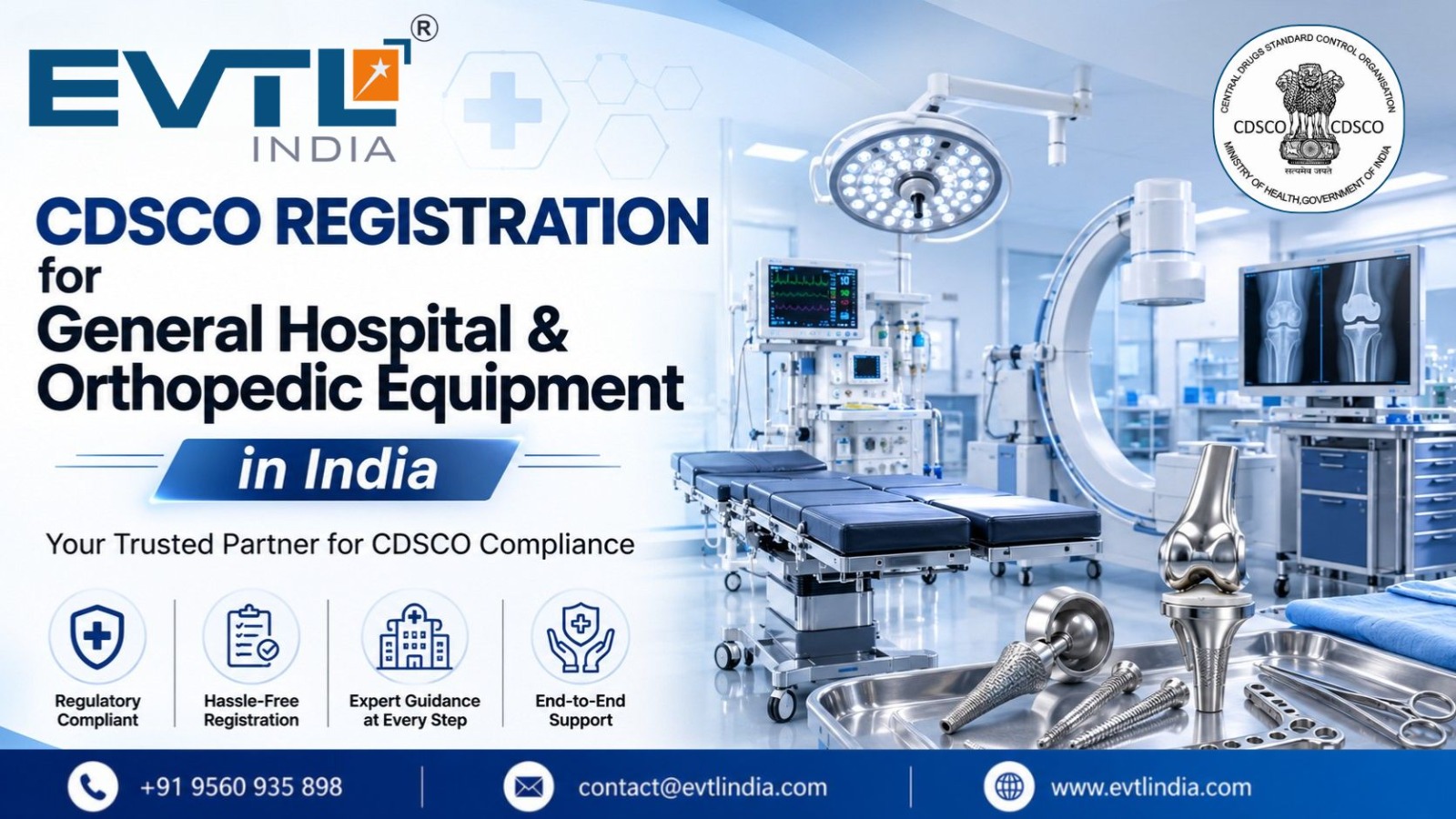
CDSCO Registration for General Hospital and Orthopedic Equipment is mandatory for manufacturers, importers, and other businesses dealing with notified medical devices in India. General hospital and orthopedic equipment, including surgical instruments, hospital furniture, sterilization equipment, orthopedic implants, fixation systems, rehabilitation devices, and patient care products, are regulated by the Central Drugs Standard Control Organization (CDSCO) under the Medical Devices Rules, 2017. Before these products can be manufactured, imported, sold, or distributed in India, the appropriate CDSCO licence must be obtained based on their risk classification.
The licensing process involves determining the correct device classification, preparing the required technical documentation, submitting the application through the CDSCO SUGAM Portal, and complying with the applicable regulatory requirements. Whether you are manufacturing General Hospital Equipment or importing Orthopedic Medical Devices, obtaining the appropriate CDSCO licence is essential to ensure legal compliance and smooth market access in India.
This guide explains everything you need to know about CDSCO Registration for General Hospital & Orthopedic Equipment, including device classification, licence requirements, required documents, the registration process, fees, validity, and how EVTL India can assist you with end-to-end regulatory compliance.
What are General Hospital & Orthopedic Medical Devices?
General Hospital and Orthopedic Medical Devices are medical products used in hospitals, clinics, diagnostic centers, and healthcare facilities for patient care, diagnosis, treatment, surgery, rehabilitation, and orthopedic procedures. These devices include hospital equipment, surgical instruments, orthopedic implants, fixation systems, rehabilitation aids, sterilization equipment, and patient monitoring devices designed to improve healthcare outcomes and ensure patient safety.
Under the Medical Devices Rules, 2017, notified General Hospital and Orthopedic Medical Devices are regulated by the Central Drugs Standard Control Organization (CDSCO). Depending on their intended use and risk classification (Class A, B, C, or D), manufacturers and importers must obtain the appropriate CDSCO licence before manufacturing, importing, selling, or distributing these devices in India.
Who Needs a CDSCO Licence for General Hospital & Orthopedic Medical Devices?
A CDSCO licence is mandatory for businesses involved in the manufacturing, import, or commercialization of notified General Hospital and Orthopedic Medical Devices in India. It is generally required for -
- Medical Device Manufacturers
- Importers of Medical Devices
- Foreign Medical Device Manufacturers
- Authorized Indian Representatives (AIR)
- Brand Owners
- Contract Manufacturers
- Medical Device Distributors (where applicable)
- Hospitals or Healthcare Institutions manufacturing notified medical devices
- Startups and Companies introducing notified medical devices into the Indian market
Obtaining the appropriate CDSCO licence helps ensure regulatory compliance, product quality, patient safety, and legal market access in India.
CDSCO Classification of General Hospital & Orthopedic Medical Devices
The Central Drugs Standard Control Organization (CDSCO) classifies General Hospital and Orthopedic Medical Devices into four risk-based categories under the Medical Devices Rules, 2017. The classification is based on the intended use, duration of use, level of invasiveness, and potential risk to patients. The higher the risk associated with the device, the more stringent the regulatory requirements and licensing process.
Class A (Low-Risk Devices)
Class A medical devices are considered low-risk products that are generally used for routine patient care, basic medical procedures, and non-invasive orthopedic applications.
Patient Care Equipment
- Hospital Beds
- Patient Scales
- Stretchers
- Medical Examination Lights
- Therapeutic Mattresses
General Hospital Products
- Burn Sheets
- Medical Binders
- CPR Boards
- Body Waste Receptacles
- Medical Insoles
Orthopedic Instruments
- Bone Chisels
- Bone Curettes
- Bone Cutters
- Bone Taps
- Forceps
- Surgical Scissors
- Surgical Mallets
- Osteotomes
- Retractors
- Needle Holders
- Surgical Screwdrivers
- Wrenches
- Guide Pins
- Torque Wrenches
- Wire Tensioners
- Plaster Knives
- Plaster Spreaders
- Bone Punches
- Orthopedic Implant Impactors
Orthopedic Consumables
- Adhesive Plaster
- Microporous Surgical Tape
- Cotton Crepe Bandage
- Elastic Bandage
- Plaster of Paris (POP) Bandage
- Orthopedic Cast Padding
- Skin Traction Kits
Class B (Low to Moderate-Risk Devices)
Class B devices present a low to moderate level of risk and typically include powered equipment, sterilization products, patient care systems, and specialized orthopedic instruments.
Sterilization Equipment
- Biological Sterilization Indicators
- Chemical Sterilization Indicators
- Sterilization Wraps
Patient Care Devices
- Pediatric Medical Cribs
- Medical Bassinets
- Pressure Infusors
- Patient Lifts
- Motorized Stretchers
Hospital Equipment
- Blood Storage Refrigerators
- Platelet Storage Chambers
- Medical Washer-Disinfectors
- UV Disinfection Systems
- Ultrasonic Cleaners
Orthopedic Equipment
- Surgical Drills
- Implant Trials
- Arthroscopes
- Arthroscopic Instruments
- Fluid Management Systems
- Bone Cement Accessories
- External Fixation Systems
- Ring Fixation Systems
- Computer-Assisted Surgery Systems
- Knee System Instruments
- Hip System Instruments
Class C (Moderate to High-Risk Devices)
Class C devices are moderate to high-risk medical devices that generally require greater regulatory oversight because they play a critical role in patient treatment, sterilization, or surgical procedures.
Examples include -
- Steam Sterilizers
- Ethylene Oxide (ETO) Sterilizers
- Hydrogen Peroxide Plasma Sterilization Systems
- Dry Heat Sterilizers
- High-Level Disinfectants
- UV Chamber Disinfection Devices
- Electronic Infusion Monitoring Systems
Class D (High-Risk Devices)
Class D devices represent the highest risk category and are subject to the most stringent regulatory controls due to their significant impact on patient safety and clinical outcomes.
Examples include -
- Chemical Cold Pack Snakebite Kits
- Other High-Risk General Hospital and Orthopedic Medical Devices notified by CDSCO
Note: The exact classification of a medical device depends on its intended purpose, design, and applicable classification rules under the Medical Devices Rules, 2017. Businesses should verify the official CDSCO classification before applying for a manufacturing or import licence.
CDSCO Licence Requirements for General Hospital & Orthopedic Medical Devices
The licensing requirements for General Hospital and Orthopedic Medical Devices depend on the device's risk classification under the Medical Devices Rules, 2017. Manufacturers and importers must obtain the appropriate licence before manufacturing, importing, selling, or distributing notified medical devices in India.
Licence Requirements for Indian Manufacturers
Licence Requirements for Importers
Importers of notified General Hospital and Orthopedic Medical Devices must obtain an Import Licence from CDSCO before importing products into India.
Note: Foreign manufacturers must appoint an Authorized Indian Representative (AIR) to apply for the import licence and manage regulatory compliance in India.
Documents Required for CDSCO Registration
The documents required for obtaining a CDSCO licence may vary depending on the product category, risk classification, and whether the application is for manufacturing or import. However, the following documents are commonly required -
- Company Incorporation Certificate
- PAN Card and GST Registration Certificate
- Manufacturing Site Ownership or Lease Documents
- Plant Master File (PMF)
- Device Master File (DMF)
- ISO 13485 Certificate
- Quality Manual
- Manufacturing Process Flow Chart
- Manufacturing Facility Layout
- List of Manufacturing and Testing Equipment
- Equipment Calibration Certificates
- Details of Qualified Technical Staff
- Product Labels, Packaging Artwork, and Instructions for Use (IFU)
- Product Test Reports
- Risk Management File
- Clinical Evaluation Documents (where applicable)
- Environmental Compliance Documents
- Free Sale Certificate (for imported medical devices, where applicable)
- Authorized Indian Representative (AIR) Documents (for foreign manufacturers)
- Power of Attorney or Authorization Letter (for foreign manufacturers)
Note: CDSCO may request additional technical or regulatory documents depending on the type of medical device, its risk classification, and the specific requirements of the application.
CDSCO Registration Process for General Hospital & Orthopedic Medical Devices
Obtaining a CDSCO licence for General Hospital and Orthopedic Medical Devices involves a structured regulatory process under the Medical Devices Rules, 2017. Manufacturers and importers must ensure that their products comply with the applicable safety, quality, and regulatory requirements before they can be marketed in India.
- Determine the Device Classification – Identify whether the medical device falls under Class A, Class B, Class C, or Class D based on its intended use, risk level, and the official CDSCO classification.
- Prepare Technical Documentation – Compile all required regulatory documents, including the Device Master File (DMF), Plant Master File (PMF), quality management documents, product specifications, test reports, labels, and other supporting technical information.
- Register on the CDSCO SUGAM Portal – Create an account on the CDSCO SUGAM Portal and complete the registration process for the applicant organization.
- Submit the Licence Application – Complete the applicable application form, upload the required documents, and submit the application through the SUGAM Portal.
- Pay the Applicable Government Fees – Pay the prescribed government fees based on the type of application, device classification, and licence category.
- Application Review by CDSCO – The concerned licensing authority reviews the submitted application and verifies the technical documentation for compliance with the Medical Devices Rules, 2017.
- Respond to Regulatory Queries – If any clarification or additional information is requested, submit the required responses and supporting documents within the specified timeframe.
- Manufacturing Site Inspection (Where Applicable) – For applicable manufacturing licence applications, the licensing authority may conduct an inspection of the manufacturing facility to verify compliance with quality management and regulatory requirements.
- Grant of CDSCO Licence – Upon successful completion of the review process and compliance verification, the appropriate CDSCO licence is issued.
- Maintain Ongoing Regulatory Compliance – After obtaining the licence, manufacturers and importers must continue to comply with applicable regulatory requirements, maintain quality standards, and fulfil post-market obligations prescribed by CDSCO.
CDSCO Registration Fees & Timeline
The government fees and processing timeline for obtaining a CDSCO licence for General Hospital and Orthopedic Medical Devices depend on the type of application, device classification, and regulatory requirements.
Government Fees for Indian Manufacturers
Note: A retention fee of the same amount is payable every five years to keep the licence valid.
Government Fees for Import Licence (MD-15)
For imported medical devices, CDSCO charges fees in US Dollars, which vary depending on the device class and manufacturing site. The applicable fee is prescribed under the Medical Devices Rules, 2017 (Second Schedule).
Estimated Timeline
The actual timeline may vary depending on -
- Device classification
- Completeness of the application
- Technical documentation
- CDSCO review process
- Regulatory query resolution
- Manufacturing site inspection (where applicable)
Submitting accurate documentation and responding promptly to CDSCO queries can help reduce approval timelines.
Validity & Retention Requirements
A CDSCO licence for General Hospital and Orthopedic Medical Devices is valid indefinitely, provided the licence holder continues to comply with the applicable provisions of the Medical Devices Rules, 2017. To maintain the validity of the licence, the prescribed retention fee must be paid every five years. Failure to pay the retention fee or comply with regulatory requirements may result in the suspension or cancellation of the licence.
Key Validity & Retention Requirements
- CDSCO licences are valid indefinitely unless suspended or cancelled.
- A retention fee is payable every 5 years to keep the licence active.
- Manufacturers and importers must continue to comply with the Medical Devices Rules, 2017.
- Any significant changes to the manufacturing facility, quality management system, or medical device should be reported to the licensing authority, as applicable.
- The licensing authority may conduct inspections or request additional information to verify continued compliance.
Why Choose EVTL India for CDSCO Registration?
Getting a CDSCO licence for General Hospital and Orthopedic Medical Devices requires accurate product classification, complete technical documentation, and compliance with the Medical Devices Rules, 2017. At EVTL India, we provide end-to-end regulatory consultancy to help manufacturers, importers, and foreign companies complete the licensing process efficiently and in compliance with CDSCO requirements.
- End-to-End CDSCO Regulatory Consultancy: We provide comprehensive support throughout the entire registration process, from initial consultation and product assessment to licence approval and post-registration compliance.
- Medical Device Classification Support: Our regulatory experts help identify the correct CDSCO classification for your medical devices, ensuring the appropriate licensing pathway is followed.
- PMF & DMF Preparation: We assist in preparing the Plant Master File (PMF) and Device Master File (DMF) in accordance with CDSCO requirements, ensuring complete and accurate documentation.
- SUGAM Portal Filing Assistance: Our team manages the application filing process through the CDSCO SUGAM Portal, helping minimize errors and streamline submission.
- Manufacturing & Import Licence Support: Whether you require a manufacturing licence (MD-5 or MD-9) or an import licence (MD-15), we provide complete regulatory assistance from application to approval.
- Regulatory Documentation Preparation: We help prepare and review all required technical and regulatory documents, including quality management records, product specifications, labels, declarations, and supporting documentation.
- CDSCO Query Resolution: If CDSCO raises any technical or regulatory queries during the review process, we assist in preparing accurate and timely responses to help keep the application moving forward.
- Inspection Readiness Support: For applications requiring a manufacturing facility inspection, we provide guidance on documentation, quality systems, and regulatory preparedness to support a successful inspection.
- Timely Project Updates: Our team keeps you informed at every stage of the registration process, providing regular updates on application progress and regulatory developments.
- PAN India & International Client Support: We support domestic manufacturers, importers, and foreign medical device companies across India and international markets, offering reliable regulatory consultancy tailored to your business requirements.
Conclusion
CDSCO Registration for General Hospital and Orthopedic Medical Devices is an essential regulatory requirement for manufacturers, importers, and other businesses dealing with notified medical devices in India. Compliance with the Medical Devices Rules, 2017 not only enables legal market access but also demonstrates that your products meet the required standards of safety, quality, and performance. From determining the correct device classification and preparing technical documentation to obtaining the appropriate manufacturing or import licence, every step plays a crucial role in achieving regulatory compliance.
Whether you are introducing a new medical device into the Indian market or expanding your existing product portfolio, understanding the CDSCO licensing requirements can help streamline the approval process and avoid unnecessary delays. With expert regulatory guidance and proper documentation, businesses can efficiently obtain the required licences and maintain ongoing compliance with CDSCO regulations.
Need Expert CDSCO Registration Support? Whether you require CDSCO Registration for General Hospital and Orthopedic Medical Devices, a Manufacturing Licence (MD-5 or MD-9), an Import Licence (MD-15), product classification assistance, PMF and DMF preparation, or complete regulatory consultancy, EVTL India provides end-to-end support to help you complete the licensing process accurately and efficiently.
Contact EVTL India today to discuss your requirements and receive professional guidance from our CDSCO regulatory experts.