CDSCO Registration for General Hospital Medical Devices
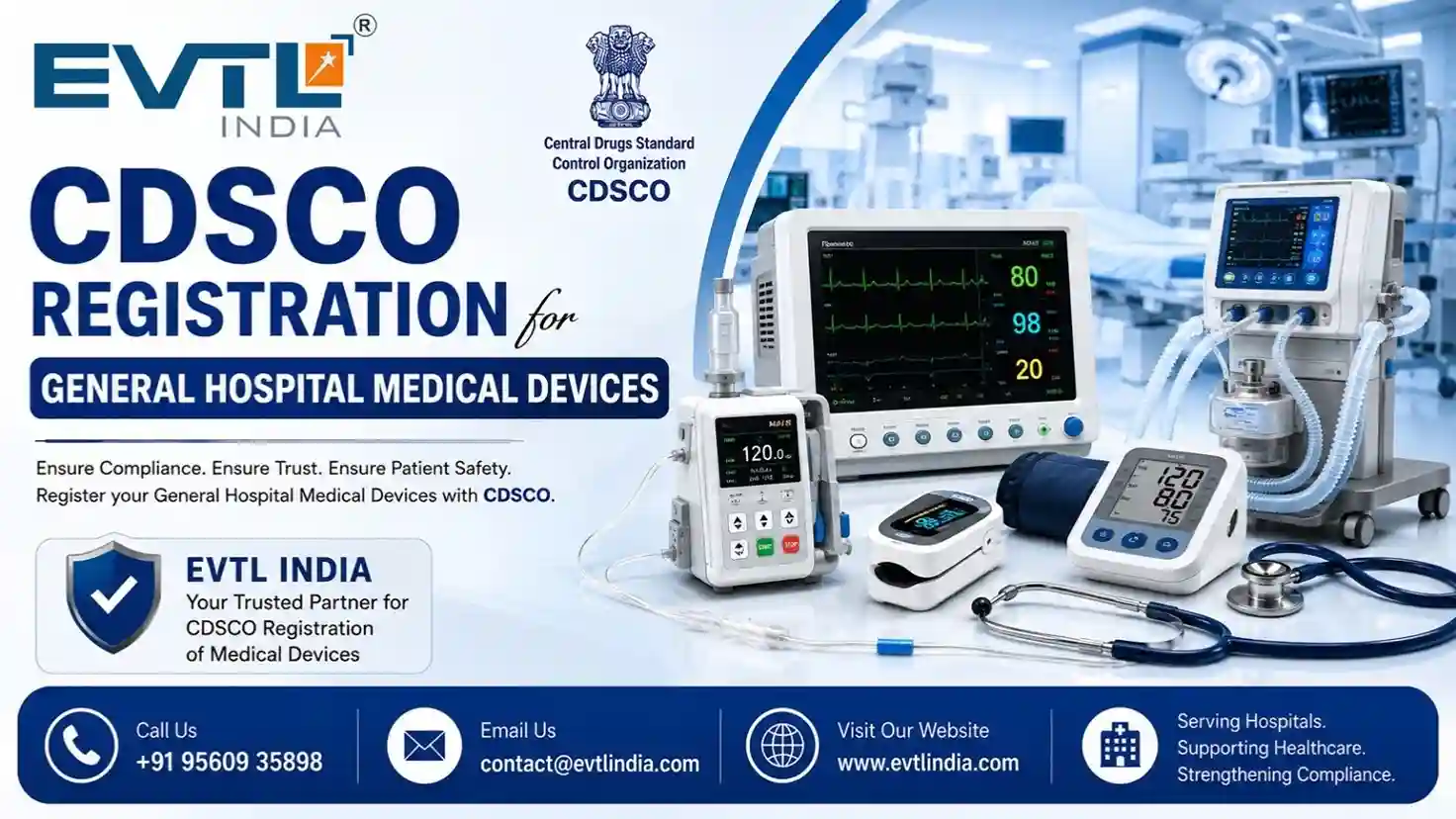
Such situations are becoming increasingly common in India's healthcare sector. Many manufacturers and importers assume that producing high-quality medical devices is enough to enter the Indian market. However, CDSCO Registration for General Hospital Medical Devices is a mandatory regulatory requirement for many notified medical devices. Without the appropriate CDSCO approval, manufacturers and importers cannot legally manufacture, import, sell, or distribute regulated hospital medical devices in India.
Today, India's medical device industry is governed by strict regulations issued by the Central Drugs Standard Control Organization (CDSCO) under the Medical Devices Rules, 2017. CDSCO regulates a wide range of general hospital medical devices, including patient monitoring systems, hospital furniture, infusion devices, syringes, surgical instruments, diagnostic equipment, and various other medical products. Failure to comply with these regulations may result in shipment delays, financial penalties, product recalls, cancellation of licences, and loss of valuable business opportunities.
The following guide explains everything you need to know about CDSCO Registration for General Hospital Medical Devices, including the registration process, applicable device categories, required documents, licensing requirements, and the steps manufacturers and importers must follow to achieve regulatory compliance in India.
What is a CDSCO License for General Hospital Medical Devices?
A CDSCO License for General Hospital Medical Devices is a mandatory regulatory approval issued under the Drugs and Cosmetics Act, 1940 and the Medical Devices Rules, 2017. It authorizes manufacturers and importers to legally manufacture, import, and market notified general hospital medical devices in India. The licensing process ensures that medical devices meet the prescribed safety, quality, and performance standards before they are made available to healthcare providers and patients.
Under the CDSCO regulatory framework, medical devices are classified according to their level of risk -
- Class A: Low-risk devices, such as surgical gloves and basic medical instruments.
- Class B: Low to moderate-risk devices, including infusion sets and similar products.
- Class C: Moderate to high-risk devices, such as ventilators, patient monitors, and diagnostic imaging equipment.
- Class D: High-risk, life-supporting or life-sustaining medical devices.
Most general hospital medical devices fall under Class A, Class B, or Class C, depending on their intended purpose, duration of use, and degree of patient interaction.
Obtaining a CDSCO License for General Hospital Medical Devices demonstrates that the product complies with the applicable regulatory requirements, quality management standards, and safety guidelines, enabling its lawful manufacture, import, distribution, and sale in the Indian healthcare market.
Why is a CDSCO License Mandatory for General Hospital Medical Devices?
Medical devices used in hospitals directly impact patient health and safety, making regulatory compliance essential. The CDSCO License for General Hospital Medical Devices ensures that manufacturers and importers meet the quality, safety, and performance standards prescribed under Indian regulations. Without this approval, medical devices cannot be legally manufactured, imported, or marketed in India.
The key reasons why a CDSCO License is mandatory include -
- Ensures compliance with the provisions of the Drugs & Cosmetics Act, 1940 and Medical Device Rules, 2017.
- Confirms that medical devices meet prescribed safety, quality, and performance standards before reaching the market.
- Protects patients by reducing the risk of defective, unsafe, or substandard medical devices.
- Acts as a mandatory requirement for supplying products to government hospitals, healthcare institutions, and public procurement agencies.
- Builds confidence among hospitals, healthcare professionals, and end users by demonstrating regulatory compliance.
- Enables manufacturers and importers to market and distribute medical devices across India without regulatory hurdles.
Without a valid CDSCO License for General Hospital Medical Devices, even technologically advanced and high-quality products may be rejected during regulatory inspections, procurement evaluations, or market surveillance, preventing their legal sale and distribution in India.
Types of CDSCO Licenses for Medical Devices
Before applying for a CDSCO licence, it is important to understand the different categories of licences available under the Medical Device Rules, 2017. The type of licence required depends on whether the device is manufactured, imported, tested, or produced through a third-party manufacturer.
- Manufacturing Licence: A Manufacturing Licence is required for companies that manufacture medical devices in India. Depending on the risk classification of the device, licences are issued under the relevant CDSCO application forms, such as MD-5 or MD-9.
- Import Licence: An Import Licence is mandatory for foreign manufacturers and Indian importers intending to market medical devices in India. Applications for import approval are processed through Forms MD-14 and MD-15.
- Loan Licence: A Loan Licence is suitable for businesses that own the product brand but outsource manufacturing to a licensed manufacturing facility. This allows companies to market their products without establishing their own manufacturing unit.
- Test Licence: A Test Licence is issued for the import or manufacture of medical devices intended for testing, evaluation, clinical investigation, demonstration, or performance assessment before commercial distribution.
Each type of CDSCO licence has its own eligibility criteria, documentation requirements, and regulatory procedures. Selecting the correct licence category is essential to ensure a smooth approval process and full compliance with Indian medical device regulations.
Eligibility Criteria for CDSCO License
To obtain a CDSCO License for General Hospital Medical Devices, applicants must satisfy the eligibility requirements prescribed under the applicable regulatory framework. These include -
- A legally registered business entity in India.
- An established quality management system compliant with ISO 13485.
- Qualified technical personnel with expertise in biomedical engineering, medical devices, or related fields.
- A well-maintained and controlled manufacturing facility (for manufacturers).
- Compliance with Good Manufacturing Practices (GMP) and applicable quality standards.
- Access to accredited testing laboratories for product evaluation and quality verification.
In addition to these requirements, the licensing authority evaluates the applicant's technical capabilities, manufacturing infrastructure, and quality control systems to ensure that medical devices are consistently produced in accordance with prescribed safety and performance standards.
Documents Required for a CDSCO License for General Hospital Medical Devices
Preparing accurate and complete documentation is a crucial step in obtaining a CDSCO License for General Hospital Medical Devices. The regulatory authority carefully reviews all submitted documents to verify compliance with the applicable standards and Medical Device Rules, 2017. Any missing or incorrect information may result in delays or additional queries during the approval process -
The essential documents required include:
- Certificate of Incorporation or Business Registration
- Manufacturing site layout and facility details
- Device Master File (DMF)
- Plant Master File (PMF)
- ISO 13485 Certificate for Quality Management System
- Product technical specifications and design details
- Test reports from NABL-accredited laboratories
- Quality Management System (QMS) and quality assurance procedures
- Authorization Letter or Power of Attorney (if the application is filed through an authorized consultant)
Ensuring that all documents are complete, accurate, and up to date helps streamline the CDSCO approval process and minimizes the chances of regulatory delays.
CDSCO License Process for General Hospital Medical Devices
Obtaining a CDSCO License for General Hospital Medical Devices involves a structured regulatory process to ensure that the device meets the required safety, quality, and performance standards. The application process typically includes the following steps -
- Device Classification: Identify the appropriate risk category of the medical device—Class A, Class B, Class C, or Class D—as per the Medical Device Rules, 2017.
- Documentation Preparation: Compile all required documents, including the Device Master File (DMF), Plant Master File (PMF), quality management system records, test reports, and other regulatory documents.
- Online Application Submission: Submit the application through the CDSCO online portal (SUGAM) along with the prescribed documents and application forms.
- Payment of Government Fees: Pay the applicable government fee based on the type of licence and the risk classification of the medical device.
- Technical Review: CDSCO evaluates the submitted technical documentation to verify the device's safety, quality, and compliance with applicable regulatory requirements.
- Manufacturing Site Inspection (If Applicable): For certain categories of medical devices, CDSCO or the designated licensing authority may conduct an inspection of the manufacturing facility to assess compliance with Good Manufacturing Practices (GMP).
- Response to Queries: If additional information or clarification is required, the applicant must submit the requested documents or explanations within the specified timeline.
- Grant of CDSCO License: Upon successful review and compliance with all regulatory requirements, the competent authority issues the CDSCO License, authorizing the manufacture or import of the medical device in India.
Timeline for CDSCO License Approval
The time required to obtain a CDSCO License for General Hospital Medical Devices varies based on the device's risk classification and the completeness of the application.
- Class A & Class B Devices: Typically approved within 30–60 days
- Class C Devices: Generally require 60–90 days
- Class D Devices: Approval may take 90–120 days or longer
The overall timeline may increase if additional information is requested by the authorities, technical documents are incomplete, or a manufacturing site inspection is required.
CDSCO License Fees and Cost Factors
The cost of obtaining a CDSCO License depends on several factors, including the type of medical device and the applicable regulatory requirements.
Key cost components include:
- Government application and licensing fees
- Device risk classification (Class A, B, C, or D)
- Product testing charges at approved laboratories
- Inspection and audit expenses, where applicable
- Documentation preparation and regulatory consultancy fees (if availed)
Since higher-risk medical devices undergo a more comprehensive technical evaluation, they generally involve higher regulatory compliance and certification costs.
Compliance Requirements After Approval
Obtaining a CDSCO License is only the beginning of the regulatory compliance process. After approval, manufacturers and importers must continue to meet the ongoing requirements prescribed under the Medical Device Rules, 2017 to retain their market authorization.
Key post-approval compliance requirements include -
- Post-market surveillance and product performance monitoring
- Timely reporting of adverse events and safety issues
- Periodic renewal of the CDSCO license, where applicable
- Maintenance of batch-wise production and distribution records
- Regular internal audits and regulatory inspections
Continuous compliance helps ensure product quality, patient safety, and uninterrupted market access.
Common Challenges in Obtaining a CDSCO License
The CDSCO approval process can be complex, and applicants often encounter challenges that delay licensing or result in additional regulatory queries.
Some of the most common issues include -
- Incorrect classification of medical devices
- Incomplete or inconsistent technical documentation
- Delays in obtaining laboratory test reports
- Non-compliance with ISO 13485 quality management requirements
- Slow responses to regulatory queries and clarification requests
Following a well-planned compliance strategy and maintaining accurate documentation can significantly improve the chances of timely approval.
Benefits of a CDSCO License for General Hospital Medical Devices
A valid CDSCO License enables manufacturers and importers to legally market their medical devices in India while strengthening their competitive position in the healthcare industry.
Key benefits include -
- Legal authorization to manufacture or import medical devices in India
- Eligibility to participate in government and institutional procurement
- Enhanced credibility among hospitals, distributors, and healthcare providers
- Faster procurement and smoother regulatory acceptance
- Improved opportunities for expansion into regulated international markets
For medical device businesses, obtaining a CDSCO License for General Hospital Medical Devices is a crucial step toward sustainable growth and long-term market success.
Integrating CDSCO Compliance with Other Regulatory Frameworks
Many organizations integrate CDSCO compliance with internationally recognized quality and regulatory systems to strengthen their overall compliance framework. Aligning CDSCO requirements with standards such as ISO 13485 and other applicable certifications helps establish consistent quality management practices, simplifies regulatory processes, and supports long-term operational efficiency. This integrated approach enhances regulatory readiness while ensuring continuous compliance with evolving medical device regulations.
Why Choose EVTL India in CDSCO Licensing
Obtaining a CDSCO License for General Hospital Medical Devices requires accurate documentation, proper device classification, and strict compliance with the Medical Device Rules, 2017. Even small mistakes in the application or technical documents can result in delays, regulatory queries, or rejection.
With the support of EVTL India, the licensing process becomes simple and well-organized. Our regulatory experts assist in preparing all mandatory documentation, including the Device Master File (DMF), Plant Master File (PMF), ISO 13485 certification, product technical files, laboratory test reports, and other documents required by CDSCO.
We help manufacturers and importers correctly classify their medical devices under Class A, B, C, or D, ensuring the appropriate licensing route is selected from the beginning and reducing the risk of compliance issues. Our team manages the complete licensing process—from document preparation and online application submission to responding to CDSCO queries, coordinating inspections (where applicable), and following up until the licence is issued. This comprehensive approach helps minimize delays and improves the likelihood of timely approval.
Even after the CDSCO licence is granted, EVTL India continues to support businesses with post-approval compliance, including licence renewals, regulatory updates, adverse event reporting, and ongoing documentation maintenance to ensure uninterrupted compliance with CDSCO requirements.
Conclusion
A CDSCO Registration for General Hospital Medical Devices is much more than a regulatory approval. It is a critical compliance requirement that determines whether a medical device can be legally manufactured, imported, and marketed in India.
For manufacturers and importers, obtaining CDSCO registration is essential for ensuring regulatory compliance, uninterrupted market access, stronger credibility among hospitals and healthcare institutions, and long-term business growth in India's highly regulated medical device sector.
Businesses that invest in proper device classification, accurate technical documentation, ISO 13485 compliance, and robust quality management systems are more likely to achieve faster approvals and face fewer regulatory challenges during the licensing process.
A well-planned CDSCO compliance strategy is no longer optional-it is a fundamental requirement for successfully operating and expanding in India's rapidly growing medical device market.