CDSCO Medical Device Registration in India: Process, Documents & Licence Guide
Introduction to CDSCO Medical Device Registration
CDSCO Medical Device Registration is the regulatory process for obtaining the required licence to manufacture or import notified medical devices in India. The Central Drugs Standard Control Organization (CDSCO) regulates medical devices under the Medical Devices Rules, 2017 to ensure they meet the required standards of safety, quality, and performance before being marketed in the country.
Manufacturers and importers of notified medical devices must obtain the appropriate manufacturing or import licence by fulfilling the applicable regulatory requirements. The process typically includes device classification, preparation of technical documentation, application submission through the CDSCO SUGAM Portal, regulatory review, and licence approval.
Whether you are an Indian manufacturer, foreign manufacturer, importer, or Authorised Indian Representative (AIR), understanding the CDSCO regulatory framework is essential for ensuring compliance and obtaining timely approval for your medical devices.
Medical Device Under the Medical Devices Rules, 2017
A medical device is any instrument, apparatus, appliance, implant, software, material, or other article intended for the diagnosis, prevention, monitoring, treatment, or alleviation of a disease or medical condition. In India, medical devices are regulated by the Central Drugs Standard Control Organization (CDSCO) under the Medical Devices Rules, 2017, framed under the Drugs and Cosmetics Act, 1940.
According to Rule 3(zb) of the Medical Devices Rules, 2017, medical devices are used for purposes such as:
- Diagnosis, prevention, monitoring, or treatment of diseases.
- Diagnosis or treatment of injuries and disabilities.
- Supporting or replacing anatomical structures or physiological functions.
- Life-supporting or life-sustaining purposes.
- Contraception.
- Disinfection of medical devices.
- In-vitro examination of human specimens (IVD medical devices).
Unlike medicines, medical devices primarily achieve their intended purpose through physical, mechanical, or technological means rather than pharmacological action.
Common Examples of Medical Devices
Some commonly regulated medical devices include -
- Surgical gloves and syringes
- Blood pressure monitors and thermometers
- Ventilators and infusion pumps
- X-ray, CT Scan, MRI, and Ultrasound equipment
- Orthopedic implants and cardiac stents
- Pacemakers and patient monitoring systems
- In-Vitro Diagnostic (IVD) kits
Medical devices range from simple disposable products to advanced life-supporting equipment. Before manufacturing or importing any notified medical device in India, businesses must comply with the applicable CDSCO licensing requirements.
Who Needs CDSCO Medical Device Registration?
CDSCO Medical Device Registration or licensing is required for businesses involved in the manufacturing or importing of notified medical devices in India. Depending on the type of business and the device's risk classification, applicants must obtain the appropriate licence under the Medical Devices Rules, 2017 before placing their products on the Indian market.
The following entities generally require a CDSCO medical device licence -
- Indian Medical Device Manufacturers: Indian manufacturers must obtain a valid manufacturing licence before manufacturing, marketing, or selling notified medical devices in India.
- Foreign Medical Device Manufacturers: Foreign manufacturers exporting medical devices to India must obtain an import licence through CDSCO and appoint an Authorised Indian Representative (AIR).
- Medical Device Importers: Importers of notified medical devices must obtain the applicable import licence before importing or distributing products in India.
- IVD Medical Device Manufacturers and Importers: Businesses dealing with In-Vitro Diagnostic (IVD) medical devices must also obtain the appropriate manufacturing or import licence based on the device classification.
- Authorised Indian Representatives (AIR): The AIR represents foreign manufacturers in India and is responsible for regulatory submissions, communication with CDSCO, and post-market compliance.
The type of license required depends on the medical device classification and whether the product is manufactured in India or imported from another country.
Who Does Not Need CDSCO Medical Device Registration?
Businesses involved only in the distribution, wholesale, retail sale, or supply of already licensed medical devices generally do not require a separate CDSCO manufacturing or import licence. Similarly, hospitals, clinics, and diagnostic laboratories using approved medical devices for patient care are not required to obtain a manufacturing or import license solely for using these devices. However, they must comply with the applicable provisions of the Medical Devices Rules, 2017 and other relevant regulations.
List of Notified Medical Devices in India
Notified medical devices are products regulated by the Central Drugs Standard Control Organization (CDSCO) under the Medical Devices Rules, 2017. These devices require the appropriate manufacturing or import licence before they can be manufactured, imported, or marketed in India.
CDSCO regulates a wide range of medical devices, including -
- CDSCO Registration for Cardiovascular Devices
- CDSCO Registration for Orthopedic Devices
- CDSCO Registration for General Hospital Equipment
- CDSCO Registration for Surgical Instruments
- CDSCO Registration for Ophthalmic and Dental Devices
- CDSCO Registration for Neurology and Respiratory Devices
- CDSCO Registration for Diagnostic Imaging Equipment
- CDSCO Registration for In-Vitro Diagnostic (IVD) Devices
- CDSCO Registration for Patient Monitoring Devices
- CDSCO Registration for Infusion and Dialysis Equipment
- CDSCO Registration for Medical Furniture
- CDSCO Registration for Implantable Medical Devices
- CDSCO Registration for Sterilization and Infection Control Products
Some commonly regulated medical devices include -
- CDSCO Registration for Surgical gloves and syringes
- CDSCO Registration for Blood pressure monitors and thermometers
- CDSCO Registration for Ventilators and infusion pumps
- CDSCO Registration for X-ray, CT Scan, MRI, and Ultrasound equipment
- CDSCO Registration for Orthopedic implants and cardiac stents
- CDSCO Registration for Pacemakers
- CDSCO Registration for Blood collection bags
- CDSCO Registration for HIV and other IVD diagnostic kits
If you are unsure whether your product is regulated by CDSCO, you should -
- Review the Medical Devices Rules, 2017 and relevant notifications.
- Identify the intended use of the medical device.
- Determine its applicable risk classification.
- Verify the product through the official CDSCO resources or seek professional regulatory guidance.
Identifying whether a product is a notified medical device is the first step. The next step is to determine its risk classification (Class A, B, C, or D), as the applicable licensing authority, documentation, and approval process depend on the device's classification.
CDSCO Medical Device Classification
Under the Medical Devices Rules, 2017, CDSCO classifies medical devices into four risk-based categories: Class A, Class B, Class C, and Class D. The classification determines the applicable licensing authority, regulatory requirements, documentation, and approval process.
Medical devices are classified based on factors such as their intended use, duration of use, degree of invasiveness, implantability, whether they support or sustain life, and the potential risk to patients. The classification is carried out in accordance with the First Schedule of the Medical Devices Rules, 2017.
CDSCO Medical Device Classification
The correct classification determines -
- The licensing authority.
- The applicable application forms.
- The required documents.
- The level of regulatory review.
- Inspection or audit requirements.
- Post-licence compliance obligations.
Choosing the correct classification is essential, as an incorrect classification may lead to regulatory queries, delays, or rejection of the application. The following sections explain the requirements for Class A, Class B, Class C, and Class D medical devices in detail.
Import Licence vs Manufacturing Licence for Medical Devices
Before manufacturing or importing a medical device in India, businesses must determine whether they require a Manufacturing Licence or an Import Licence under the Medical Devices Rules, 2017.
A Manufacturing Licence is required for medical devices manufactured within India, while an Import Licence is required for medical devices manufactured outside India and imported for sale or distribution in the Indian market. Foreign manufacturers must appoint an Authorised Indian Representative (AIR) to apply for an import licence through the CDSCO SUGAM Portal.
Difference Between Manufacturing Licence and Import Licence
You generally need a Manufacturing Licence if you manufacture notified medical devices in India. An Import Licence is required if the medical devices are manufactured outside India and imported into the Indian market.
Selecting the correct licence is important because it determines the applicable application forms, documentation requirements, licensing authority, and approval process. Choosing the wrong licence category may lead to regulatory queries or delays in obtaining approval.
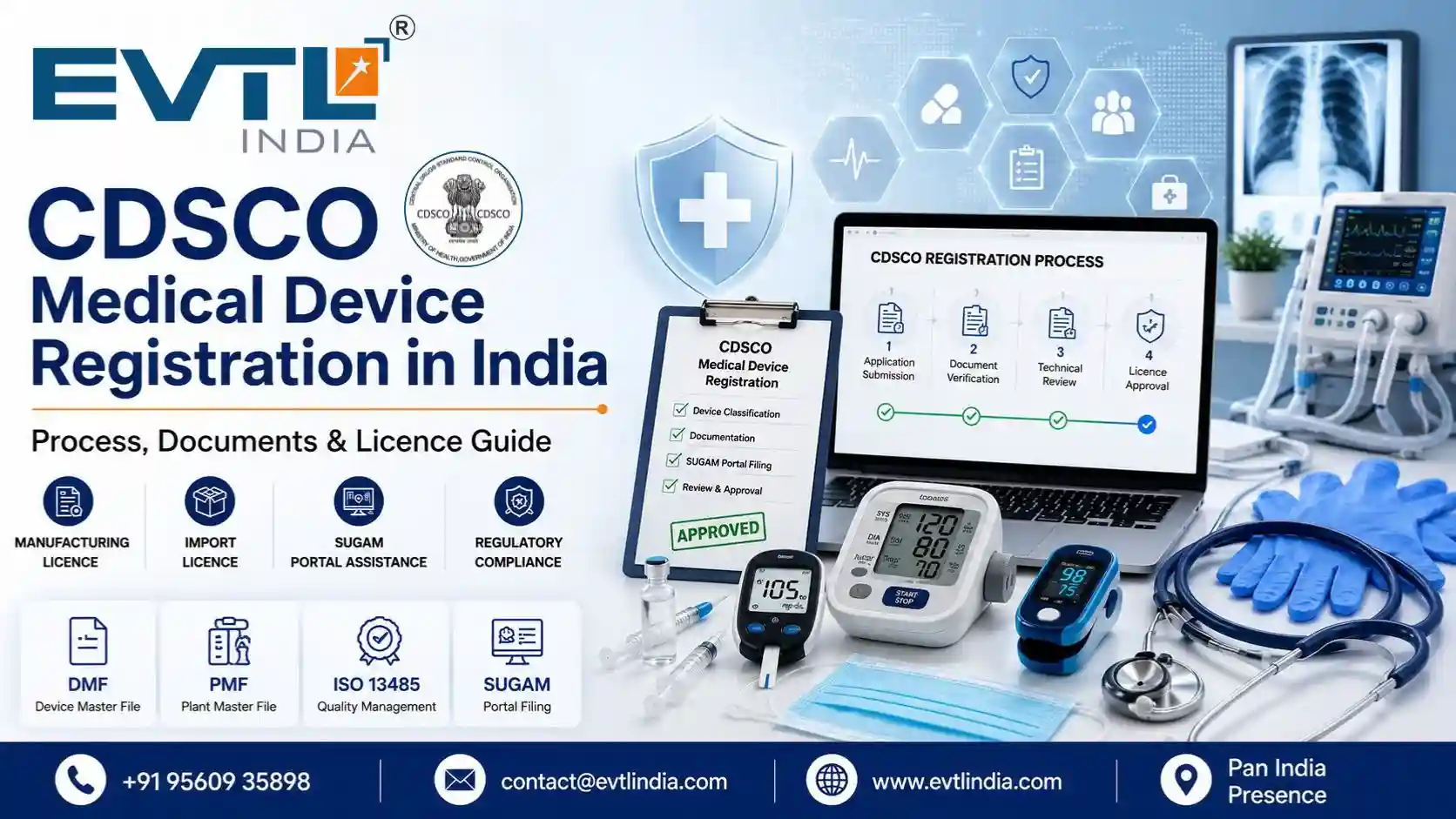
CDSCO Medical Device Registration Process (Step-by-Step)
The CDSCO Medical Device Registration process involves identifying the correct device classification, preparing the required documents, submitting the application through the CDSCO SUGAM Portal, and obtaining the appropriate manufacturing or import licence before the medical device can be marketed in India.
- Verify the Medical Device
Confirm whether your product qualifies as a medical device under the Medical Devices Rules, 2017 and whether it is regulated by CDSCO.
- Determine the Device Classification
Identify whether the medical device falls under Class A, Class B, Class C, or Class D, as the classification determines the licensing authority, documentation, and approval process.
- Prepare the Required Documents
Compile all necessary technical and regulatory documents, such as the Device Master File (DMF), Plant Master File (PMF), ISO 13485 Certificate, product testing reports, labels, and other supporting documents. Foreign manufacturers must also appoint an Authorised Indian Representative (AIR).
- Submit the Application
Submit the application online through the CDSCO SUGAM Portal using the applicable form and pay the prescribed government fee.
- Application Review and Inspection
The licensing authority reviews the application and may raise queries or conduct a facility inspection, depending on the device classification and regulatory requirements.
- Grant of Licence
Once all requirements are fulfilled, the appropriate Manufacturing Licence or Import Licence is issued, allowing the medical device to be legally manufactured or imported into India.
- Post-Licence Compliance
After approval, licence holders must continue to comply with the Medical Devices Rules, 2017, maintain quality records, and fulfil all applicable post-market regulatory requirements.
Documents Required for CDSCO Medical Device Registration
To get a Manufacturing Licence or Import Licence for medical devices in India, applicants must submit the required technical, quality, and regulatory documents to the licensing authority. The exact requirements vary depending on the device classification, licence type, and whether the applicant is an Indian or foreign manufacturer.
- Covering letter and application form
- Device Master File (DMF)
- Plant Master File (PMF)
- ISO 13485 Certificate
- Manufacturing site details and facility layout
- Product specifications and Risk Management File
- Product labels and Instructions for Use (IFU)
- Product testing reports
- Clinical or Performance Evaluation Report (where applicable)
- Quality Control procedures
- Company incorporation documents, PAN, GST, and address proof
- Fee payment receipt
