CDSCO Compliance Checklist for Startups | Medical Device Guide India
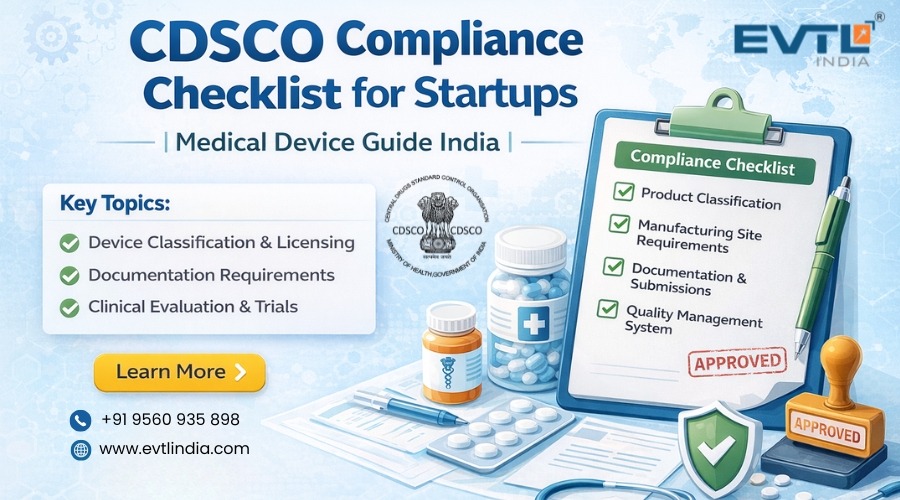
For those considering starting a business in the healthcare market in India, however, this comes with strict regulatory responsibilities. If you plan to manufacture, import, or sell medical devices in India, it's important to understand the CDSCO compliance checklist for startups. its a mandatory for Regulation
The Central Drugs Standard Control Organization (CDSCO) regulates medical devices to ensure safety, quality, and performance. For startups, compliance is not just a legal requirement—it’s a foundation for building trust and scaling your business.
Why CDSCO Compliance is Important for Startups
Startups often focus on innovation and speed, but ignoring compliance can lead to:
- Product rejection : If you are entering the health market, you just follow the rules or guidelines that have standards set by the Central Drugs Standard Control Organization, which can lead to immediate product rejection, preventing your device
- Legal penalties : CDSCO makes a regulation for products; they follow the terms and conditions. If you do not take it, then you have some legal actions or even business suspension; it affects your startup’s operations and growth or backlists your company.
- Market entry delays :First of all, if all your documentation is incomplete or has regulatory errors, then it can slow down approvals by delaying your product launch and giving competitors an advantage.
- Loss of credibility : When a startup starts in medical devices, then follow the regulations; if you do wrong or fail to comply with CDSCO guidelines, it can damage your brand reputation. It's making it difficult to gain trust from customers, investors, and healthcare professionals.
By following a proper CDSCO compliance checklist, you can avoid these risks and ensure a smooth product launch.
CDSCO Compliance Checklist for Startups
1. identify your medical device classification
Class A( Low Risk): Basic devices with minimum risk to patients, generally easy to use such as simple medical tools like as Thermometers, surgical dressings, and bandages
Class B( Low-Moderate Risk): Devices with slightly higher risk that require controlled usage and monitoring. Hypodermic needles, suction equipment, blood pressure monitors, and infusion pumps.
Class C (Moderate-High Risk): These devices play a critical role in patient care regulatory control for patient safety for human life . Ventilators, dialysis machines, bone fixation implants, and infusion pumps
Class D (High Risk): High-risk devices that directly impact life and require the highest level of scrutiny and approval. Heart valves, pacemakers, implantable defibrillators, and coronary stents.
2. determine applicable regulations
Startups must comply with the Medical Device Rules, 2017 under CDSCO. Ensure your product:
- Falls under notified medical devices
- Meets Indian regulatory standards
- Aligns with global safety norms
3. register on cdsco sugam portal
Businesses that start must be registered on the CDSCO Sugam Portal, which is an online platform. It's a government portal to fill out the application. Then wait for the CDSCO approval process. Startups need to create an account, fill in company details, and upload required documents carefully. Accurate registration ensures smooth application processing and helps avoid unnecessary delays or rejections.
All applications must be submitted through the CDSCO Sugam Portal.
Checklist:
- Create login credentials
- Fill accurate company details
- Registration purpose
- Upload required documents
Any error here can delay your approval.
4. prepare essential documentation
Documentation is the backbone of CDSCO compliance.
Key documents include:
- Device Master File (DMF)
- Plant Master File (PMF)
- ISO 13485 Certificate
- Free Sale Certificate (for importers)
- Clinical evaluation data (if applicable)
- Labeling and packaging details
5. appoint an authorized indian agent (for importers)
If you are a foreign startup, you must appoint an Indian Authorized Agent who will:
- Represent you before CDSCO
- Handle submissions and queries
- Ensure regulatory compliance
6.apply for cdsco license
7. ensure quality management system(qms)
A strong Quality Management System is mandatory.
Most startups need:
- ISO 13485 certification
- Standard Operating Procedures (SOPs)
- Risk management system
This ensures consistent product quality and compliance.
8. conduct product testing & validation
Your product must be tested in:
- NABL-approved laboratories
- Accredited testing facilities
Ensure:
- Safety testing
- Performance validation
- Biocompatibility (if required)
9. labeling compliance
CDSCO has strict labeling requirements. Your product label must include:
- Product name
- Manufacturer/importer details
- Batch number
- Manufacturing & expiry date
- Regulatory symbols
Incorrect labeling can lead to rejection.
Common Mistakes Startups Should Avoid
- Incorrect device classification
- Incomplete documentation
- Ignoring CDSCO updates
- Poor quality management system
- Errors in Sugam portal submission
Avoiding these mistakes can save both time and cost.
Pro Tips for Startups
- Start compliance early in product development
- Keep documents updated and organized
- Work with experienced CDSCO consultants
- Regularly check regulatory updates
Conclusion
EVTL India is a trusted CDSCO registration consultant in India, helping medical device businesses achieve compliance smoothly
For startups entering the medical device market, following a proper CDSCO compliance checklist is not optional—it’s essential. It ensures smooth approval, builds trust with customers, and helps your business scale without legal hurdles.
By aligning with the Central Drugs Standard Control Organization guidelines from the beginning, startups can confidently launch their products and grow in the Indian healthcare market.