CDSCO Certification for Ear Nose Throat (ENT) Devices
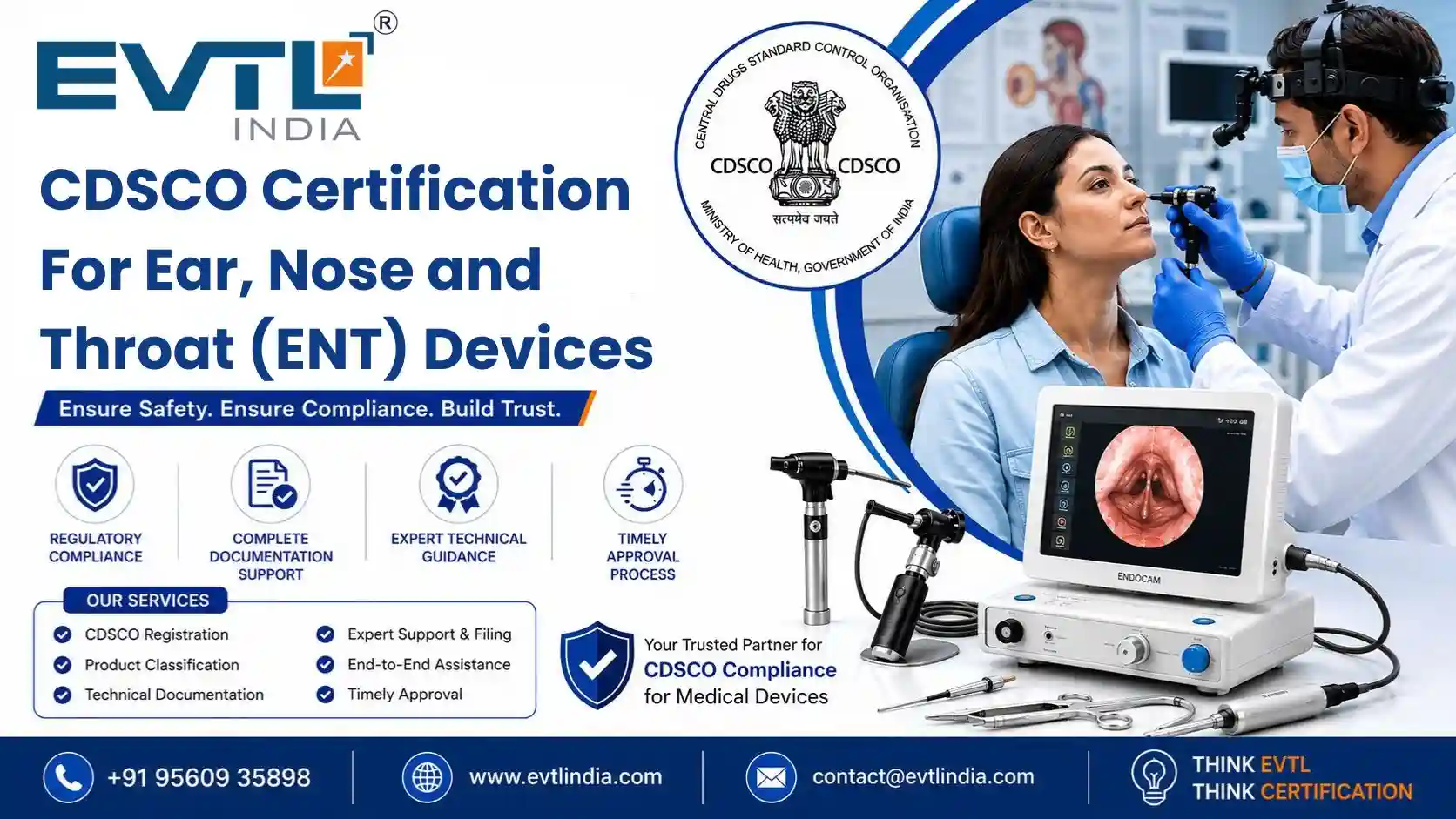
CDSCO Certification for Ear, Nose and Throat (ENT) Devices is required for manufacturers and importers who want to market regulated ENT medical devices in India. The Central Drugs Standard Control Organization (CDSCO) regulates medical devices under the Medical Devices Rules, 2017 to ensure their safety, quality, and performance.
ENT devices such as hearing aids, diagnostic instruments, surgical devices, nasal devices, and other specialized equipment may fall under different regulatory classifications and requirements. Depending on the device, manufacturers or importers may need to obtain the appropriate CDSCO registration or licence before placing the product on the Indian market.
Understanding the applicable device classification, Indian regulatory requirements, documentation, testing, and licensing process is essential for smooth and compliant market entry.
What is CDSCO Registration for ENT Medical Devices?
CDSCO Registration for ENT Medical Devices is the regulatory process applicable to medical devices used for the diagnosis, examination, monitoring, and treatment of conditions affecting the ear, nose, throat, and related head and neck structures in India.
The Central Drugs Standard Control Organization (CDSCO) regulates medical devices in India under the Medical Devices Rules, 2017. Based on the device type, intended use, and associated risk, ENT medical devices are classified into Class A, Class B, Class C, and Class D. The classification determines the applicable regulatory requirements and licensing process.
Types of ENT Medical Devices
ENT medical devices include a wide range of diagnostic, examination, monitoring, and surgical equipment, such as -
- Otoscope: Used to examine the ear canal and eardrum.
- Nasal Speculum: Used for examination of the nasal passages.
- Laryngoscope: Used to examine the throat and larynx.
- Endoscopes: Used for detailed examination of the ear, nose, and throat.
- Audiometers: Used to assess a patient's hearing ability.
- Tympanometers: Used to evaluate the condition and functioning of the middle ear.
- ENT Surgical Instruments: Used during various ENT procedures and surgeries.
Depending on the specific device and its risk classification (Class A, B, C, or D), manufacturers and importers must comply with the applicable CDSCO requirements before placing the device on the Indian market.
What Is CDSCO and Its Role in Medical Device Regulation?
The Central Drugs Standard Control Organization (CDSCO) is India’s national regulatory authority responsible for ensuring the quality, safety, and effectiveness of drugs and medical devices. It operates under the Directorate General of Health Services (DGHS), Ministry of Health & Family Welfare, Government of India.
For medical devices, CDSCO administers the regulatory framework under the Medical Devices Rules, 2017 (MDR 2017). The framework applies to medical devices and in-vitro diagnostic devices manufactured, imported, sold, or distributed in India.
CDSCO plays an important role in regulating medical devices by establishing requirements for registration, licensing, manufacturing, import, testing, quality control, and post-market surveillance. Depending on the risk level of a medical device, different regulatory requirements may apply.
Role of CDSCO in Medical Device Regulation
CDSCO plays an important role in regulating medical devices by -
- Classifying medical devices based on their intended use and associated risk.
- Granting applicable manufacturing and import licences for regulated medical devices.
- Evaluating applications and reviewing technical and regulatory documentation.
- Ensuring compliance with applicable Indian Standards and regulatory requirements.
- Monitoring the safety, quality, and performance of medical devices in the Indian market.
- Taking regulatory action against products that do not comply with applicable requirements.
- Overseeing clinical investigations and performance evaluations, wherever applicable.
- Coordinating with State Licensing Authorities (SLAs) for the implementation and enforcement of medical device regulations.
Risk-Based Classification of Medical Devices
Under the Medical Devices Rules, 2017, medical devices are generally classified according to their level of risk -
Legal Framework Governing CDSCO Certification for ENT Devices
CDSCO certification for ENT medical devices in India is mainly regulated under the Drugs and Cosmetics Act, 1940, Drugs and Cosmetics Rules, 1945, and Medical Devices Rules, 2017. ENT devices are divided into Class A, B, C, or D based on their risk level and how they are used.
Manufacturers and importers need the required CDSCO licence or registration before selling these devices in India. They must also follow the required safety, testing, labelling, documentation, and quality standards to ensure the devices are safe and suitable for use.
List of Documents Required to Apply for CDSCO Licence for ENT Medical Devices
The documents required for a CDSCO licence for ENT medical devices depend on the device classification and whether the device is manufactured in India or imported. The main documents generally include -
- Application Form – The applicable CDSCO application form, such as MD-3/MD-7 for manufacturing or MD-14 for import, depending on the device and application type.
- Covering Letter – A letter providing basic details of the applicant, device and purpose of the application.
- Constitution/Company Documents – Documents showing the legal constitution of the manufacturer or applicant, such as incorporation or partnership documents, as applicable.
- Site/Plant Master File (PMF) – Details of the manufacturing facility, premises, equipment, personnel, production, quality assurance, storage and documentation.
- Device Master File (DMF) – Detailed technical information about the ENT medical device, including its intended use, design, specifications, manufacturing process, safety and performance information.
- Quality Management System (QMS) Documents – Documents demonstrating that the manufacturing facility follows the applicable quality management requirements. An ISO 13485 certificate may be included where applicable.
- Essential Principles Compliance – Documentation showing compliance with the applicable Essential Principles of Safety and Performance.
- Risk Management Documents – Risk assessment and risk management information for identifying and controlling risks associated with the device.
- Testing and Performance Reports – Applicable safety, quality and performance test reports for the ENT medical device.
- Clinical Evaluation/Clinical Evidence – Clinical evaluation or other clinical evidence, where applicable based on the device and regulatory requirements.
- Declaration of Conformity – A declaration from the manufacturer confirming conformity with applicable regulatory requirements.
- Labelling and Packaging Details – Proposed labels, packaging information, instructions for use and other applicable product information.
- Fee Challan – Proof of payment of the applicable CDSCO licence/application fee.
- Additional Import Documents – For imported ENT medical devices, documents may include: , Power of Attorney for the Indian Authorised Agent , Indian Authorised Agent's constitution/licence documents , Free Sale Certificate or Marketing Authorisation, where applicable , Overseas manufacturing site/establishment registration, where applicable , Quality management and regulatory certificates from the manufacturer.
Step-by-Step Process for CDSCO License for ENT Medical Devices
- Identify the ENT Medical Device: Identify the device, its intended use, and whether it comes under CDSCO medical device regulations.
- Classify the Device: Determine whether the device is Class A, B, C, or D based on its risk level.
- Prepare Required Documents: Prepare documents such as the Device Master File, Plant Master File, test reports, labelling details, quality documents, and other required certificates.
- Select the Correct Application Form: Choose the applicable CDSCO application form based on the device class and whether it is being manufactured or imported.
- Submit the Application: Submit the application and required documents through the applicable CDSCO online portal.
- CDSCO Review & Inspection: CDSCO or the relevant licensing authority reviews the documents and may conduct an inspection or ask for additional information, if required.
- Get the CDSCO License: Once all requirements are successfully completed, the applicable CDSCO license is issued. The manufacturer or importer must then maintain ongoing regulatory compliance.
Timeline for CDSCO Certification
The timeline for CDSCO certification depends on the device class, type of application, testing requirements, and completeness of documents. In general, the process may take 2–6 months or more.
- Document Preparation: 1–3 weeks
- Testing & Technical Documents: 2–6 weeks
- Application Submission: 1–2 days
- CDSCO Review: 4–12 weeks
- Queries/Clarifications (if any): 2–4 weeks
- License Approval: After successful review and compliance
Note: The actual timeline may vary depending on the device classification and CDSCO's review process.
Benefits of CDSCO Certification for ENT Devices
- Legal Compliance
- Patient Safety
- Market Access
- Builds Trust
- Business Growth
Why Choose EVTL India as Your CDSCO Consultant
- 12+ Years of Experience: Our experienced team has over 12 years of expertise in regulatory and compliance services.
- Expert Guidance: Get professional support throughout the CDSCO registration process.
- Complete Documentation Support: We help prepare and review all required documents.
- Faster Process: We help reduce delays and avoid common application errors.
- End-to-End Support: From device classification to license approval, we assist at every step.
- Latest Regulatory Knowledge: We stay updated with CDSCO rules and requirements.
- Transparent Service: Clear communication and professional support throughout the process.
Conclusion
CDSCO certification is important for manufacturers and importers of ENT medical devices in India. Proper device classification, documents, testing, labelling, and licensing help ensure that the devices meet the required safety and quality standards.
The CDSCO process depends on the type and risk class of the device, so expert guidance can help avoid mistakes and delays. With 12+ years of experience, EVTL India provides complete support for ENT medical device compliance, from device classification and documentation to application submission and licence approval.