BIS Revises LED Luminaire Standards: Guidelines and What Manufacturers Need to Know About IS 10322:2026?
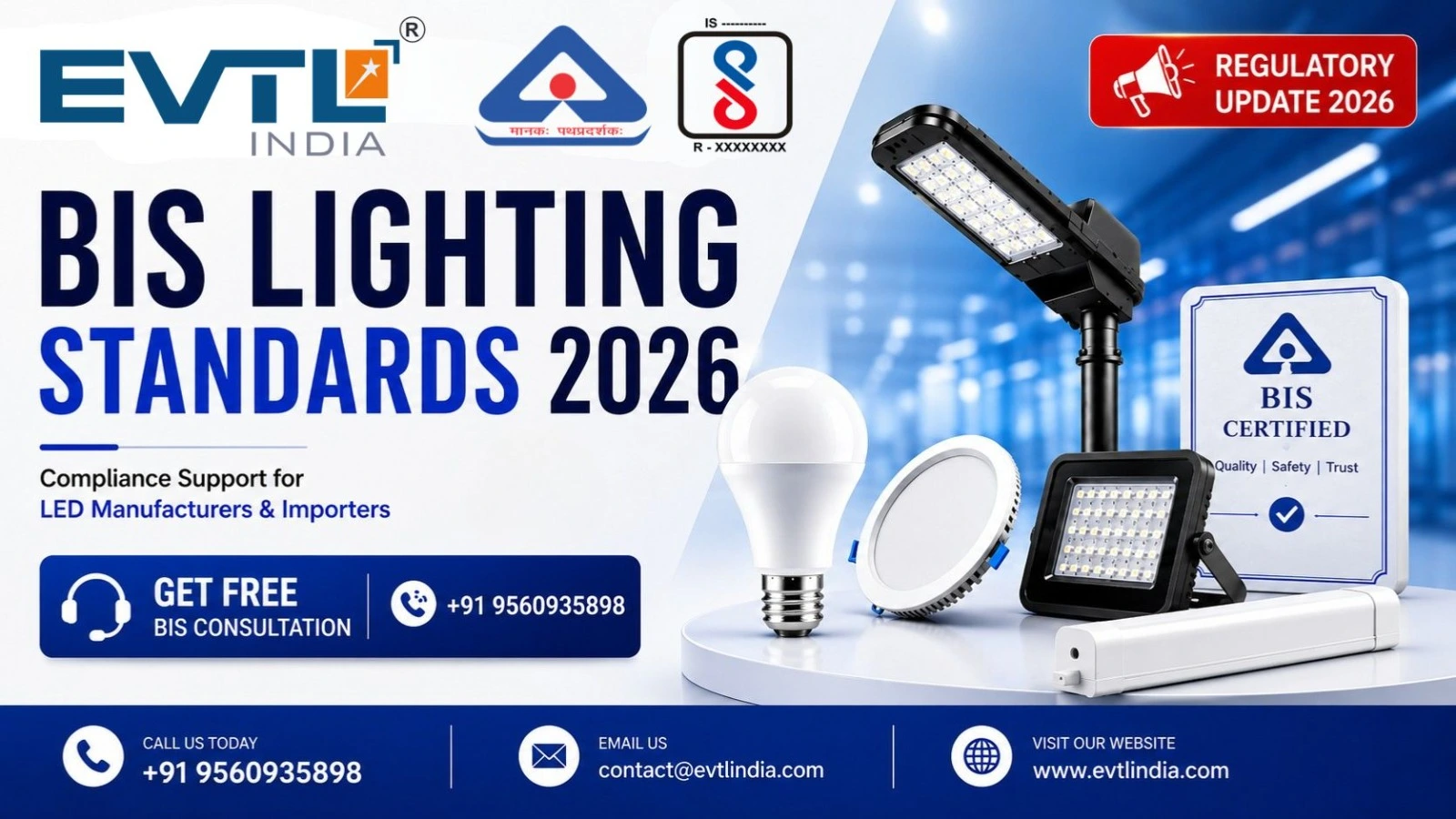
Major Amendments in Revised LED Luminaire Standards Set New Benchmark for Safety, Compliance, and Innovation — the Bureau of Indian Standards (BIS) has come up with a latest significant update to India's LED lighting regulatory implementation of guidelines under IS 10322 (Part 1):2026 and corresponding revisions among multiple sections governing LED luminaires. These BIS revisions are a crucial step towards underlined Indian lighting standards with updated international safety requirements, technological advancements, and emerging product categories.
This implementation of revised standards for LED luminaires various categories significantly impact the manufacturers, importers, testing laboratories, and professionals, helping understand these amendments is vital to assure uninterrupted access in the Indian market and required compliance under the Compulsory Registration Order (CRO). Let's see what are the key changes introduced in the revised standards, product categories, implementation timelines, and what the updates mandated for the LED lighting industry under the Indian Standard.
Product Categories Covered in Revised BIS Standards for LED Luminaires
The BIS Certification revised standards applicable to various categories of LED luminaires under the compulsory registration scheme (CRS).
The BIS revision impacts several categories of LED luminaires, including -
Important note: All existing BIS License and new applicants covered under these LED luminaires categories must implement the prescribed IS 10322 (Part 5):2026 standards by 02 August 2026. After this, BIS will no longer accept compliance under the previous versions of the standards, so manufacturers must make timely transitions for maintaining certification and market access.
Major Technical Amendments Introduced in IS 10322 (Part 1):2026
The revised standard introduces several significant technical enhancements to improve product safety, reliability, and performance.
Some of the key updates include -
- Introduction of IPX9 protection requirements for enhanced water resistance.
- Inclusion of Electromagnetic Field (EMF) safety requirements.
- Revised product marking and labelling requirements.
- New provisions for mains socket outlet marking.
- Safety requirements for protection against fast rotating parts, including moving fan blades.
- Introduction of the Protective Extra-Low Voltage (PELV) system.
- Additional requirements for luminaires using SELV output control gear.
- Updated electric shock protection tests with touch voltage and touch current limits.
- New annexures covering: Power sourcing equipment for Class III luminaires, Higher impulse withstand overvoltage (Category III), Battery and EDLC-operated luminaires.
- Extended Photobiological Safety Requirements.
These revisions align Indian standards more closely with global safety practices and emerging LED technologies.
Product-Specific Amendments Across LED Luminaire Categories
1. Fixed General Purpose LED Luminaires
The revised standard expands the scope to include all electric light sources and updates references to the newly revised Part 1 standard. This broader applicability ensures consistency across diverse lighting technologies entering the market.
2. Recessed LED Luminaires
Several important updates have been introduced for recessed luminaires, including:
- Integration of requirements previously contained in Part 1
- New provisions for air-handling luminaires
- Additional marking requirements
These amendments support safer installation practices and improved product performance in commercial and industrial environments.
3. LED Road and Street Lighting Luminaires
The revised requirements focus primarily on:
- Updated references to Part 1
- Enhanced marking requirements
Given the critical role of street lighting in public infrastructure, improved identification and compliance measures are expected to support better maintenance and operational reliability.
4. LED Flood Lights
Flood light manufacturers will need to address new compliance requirements, including:
- Introduction of glass-breaking tests
- Additional marking obligations
These measures enhance product robustness and safety, particularly in outdoor and high-impact environments.
5. LED Lighting Chains
The revised standard introduces:
- Requirements for Temporarily Installed Protected Lighting (TPL) chains
- New technical definitions
- Updated references to Part 1
These updates reflect evolving use cases in decorative, event, and commercial lighting applications.
6. LED Hand Lamps
The revised standard for LED Hand Lamps brings updated safety and performance requirements in alignment with Part 1 revisions, ensuring improved user safety and product reliability across various application environments.
7. LED Emergency Lighting Luminaires
Emergency lighting systems receive some of the most comprehensive updates, including:
- New requirements for lithium batteries
- Requirements for Electric Double Layer Capacitors (EDLCs)
- Updated provisions for rest mode and inhibiting mode
- Clarified high-temperature testing procedures
- Improved testing methodologies for exit sign visibility
These changes support greater reliability during emergency situations and address advancements in energy storage technologies.
Compliance Timeline and Industry Implications for LED Luminaires
What existing licensees must do: Current BIS license holders must transition to the revised standards by 2 August 2026.
Key compliance actions include -
- Obtaining fresh test reports from BIS-recognized laboratories for lead models
- Demonstrating conformity with the revised standard
- Providing declarations covering other series models within the licensed scope
Failure to complete the transition may result in cancellation of licenses or removal of products from the approved scope.
Guidance for New Applicants
New applicants may continue using the previous standards during the concurrent running period. However, all applications submitted under the older standards must include a commitment to implement the revised standards before the transition deadline.
After 2 August 2026, approvals will only be granted based on compliance with the revised standards.
Why Do These BIS LED Standard Revisions Matter?
The revision of IS 10322 represents more than a regulatory update — it reflects the rapid transformation of the lighting industry.
By incorporating advanced safety requirements, battery technologies, ingress protection measures, and improved testing methodologies, BIS is creating a framework that supports -
- Higher product safety
- Better quality assurance
- International harmonization
- Improved consumer confidence
- Enhanced reliability of LED lighting systems
Manufacturers that proactively align with these changes will be better positioned to maintain market competitiveness while reducing compliance risks.
Conclusion
The introduction of IS 10322:2026 marks a pivotal development for India's LED lighting ecosystem. With strengthened safety requirements, expanded testing protocols, improved marking provisions, and technology-focused updates, the revised standards set a new benchmark for quality and performance.
Organizations and manufacturers involved in the design, manufacture, testing, and certification of LED luminaires should begin their transition planning immediately to ensure seamless compliance before the August 2026 deadline.