
BIS License Renewal Validity Increased to 5 Years with Annual Fee Payment
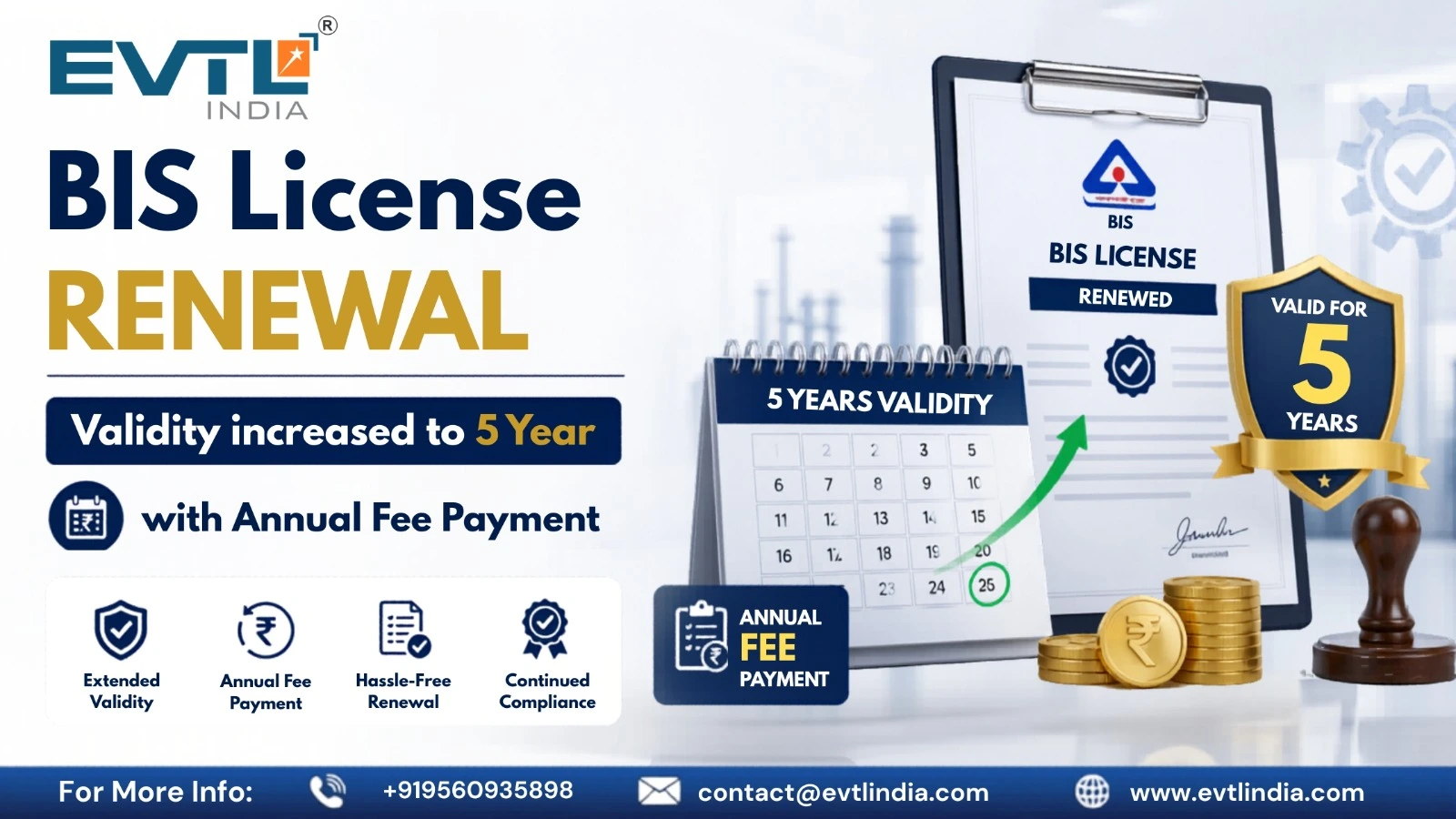
BIS License Renewal Validity Increased to 5 Years with Annual Fee Payment
Understanding the New BIS Renewal Update
Earlier, BIS licences—especially under schemes like CRS and ISI—were usually valid for only 1–2 years. This meant manufacturers had to renew their licences frequently. But with the 2026 amendment, the system has been changed to make things easier and reduce the burden of compliance. Under the new update:
- BIS licence renewal validity is now increased to 5 years
- Manufacturers do not have to pay the full 5-year fee at once
- Fees can now be paid every year
- Renewal still needs proper compliance with BIS standards and timely submission
This update has been introduced to make long-term compliance easier and to reduce financial pressure on manufacturers.
Key Highlights from the Update:
Based on the regulatory changes and your provided screenshot content, here are the major highlights:
- Extended Validity Period: BIS licences can now be renewed for a period of up to 5 years at a time. This reduces the frequency of renewals and administrative workload.
- Annual Fee Payment System: Instead of paying a lump sum for the entire 5-year period, manufacturers can now pay fees annually. This improves cash flow management, especially for MSMEs and small manufacturers.
- No Advance Full Payment Required: As clearly mentioned in the email screenshot, licensees are not required to pay fees for the entire 5-year period in advance. This is a major financial relief.
- Automatic Extension After Renewal: Once the licence is renewed, its validity is extended for the next 5 years, provided annual fees are paid on time.
- Compliance Still Mandatory: Despite the relaxed payment structure, manufacturers must continue to follow BIS standards, testing procedures, and quality controls.
Why This Change is Important
This update is a big relief for industries that need BIS certification. Earlier, companies had to renew their licences often, which meant doing paperwork again and again, facing inspections, and spending more money. Now, businesses can spend more time on production and growth instead of worrying about compliance issues.
The new system provides:
- Easier way of doing business
- Less paperwork and administrative work
- Better planning of finances with yearly payments
- More stability with longer licence validity
The main goal of the government behind this change is to support manufacturers, improve efficiency, and build a stronger quality system in India.
Impact on Manufacturers
The impact of this update is highly positive across various sectors:
MSMEs and Small Businesses
Small manufacturers benefit the most as they no longer need to arrange large funds for multi-year fees. Annual payments make compliance more affordable.
Large Manufacturers
For large-scale industries, the extended validity ensures uninterrupted production and market supply without frequent renewal interruptions.
Importers and Foreign Manufacturers
Under schemes like FMCS, foreign manufacturers can also benefit from longer validity periods and simplified compliance procedures.
Important Conditions to Keep in Mind
While the update is beneficial, there are certain conditions manufacturers must follow:
- Annual fees must be paid on time; failure may lead to suspension
- Renewal application should still be filed before expiry (usually 3 months prior)
- Continuous compliance with BIS standards is mandatory
- Non-renewal or delayed renewal may lead to penalties or cancellation
Comparison: Old vs New BIS Renewal System
Practical Example
If a manufacturer previously had to renew their BIS licence every 2 years and pay fees accordingly, now they can renew it once for 5 years and simply pay yearly fees. This reduces paperwork, saves time, and improves operational efficiency.
Conclusion
The extension of BIS licence renewal validity to 5 years with an annual fee payment option marks a progressive and industry-friendly reform. It significantly reduces the frequency of renewals and removes the burden of paying a large upfront fee. This makes it easier for manufacturers, especially MSMEs, to manage their finances while continuing their operations without interruption.
At the same time, strict compliance with BIS standards remains essential, ensuring that product quality and safety are maintained. Overall, this update creates a strong balance between regulatory requirements and business ease, supporting long-term growth and strengthening India’s manufacturing ecosystem, with EVTL India helping businesses smoothly adapt to the new system.