BIS Certification for Household Sewing Machines – IS 1610:2018
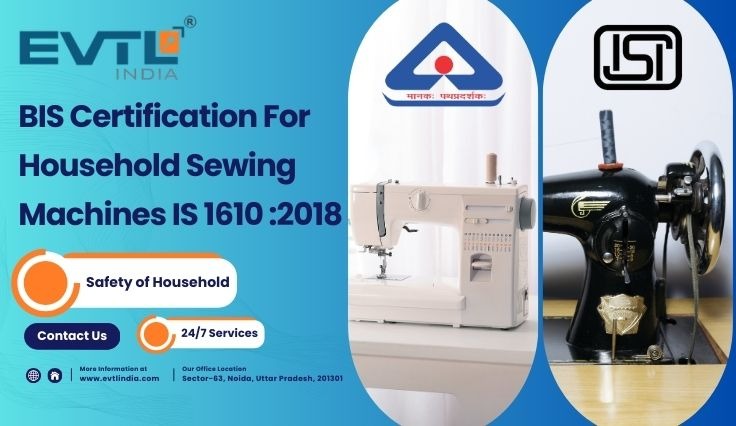
Household sewing machines are more than just appliances—they are essential tools that make daily life easier. From repairing clothes to creating custom outfits or small-scale tailoring, these machines help households save time, money, and effort. But with regular use, especially for electric models, safety and reliability become critical. This is why BIS Certification for Household Sewing Machines under IS 1610:2018 plays such an important role. It ensures that every machine meets high standards of safety, quality, and performance.
What is BIS Certification for Household Sewing Machines?
The Bureau of Indian Standards (BIS) is India’s national standards authority, responsible for ensuring that products meet consistent quality and safety benchmarks. BIS Certification for Household Sewing Machines confirms that a product complies with IS 1610:2018, covering mechanical safety, electrical safety, performance, and durability.
Manufacturers who obtain a BIS license can display the ISI mark, which acts as a seal of trust. It shows that the sewing machine has passed rigorous testing and adheres to Indian standards. Beyond legal compliance, the ISI mark signals to consumers and retailers that the product is safe, reliable, and built to last.
Why BIS Certification Matters
- Protects Users and Ensures Safety : Electric household sewing machines can pose risks like electric shocks, fire hazards, or injuries from moving parts. BIS certification ensures machines meet strict safety standards, protecting users and giving families peace of mind.
- Guarantees Quality and Performance : BIS-certified machines are tested for smooth operation, stitch consistency, thread tension, and durability. This means that consumers can rely on their machines for years without worrying about frequent breakdowns or poor performance.
- Ensures Compliance with IS 1610:2018 : IS 1610:2018 sets standards for mechanical safety, electrical insulation, noise limits, endurance, and operational efficiency. Adhering to these standards ensures uniform quality across all certified machines.
- Builds Market Credibility : A BIS-certified sewing machine inspires confidence among buyers, retailers, and even institutional clients. Products with the BIS Registration for Household Sewing Machines gain trust and are preferred over uncertified alternatives.
- Helps with Legal and Export Compliance : While certification is sometimes voluntary, it is highly beneficial for exports and business contracts. A BIS license shows proactive adherence to Indian standards, which can open doors to international markets.
Key Requirements under IS 1610:2018
- Mechanical Safety: Designs must prevent accidental contact with moving parts, eliminate sharp edges, and minimize risk of injury.
- Electrical Safety: Electric machines undergo tests for proper insulation, grounding, and overload protection.
- Performance: Machines should deliver consistent stitch quality, work with recommended fabrics, and operate smoothly with minimal vibration and noise.
- Durability: Endurance testing ensures the machine can withstand long-term, regular use.
- Labelling and Instructions: Clear user manuals, maintenance guidelines, safety instructions, and display of BIS mark, model number, and electrical ratings are mandatory.
The BIS Certification Process
Obtaining BIS Certification for Household Sewing Machines involves a clear, step-by-step process:
- Application Submission: Manufacturers submit product details, technical specifications, and test reports to BIS.
- Product Testing: Authorized laboratories check machines for compliance with IS 1610:2018.
- Factory Inspection: BIS officials inspect manufacturing units to ensure proper quality control systems.
- License Grant: Successful testing and inspection lead to the BIS license, allowing the use of the ISI mark.
- Periodic Surveillance: Regular audits maintain ongoing compliance with BIS standards.
How BIS Consultants and Agents Can Help
Navigating the certification process can be complex, which is why many manufacturers and importers seek professional guidance:
- BIS Consultant for Household Sewing Machines: Helps with documentation, testing, and compliance.
- ISI Consultant for Household Sewing Machines: Assists in acquiring the ISI mark and ensuring adherence to IS 1610:2018.
- BIS Agent for Household Sewing Machines: Manages communication with BIS and license renewals.
- BIS QCO for Household Sewing Machines: Conducts quality checks and ensures ongoing compliance.
Benefits for Manufacturers
- Consumer Trust: Certified machines are preferred by buyers.
- Market Advantage: Certification sets products apart from competitors.
- Export Opportunities: Many countries recognize BIS certification.
- Improved Quality: Following BIS standards encourages better manufacturing practices.
Conclusion
Getting BIS Certification for Household Sewing Machines under IS 1610:2018 is more than a regulatory requirement—it is a commitment to safety, quality, and consumer satisfaction. With the support of experienced BIS consultants, manufacturers can navigate the process smoothly.
Displaying the ISI mark not only ensures compliance but also communicates to customers that the product is safe, reliable, and crafted to the highest Indian standards. It’s a mark of trust that strengthens brand reputation and gives consumers confidence in every stitch.