
BIS Certification for Bearings in India: Process, Cost, IS Standards & ISI Mark
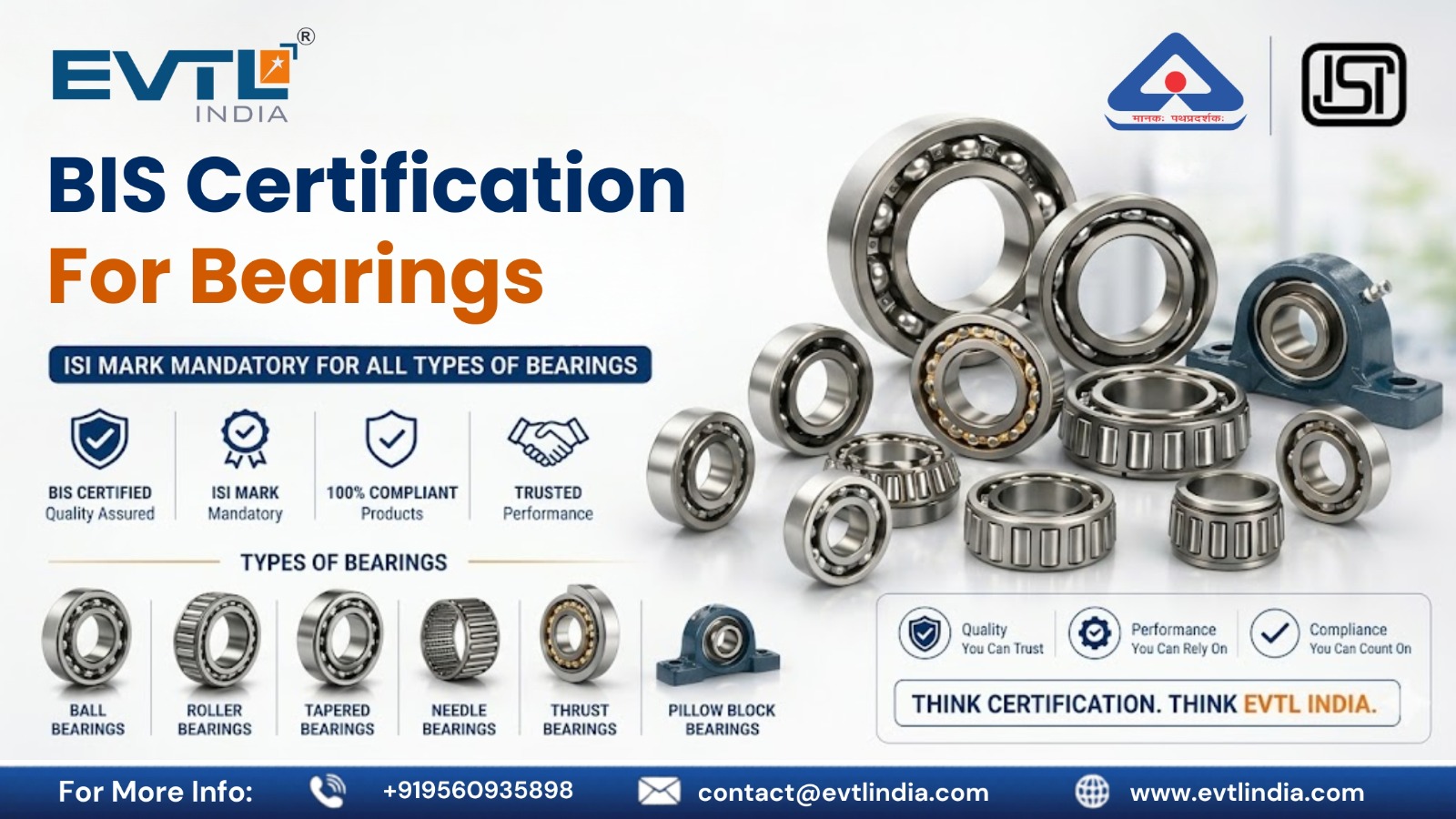
BIS Certification for Bearings guarantees that these mechanical components meet the quality standards as laid down by the Bureau of Indian Standards. Bearings are precise mechanical components that help minimize friction and facilitate the rotating or linear movement of the machine. The usage of these bearings is common in various fields such as automobile industry, machinery, electrical instruments, and heavy engineering operations. The bearings aid in enhancing efficiency and increase the life of the machine.
To ensure the quality and performance of bearings, the Bureau of Indian Standards has established specific requirements under relevant Indian Standards. Some of the specifications under the BIS IS standard include aspects like load bearing capability, dimensional accuracy, quality of material, and durability. Manufacturers are required to obtain BIS certification for Bearings before sale in India. This confirms that the product meets prescribed safety and quality standards for reliable industrial and mechanical use.
BIS Certification for bearings: Overview, Key Requirements, and Applicability
BIS Certification for Bearings is a quality assurance issued by the Bureau of Indian Standards that the ball and roller components meet the required safety, performance, and durability standards. Once certified, manufacturers can use the ISI Mark, assuring buyers that the bearings are reliable and approved for sale in the Indian market. Requirements Bearings are required in various industries to ensure efficient operation, reduced wear and tear, and reliable performance of machinery and equipment.
Applicable to:
- Manufacturers (India): Use bearings in machinery, automotive components, and industrial equipment to ensure smooth and efficient movement.
- Foreign Manufacturers: Supply different types of bearings for export to industries that require high-performance and durable components.
- Importers/Brand Owners: Must ensure that the bearings they import or sell meet quality standards and are suitable for intended applications.
- Sellers/Distributors: Should supply high-quality bearings to maintain performance standards and customer satisfaction.
BIS-Approved Bearings Products as per Indian Standards
Bearings are critical mechanical components used to reduce friction and support rotating or moving parts in machinery. To ensure their quality, performance, and reliability, the Bureau of Indian Standards (BIS) has defined specific Indian Standards that manufacturers must comply with to obtain BIS certification and use the ISI Mark.
Here are the key BIS-approved bearing products as per relevant Indian Standards:
How to Get BIS Certification for Industrial Rotation and Load-Bearing Components
The BIS certification process ensures that bearings meet the required Indian Standards for performance, precision, and durability. This process is defined by the Bureau of Indian Standards and includes the following steps:
- Online Registration: Manufacturers register on the BIS Manak portal by providing company details, manufacturing unit information, and product specifications. Foreign manufacturers are required to appoint an Authorized Indian Representative (AIR).
- Testing at BIS-Approved Laboratory: Bearing samples are tested in BIS-recognized laboratories to evaluate parameters such as dimensional accuracy, load capacity, material quality, hardness, and performance under operating conditions.
- Application Submission: The application is submitted along with test reports, product details, and necessary technical documents. Foreign manufacturers must also include AIR-related documentation.
- Factory Inspection: BIS officials conduct an inspection of the manufacturing facility to assess the production process, quality control systems, in-house testing facilities, and overall manufacturing capabilities.
- Grant of BIS License: Once all requirements are successfully fulfilled, BIS grants the certification license under the applicable scheme.
- Use of ISI Mark: After certification, the manufacturer can affix the ISI Mark along with the CM/L number on the bearings, indicating compliance with BIS standards and approval for sale in the Indian market.
BIS Documents Checklist for Precision Mechanical Components Certification
The following documents are typically required for obtaining BIS approval for :
Foreign manufacturers must appoint an Authorized Indian Representative (AIR) who acts as their contact person in India. The AIR helps communicate with the Bureau of Indian Standards and takes care of all compliance and approval-related work on their behalf.
IS Compliance Marking Guidelines for Industrial Bearings
Once a manufacturer receives a BIS licence, the ISI Mark for bearings must be placed clearly and permanently on the product or its packaging. Along with the mark, some important details must also be mentioned as per the relevant Indian Standard. These details help in identifying the product and show that it meets BIS quality requirements.
Note: The marking should be done using strong and long-lasting methods like engraving, stamping, metal plates, or permanent printing. This makes sure the information does not fade during handling and use.
BIS License Duration for Industrial Load-Bearing Components
After getting BIS certification, the license remains valid for a certain time. To keep the license active, manufacturers must follow all BIS rules continuously.
This process helps ensure that bearings available in the market are safe, reliable, and of good quality.
BIS Approval Cost for Bearings
The cost of getting BIS certification for bearings includes several types of fees. These usually cover the application, factory inspection, licence, marking, product testing, and consultancy support. The total cost may change depending on the type of bearings and the manufacturer.
Charges Overview
Note:
- Foreign manufacturers usually pay the application fee through SWIFT transfer. In SAARC countries, payment in INR with GST may also be allowed.
- Audit charges for foreign manufacturers depend on the factory location and inspection needs.
- Marking fees depend on the type of bearings and production quantity. MSME benefits may be available in some cases.
- Testing charges are paid directly to BIS-approved labs for product testing.
- Consultancy fees depend on the product type, required documents, and level of support needed.
Conclusion
In India, BIS certification ensures that bearings meet the required quality, safety, and performance standards. The ISI Mark on bearings indicates that they have been properly tested and approved as reliable and durable components suitable for industrial and mechanical use. For manufacturers, importers, and distributors, obtaining BIS certification is mandatory to legally sell bearings in the Indian market. It helps ensure that products comply with relevant Indian Standards and deliver consistent performance.
With the support of EVTL India, businesses can complete the certification process smoothly and ensure their bearings meet all regulatory requirements without complications.