
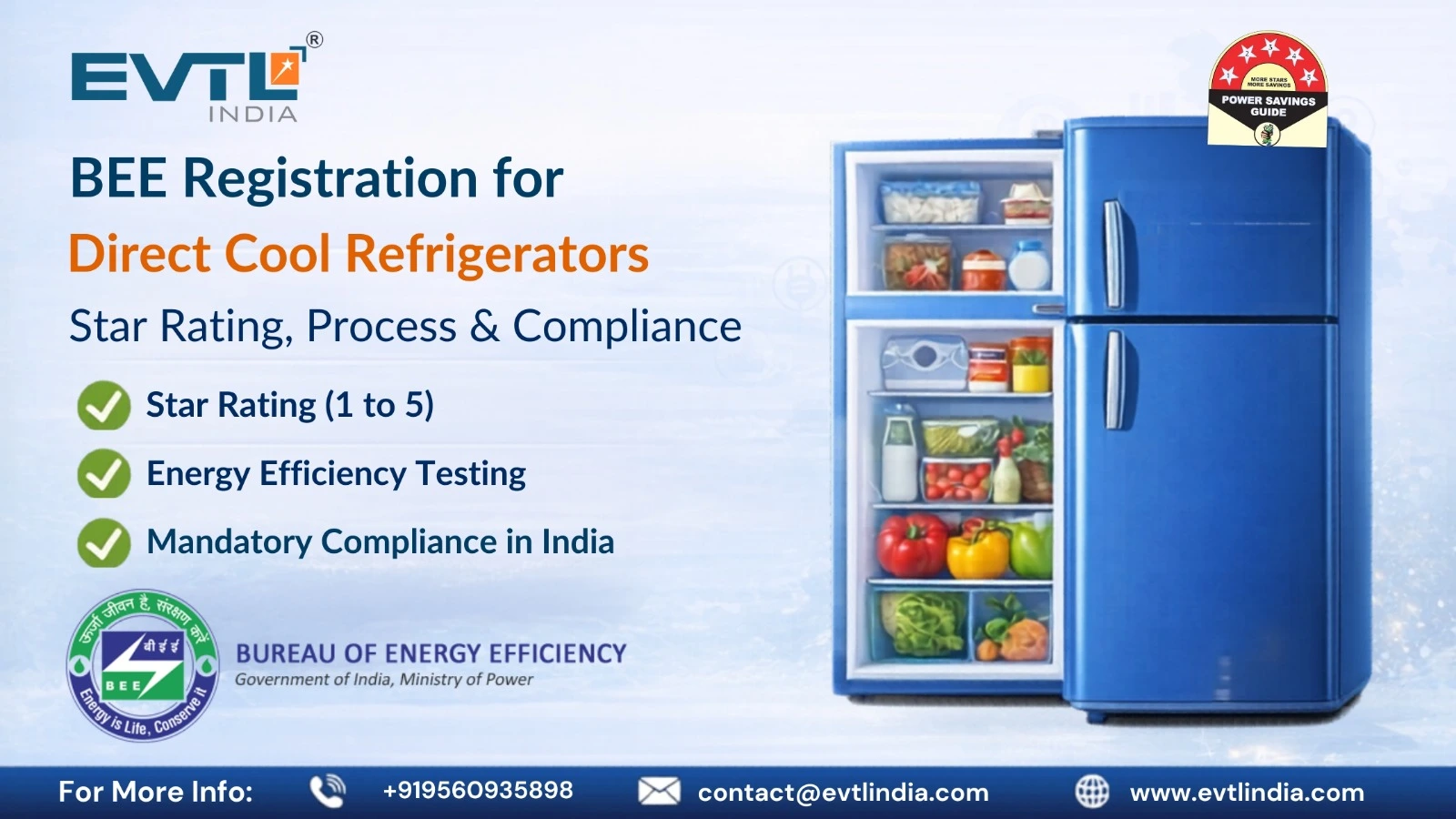
BEE Registration for Direct Cool Refrigerators – Star Rating, Process & Compliance
Direct Cool Refrigerators have become one of the most widely used household appliances across residential and small commercial spaces. These refrigerators operate on natural convection, where cool air circulates inside the refrigerator without the use of fans, making them energy-efficient and cost-effective. They are commonly used in homes, small shops, offices, hostels, and rural areas due to their affordability, low maintenance, and reliable performance.
With the increasing use of refrigerators and rising electricity consumption, regulating their energy efficiency has become essential. To ensure optimal performance and reduced energy usage, the Government of India has made it mandatory to obtain BEE Registration for Direct Cool Refrigerators under the Bureau of Energy Efficiency (BEE). This initiative helps in promoting energy conservation, reducing electricity bills, and encouraging the use of eco-friendly appliances
What is BEE Registration for Direct Cool Refrigerators?
BEE Registration for Direct Cool Refrigerators is a certification issued under the Energy Conservation Act, 2001. It ensures that refrigerator models comply with the energy efficiency standards specified by the Bureau of Energy Efficiency.
Once registered, the refrigerator is assigned a star rating label that indicates its energy consumption level. This rating helps consumers compare different models and choose energy-efficient appliances. Direct Cool Refrigerators, typically single-door units, fall under the mandatory labeling program and must comply with BEE norms before being sold in the Indian market.
The star rating system provides transparency and allows consumers to make informed purchasing decisions based on long-term energy savings.
Importance of BEE Registration for Direct Cool Refrigerators
BEE Registration is mandatory for manufacturers, importers, and brand owners dealing with Direct Cool Refrigerators in India. Without this certification, these appliances cannot be legally sold or distributed.
Key benefits of BEE Registration include:
- Reduced electricity consumption
- Lower energy bills for consumers
- Compliance with Indian regulatory requirements
- Improved product reliability and quality assurance
- Enhanced brand value and consumer trust
- Contribution to environmental sustainability
- Promotion of energy-efficient technologies
Since refrigerators operate continuously, even small improvements in energy efficiency can result in significant electricity savings over time.
Star Rating for Direct Cool Refrigerators
The Bureau of Energy Efficiency assigns star ratings ranging from 1 Star to 5 Star for Direct Cool Refrigerators. This rating is displayed on a standardized energy label affixed to the product.
Higher star ratings indicate better energy efficiency and lower electricity consumption. Consumers are encouraged to opt for higher-rated refrigerators to achieve long-term cost savings.
Star Rating Efficiency (Indicative Values)
Table 1.1 for Frost Free Refrigerator
(Valid from 1st January, 2026 to 31st December, 2028)
Certification and Quality Standards
- Energy consumption (kWh/year)
- Cooling efficiency and temperature maintenance
- Insulation performance
- Compressor efficiency
- Defrosting performance
- Durability and safety
BEE Registration Process for Direct Cool Refrigerators
- Product Testing: The refrigerator model is tested in a BEE-approved laboratory to evaluate its energy performance.
- Documentation Preparation: Required documents such as test reports, technical specifications, brand authorization, and company details are compiled.
- Online Application Submission: The application is submitted on the official BEE portal along with applicable fees.
- Verification and Evaluation: BEE reviews the submitted documents and verifies compliance with energy efficiency standards.
- Approval and Registration: Upon successful verification, the product is granted registration.
- Star Label Issuance: The manufacturer is authorized to affix the BEE star label before launching the product in the market.