BIS Scheme X Certification for Weaving Machines (Looms)
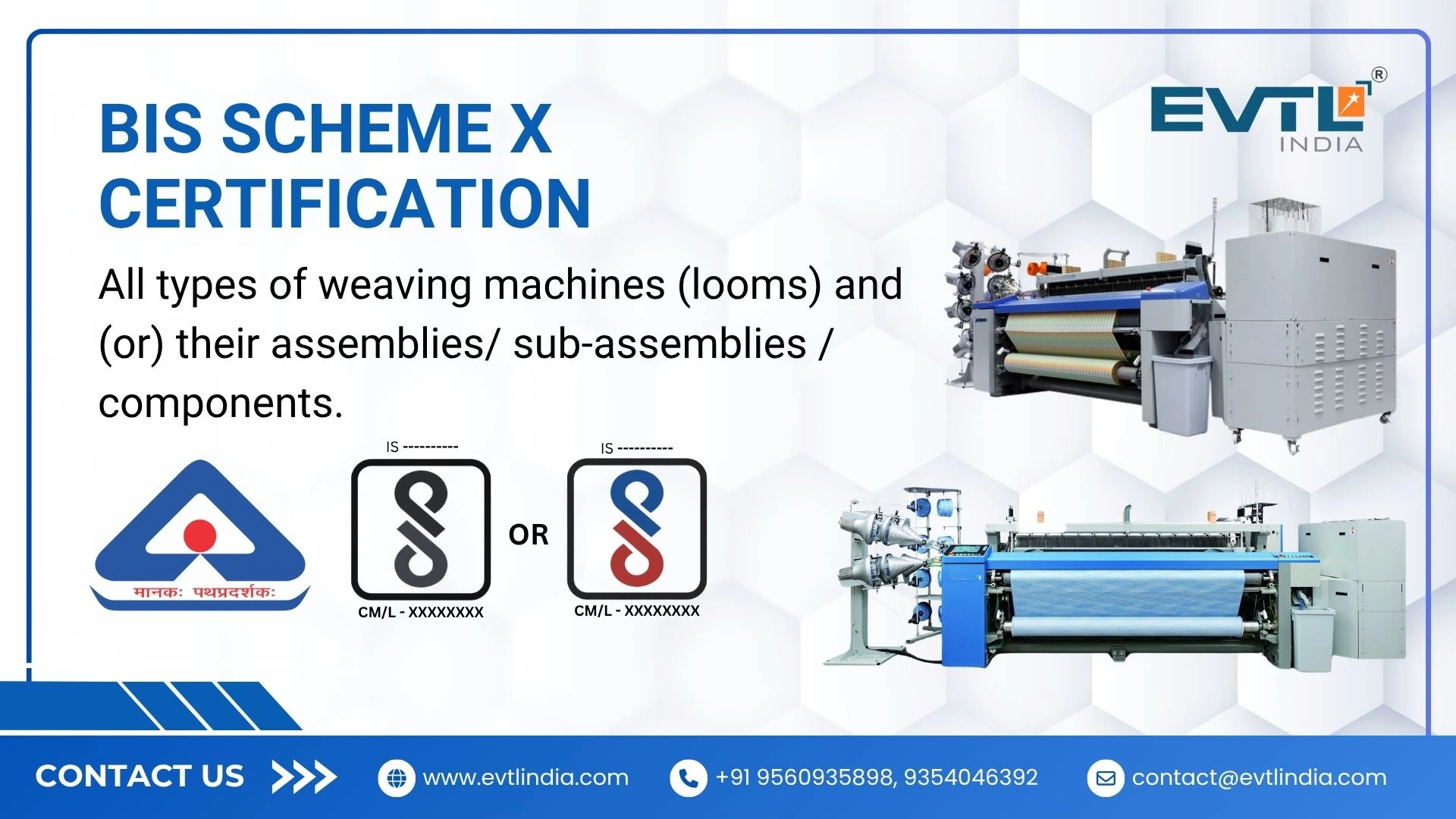
The Indian textile industry, renowned for its rich heritage and significant contribution to the economy, relies heavily on weaving machines (looms) for fabric production. Ensuring the safety, quality, and conformity of these machines is paramount to maintain operational efficiency and global competitiveness. Recognizing this, the Bureau of Indian Standards (BIS) introduced the Scheme X Certification, a regulatory framework aimed at standardizing machinery safety and performance across the nation.
Understanding BIS Scheme X Certification
Scheme X Certification is a conformity assessment scheme launched by the BIS on 16th March 2022, under the BIS Conformity Assessment Regulations, 2018. This scheme specifically targets machinery and electrical equipment, ensuring they meet predefined Indian Standards (IS) for safety and quality.
The Ministry of Heavy Industries, through the Omnibus Technical Regulation Order, 2024, has mandated that all manufacturers—both domestic and international—must comply with Scheme X Certification requirements by 28th August 2025. This directive encompasses all types of weaving machines (looms), along with their assemblies, sub-assemblies, and components.
Scope of the Certification
The Scheme X Certification applies to a broad range of weaving machinery and equipment, including:
- Weaving Machines (Looms): Power looms, shuttleless looms, rapier looms, air-jet looms, water-jet looms, and other advanced weaving technologies.
- Assemblies and Components: Warp beams, heddles, reed mechanisms, shuttle assemblies, and control systems.
It's important to note that certain equipment, such as machinery covered under the Central Motor Vehicles Rules (CMVR), 1989, may be exempt from this certification.
Importance of BIS Certification for Weaving Machines
- Safety Assurance: Certification ensures that weaving machines meet stringent safety standards, reducing the risk of accidents and equipment failure.
- Quality Standardization: Uniform standards across the industry enhance product reliability and performance.
- Regulatory Compliance: Adhering to BIS standards is mandatory, and non-compliance can lead to legal repercussions and market exclusion.
- Market Access: Certified products are more readily accepted in both domestic and international markets, facilitating trade and business expansion.
- Consumer Confidence: The BIS mark is a symbol of quality and safety, instilling trust among end-users and stakeholders.
Certification Process
1. Application Submission: Manufacturers must submit an application detailing the weaving machines or components to be certified, along with technical specifications and relevant documentation.
2. Product Testing: The equipment undergoes rigorous testing in BIS-recognized laboratories to ensure compliance with applicable Indian Standards.
3. Factory Inspection: BIS officials conduct on-site inspections to verify manufacturing processes, quality control measures, and adherence to safety protocols.
4. Certification Grant: Upon successful evaluation, BIS grants the certification, allowing the manufacturer to affix the BIS Standard Mark on their products.
5. Surveillance and Renewal: Periodic audits and inspections ensure ongoing compliance, with certifications subject to renewal as per BIS guidelines.
Conclusion
The mandatory BIS Scheme X Certification for weaving machines (looms) underscores the Indian government's commitment to safety, quality, and standardization in critical industrial sectors. By adhering to these regulations, manufacturers not only ensure legal compliance but also enhance their market competitiveness and consumer trust.
With the August 28, 2025, deadline approaching, proactive engagement with the certification process is imperative. Manufacturers are encouraged to initiate the necessary steps promptly, leveraging expert guidance to navigate the complexities of certification and contribute to a safer, more reliable industrial landscape. For further information and assistance with the BIS Scheme X Certification process, manufacturers can refer to EVTL India, a leading BIS certification consultant in India. To facilitate the certification process, manufacturers can seek assistance from EVTL India, which guides standard interpretation, documentation, testing procedures, and compliance strategies, ensuring a smoother certification journey.