BIS Scheme X Certification for Power Semiconductor Converters
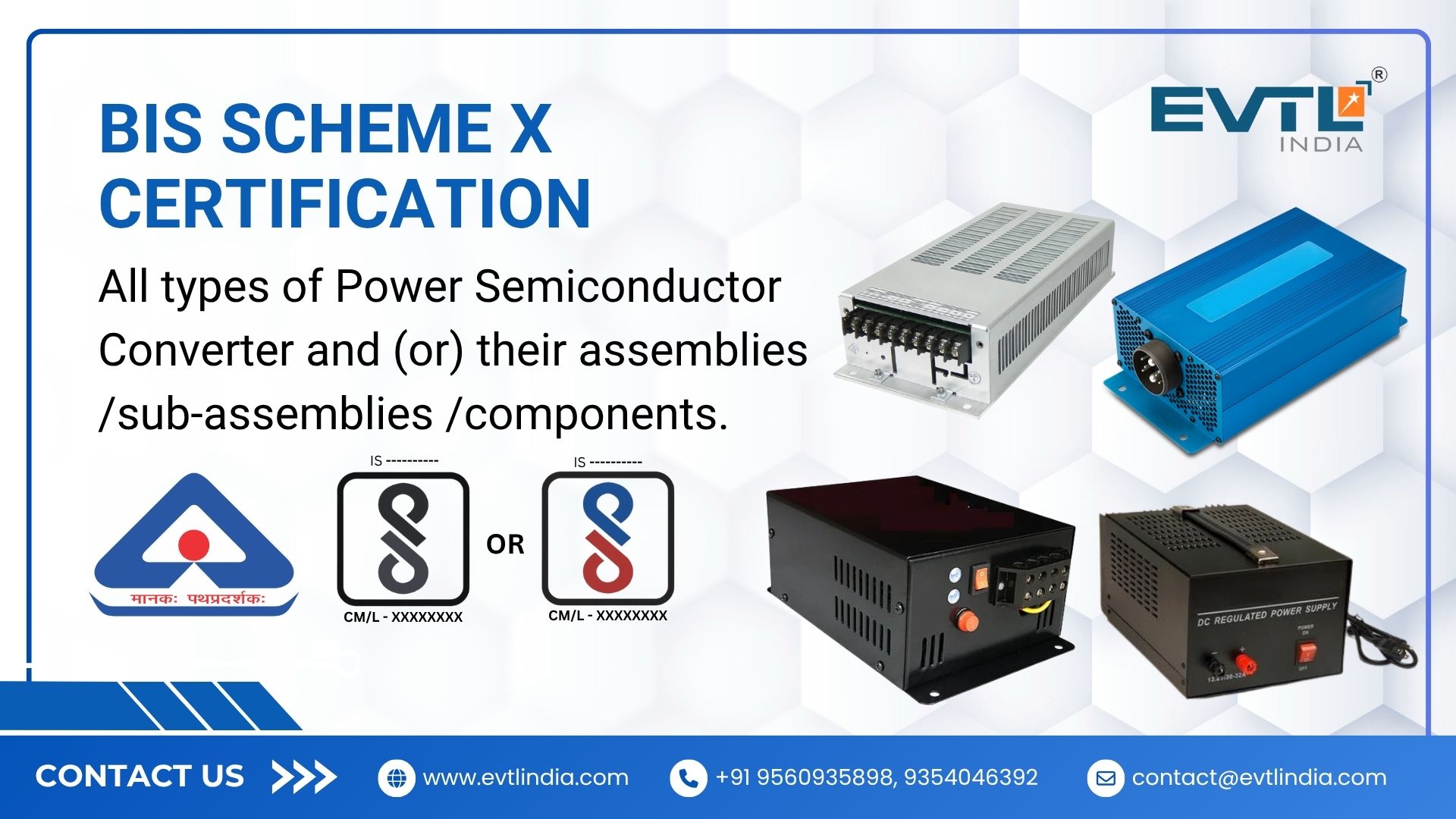
Power Semiconductor Converters are the foundation of modern electrical and electronic systems. These devices enable efficient control and conversion of electrical energy across a wide range of applications, from renewable energy systems and electric vehicles to industrial automation and consumer electronics. Given their critical role and increasing usage in India’s energy and industrial ecosystems, the Bureau of Indian Standards (BIS) has made BIS certification for Power Semiconductor Converters mandatory under the Scheme X Certification framework.
Let’s understand everything you need to know about BIS Scheme X certification for Power Semiconductor Converters, including its scope, benefits, the application process, key compliance requirements, and more.
What Is a Power Semiconductor Converter?
APower Semiconductor Converteris an electronic device that converts electrical energy from one form to another using semiconductor components such as diodes, thyristors, transistors, and IGBTs. These converters are typically used in:
- DC to AC conversion (Inverters)
- AC to DC conversion (Rectifiers)
- DC to DC conversion (Choppers)
- AC to AC conversion (Cycloconverters)
- Variable Frequency Drives (VFDs)
- Uninterruptible Power Supplies (UPS)
- Solar inverters and wind converters
They are widely used in power grids, electric vehicles, smart manufacturing, railways, and consumer electronics.
BIS Scheme X Certification: A Regulatory Milestone
To strengthen quality assurance across the machinery and electrical equipment sectors, BIS introduced Scheme X Certification under the BIS Conformity Assessment Regulations, 2018. This initiative was officially launched on 16th March 2022.
The Ministry of Heavy Industries, via the Omnibus Technical Regulation Order, 2024, has mandated that all manufacturers (domestic and international) must obtain BIS certification for Power Semiconductor Converters and their sub-assemblies/components by 28th August 2025.
Scope of BIS Certification for Power Semiconductor Converters
This certification applies toall types of power semiconductor converters and their assemblies/sub-assemblies/components, including:
- Industrial inverters and converters
- Power rectifiers and bridge circuits
- AC and DC choppers
- Static switches and relays
- Semiconductor-based speed controllers
- Modular converter units
- Voltage source and current source inverters
- High-voltage power electronic controllers
It also extends tocomponents and modulessuch as:
- Power modules and hybrid circuits
- Semiconductor switching devices (e.g., IGBT, MOSFET modules)
- Gate drivers, control cards, and cooling assemblies
Importance of BIS Certification for Power Semiconductor Converters
1. Regulatory Compliance
After 28th August 2025, it will be illegal to import, sell, or manufacture non-certified power converters in India.
2. Safety and Reliability
Certification ensures these devices comply with safety and performance benchmarks, reducing the risk of failure, overheating, or fire.
3. Market Access
Certified products gain immediate access to government and private sector tenders and markets requiring mandatory BIS certification.
4. Consumer Trust
BIS-certified equipment provides assurance of quality and conformance, increasing trust among end-users and industry stakeholders.
BIS Certification Process under Scheme X
Step 1: Classification & Applicability
Identify the type of converter or component you manufacture. Check if it falls under the mandatory BIS Scheme X certification list.
Step 2: Documentation
Prepare necessary documentation:
- Product specifications and datasheets
- Circuit diagrams
- Quality control procedures
- Test reports (from BIS-recognized labs)
- List of raw materials/components
- Manufacturing flowcharts and QC inspection plans
Step 3: Application Submission
Apply online through theBIS portal, submit forms, and pay the required certification fees.
Step 4: Product Testing
Send product samples to a BIS-approved lab for testing against the prescribed standards. Testing covers:
- Electrical and mechanical performance
- Thermal behavior
- Dielectric strength
- Harmonic distortion and power factor
- Protection systems (overcurrent, short circuit, thermal)
Step 5: Factory Audit
BIS officials conduct afactory inspectionto assess manufacturing capabilities, quality assurance systems, in-house testing labs, and consistency in production processes.
Step 6: Grant of License
Once the factory audit and product testing are successful, BIS issues a license and allows the use of theStandard Markon approved products.
Step 7: Surveillance and Renewal
Periodic surveillance audits and random testing ensure continued compliance. The license is renewable after 1–2 years, subject to re-verification.
Benefits of BIS Scheme X Certification for Power Semiconductor Converters
Benefit | Description |
Legal Compliance | Avoid penalties, fines, or bans post-August 2025 |
Competitive Advantage | Gain a certified status ahead of competitors |
Export Support | BIS certification may also support trade with countries recognizing Indian standards |
Customer Trust | BIS mark reassures buyers about product safety and durability |
Quality Consistency | Certification enforces strict production and testing protocols |
Consequences of Non-Compliance
After28th August 2025, manufacturers and importers who fail to obtain BIS certification for Power Semiconductor Converters may face:
- Sales and import restrictions
- Legal penalties under theBIS Act, 2016
- Seizure or recall of non-compliant products
- Loss of market access and brand damage
Conclusion
The BIS Scheme X certification for Power Semiconductor Converters is not just a regulatory formality—it's a strategic move towards safer, higher-quality, and globally competitive Indian manufacturing. With the deadline set for 28th August 2025, manufacturers must initiate the certification process immediately.
Whether you're producing inverters, rectifiers, converters, or any semiconductor-based power control units, BIS certification will soon become your passport to operate in the Indian market. Looking to get BIS certified for your power semiconductor converters? Get in touch with EVTL India, an experienced BIS consultant, and ensure a smooth, stress-free certification process well ahead of the compliance deadline.