
BIS Scheme X Certification for Machinery for Filling, Closing, Sealing, Labelling Bottles, Packing or Wrapping
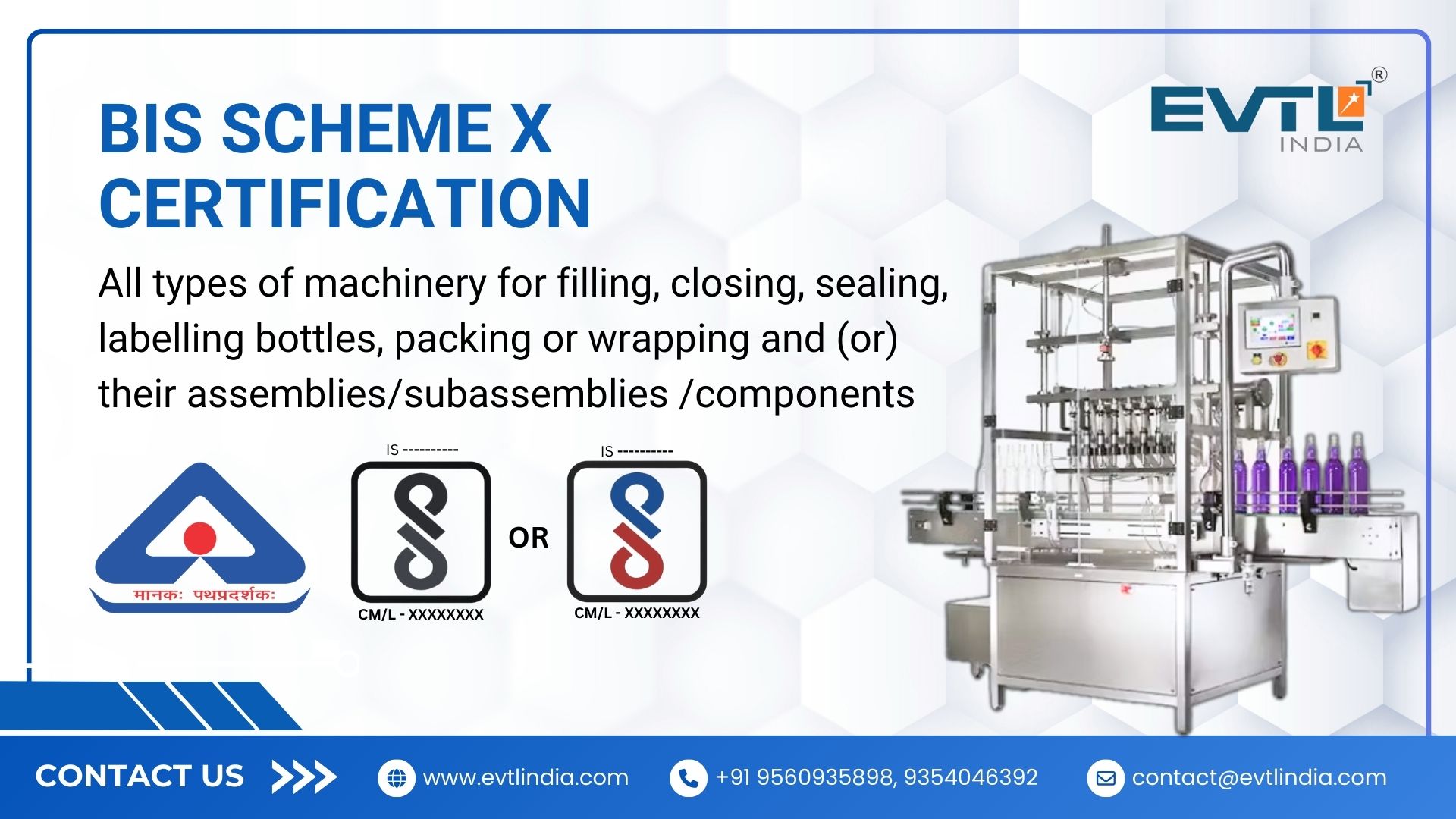
In the dynamic landscape of industrial manufacturing, packaging machinery plays a pivotal role in ensuring product integrity, safety, and efficiency. Recognizing the critical importance of these machines, the Bureau of Indian Standards (BIS) has mandated the BIS Scheme X Certification for all types of machinery involved in filling, closing, sealing, labeling bottles, packing, or wrapping, including their assemblies, sub-assemblies, and components. This move aims to standardize quality, enhance safety, and ensure conformity across the industry.
BIS Scheme X is a regulatory framework introduced by the Bureau of Indian Standards to ensure the safety, quality, and conformity of machinery and electrical equipment in India. Launched on 16th March 2022, this scheme is part of the BIS Conformity Assessment Regulations, 2018. It encompasses a wide range of machinery, including packaging equipment, to align with international safety standards and bolster consumer trust.
The Omnibus Technical Regulation Order, 2024
To reinforce the objectives of Scheme X, the Ministry of Heavy Industries issued the Omnibus Technical Regulation Order, 2024. This order mandates that all manufacturers—domestic and foreign—must comply with Indian standard requirements under Scheme X Certification by 28th August 2025. The regulation covers:
- All types of machinery for filling, closing, sealing, labeling bottles, packing, or wrapping.
- Their assemblies, sub-assemblies, and components.
This directive ensures that machinery used in critical sectors like food processing, pharmaceuticals, and consumer goods adheres to stringent safety and quality standards.
Importance of BIS Certification for Packaging Machinery
- Safety Assurance: Packaging machinery often operates at high speeds and involves complex mechanisms. Certification ensures that these machines meet safety standards, reducing the risks of accidents and malfunctions.
- Quality Standardization: BIS certification promotes uniformity in manufacturing practices, ensuring consistent product quality across different manufacturers.
- Market Access: Certified machinery gains easier access to both domestic and international markets, as it meets recognized safety and quality benchmarks.
- Consumer Trust: The BIS mark is a symbol of quality and reliability, enhancing consumer confidence in products packaged using certified machinery.
Scope of Machinery Under BIS Scheme X
The certification applies to a broad spectrum of packaging machinery, including but not limited to:
- Filling Machines: Equipment that dispenses products into containers, such as liquid fillers, powder fillers, and granule fillers.
- Closing and Sealing Machines: Machines that secure containers, including capping machines, sealing machines, and crimping machines.
- Labeling Machines: Equipment that applies labels to containers, ensuring proper identification and branding.
- Packing and Wrapping Machines: Machines that package products for distribution, including carton sealers, shrink wrap machines, and palletizers.
Additionally, the certification encompasses all related assemblies, sub-assemblies, and components integral to the functioning of these machines.
Compliance Process for Manufacturers
To obtain BIS Scheme X Certification for packaging machinery, manufacturers must follow a structured process:
- Application Submission: Manufacturers submit an application detailing the machinery and components for which certification is sought.
- Product Testing: The machinery undergoes rigorous testing to ensure compliance with relevant Indian Standards (IS), such as IS 16189:2018 and ISO 12100:2010, which focus on safety and risk assessment.
- Factory Inspection: BIS officials conduct inspections of manufacturing facilities to verify quality control processes and adherence to standards.
- Certification Grant: Upon successful evaluation, BIS grants the certification, allowing manufacturers to affix the BIS Standard Mark on their products.
- Surveillance and Renewal: Certified manufacturers are subject to periodic audits to ensure ongoing compliance, with certifications requiring renewal at specified intervals.
Conclusion
The implementation of BIS Scheme X Certification for packaging machinery marks a significant step towards standardizing safety and quality in India's manufacturing sector. By adhering to these regulations, manufacturers can ensure their machinery meets national and international standards, fostering trust among consumers and stakeholders alike.
As the 28th August 2025 compliance deadline approaches, proactive engagement with the certification process is crucial. Manufacturers are advised to initiate the necessary steps promptly, leveraging expert guidance to navigate the complexities of certification and contribute to a safer, more reliable industrial landscape. For further information and assistance with the BIS Scheme X Certification process, manufacturers can reach out to EVTL India, which specializes in machinery compliance.