
BIS Scheme X Certification for Machine Tools Working on Stone, Ceramics, Concrete, Asbestos Cement, and Similar Materials
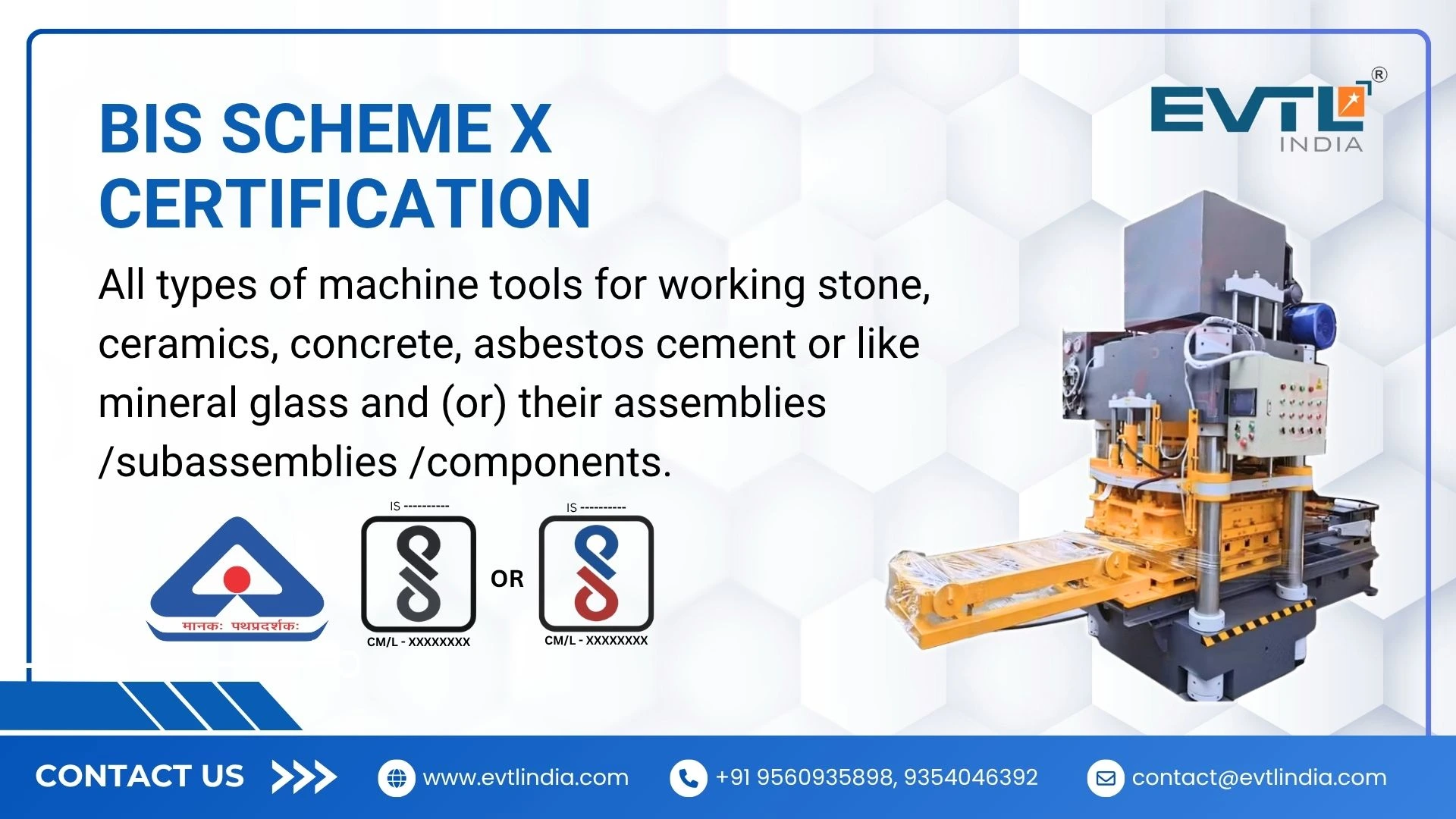
In an era where industrial safety and quality are paramount, the Bureau of Indian Standards (BIS) has taken a significant step by introducing the Scheme X Certification. This certification is particularly crucial for manufacturers of machine tools designed to work on materials like stone, ceramics, concrete, asbestos cement, and similar mineral glass. Ensuring compliance with this certification not only aligns with national safety standards but also enhances the credibility and marketability of these products.
Scheme X Certification is a specialized conformity assessment framework introduced by BIS under the BIS Conformity Assessment Regulations, 2018. Launched on 16th March 2022, this scheme aims to ensure that machinery and electrical equipment meet stringent safety, quality, and performance standards. It encompasses a wide range of products, including machine tools for working on stone, ceramics, concrete, asbestos cement, and similar materials.
Scope of Certification
The certification covers:
- All types of machine toolsare designed for working on stone, ceramics, concrete, asbestos cement, or similar mineral glass.
- Assemblies, sub-assemblies, and componentsassociated with these machine tools.
This comprehensive coverage ensures that every part of the machinery, from the main unit to its smallest component, adheres to the prescribed safety and quality standards.
Regulatory Framework: Omnibus Technical Regulation Order, 2024
To enforce the mandatory nature of this certification, the Ministry of Heavy Industries issued the Omnibus Technical Regulation (OTR) Order, 2024. Key highlights include:
- Implementation Date: The order was notified on28th August 2024and will come into effect on28th August 2025, providing a one-year window for compliance.
- Objective: To enhance the safety, reliability, and quality of machinery and electrical equipment manufactured or imported into India.
- Applicability: Covers all manufacturers—domestic and foreign—producing or importing machinery under the specified categories.
Importance of BIS Certification for Machine Tools
- Safety Assurance: Ensures that machines meet safety standards, reducing risks associated with operation.
- Quality Enhancement: Promotes consistency in manufacturing, leading to better product quality.
- Market Access: Mandatory certification is essential for legal sale and distribution within India.
- Global Competitiveness: Aligns Indian manufacturing with international standards, facilitating exports.
- Consumer Confidence: Certified products are perceived as more reliable, enhancing brand reputation.
BIS Scheme X Certification Process
The process for obtaining BIS Scheme X Certification involves several steps:
- Application Submission: Manufacturers submit detailed applications, including product specifications and technical documents.
- Product Testing: Samples are tested in BIS-recognized laboratories to verify compliance with relevant standards.
- Factory Inspection: BIS officials conduct on-site inspections to assess manufacturing processes and quality control systems.
- Grant of License: Upon successful evaluation, BIS grants the certification, allowing the use of the BIS Standard Mark.
- Surveillance: Periodic audits ensure ongoing compliance with certification requirements.
Conclusion
The mandatory BIS Scheme X Certification for machine tools working on stone, ceramics, concrete, asbestos cement, and similar materials marks a significant step towards standardizing machinery safety and quality in India. Manufacturers must proactively engage with the certification process to ensure compliance, enhance product reliability, and maintain competitiveness in both domestic and international markets.
For detailed information and guidance on the certification process, manufacturers can connect to EVTL India, a leading BIS consultant in India.