Plastic Waste Management (Amendment) Rules, 2026: Key Updates and Compliance Insights
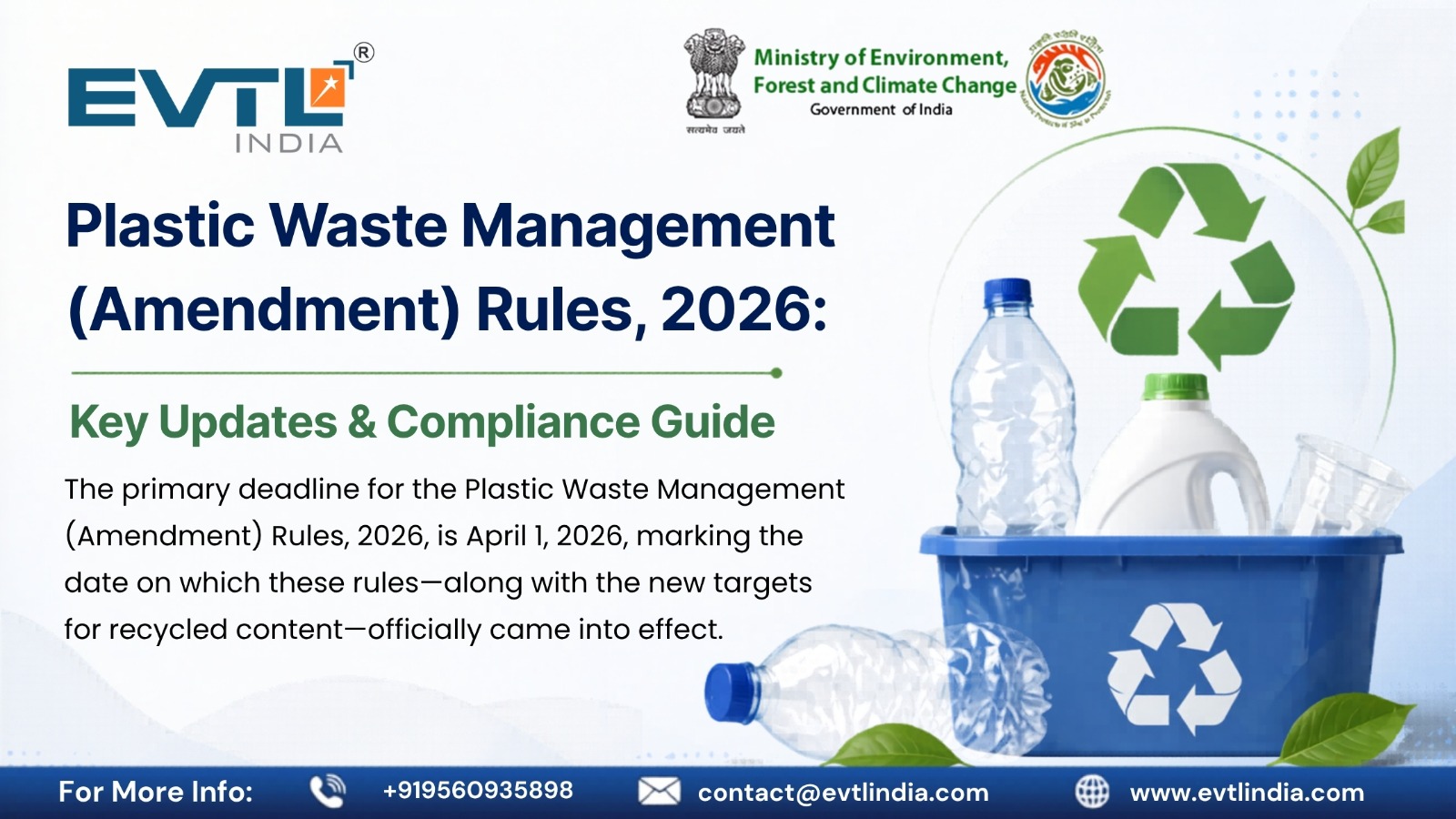
In a significant move towards tackling plastic pollution, the Government of India has notified the Plastic Waste Management (Amendment) Rules, 2026 on 31st March 2026 under the Environment (Protection) Act, 1986.
These updated rules build upon the existing 2016 framework but go a step further by focusing on better recycling practices, encouraging reuse, and tightening compliance across industries. Simply put, the government is pushing for a more practical and sustainable way of handling plastic waste.
Strengthened Definitions and Scope
One of the key updates in the 2026 amendment is the revision and expansion of definitions to remove ambiguity in compliance.
- The term “end-of-life disposal” now clearly includes energy recovery methods such as co-processing in cement and steel industries, waste-to-energy, waste-to-oil, and road construction applications.
- A new definition for “reuse” has been introduced, referring to using a product again without altering its structure.
- The term “Plastic Waste Processor” now includes both recyclers and entities involved in final disposal.
These clarifications provide better legal clarity for stakeholders and reduce interpretation issues.
Mandatory Use of Recycled Plastic Content
A major highlight of the amendment is the introduction of mandatory recycled plastic content targets for producers, importers, and brand owners.
The targets are defined category-wise:
- Category I (Rigid Plastic Packaging):30% (2025–26), increasing to 60% from 2028 onwards
- Category II (Flexible Packaging):10% to 20%
- Category III (Multi-layered Packaging):5% to 10%
These targets aim to reduce dependency on virgin plastic and promote a circular economy in plastic usage.
Carry Forward of Unfulfilled Targets
The amendment introduces a flexible compliance mechanism for businesses.
If producers, importers, or brand owners fail to meet their recycled content targets for 2025–26 (especially in food-contact packaging), they are allowed to:
- Carry forward the shortfall for up to three consecutive years
- Fulfill at least one-third of the deficit each year
This provision provides relief to industries while ensuring gradual compliance.
Introduction of Reuse Obligations
For the first time, the rules introduce minimum reuse targets for rigid plastic packaging (Category I).
Key reuse targets include:
- 10% to 25% reuse for packaging between 0.9L–4.9L
- Up to 85% reuse for large packaging used in drinking water
- 10%–15% reuse for large packaging used in other products
This marks a shift from a linear “use-and-dispose” model to a more sustainable reuse-driven system.
Compliance with Indian Standards
The amendment mandates that all recycled plastic products must comply with IS 14534:2023 standards for plastic recycling and recovery.
Additionally:
- Proper labeling and marking of recycled content is compulsory
- Food-contact plastic must also comply with applicable food safety regulations
This ensures quality, safety, and traceability in recycled plastic usage.
Strengthened Monitoring and Enforcement
The government has introduced a multi-level enforcement framework:
- Urban Local Bodies (ULBs) and local authorities are responsible for enforcement in urban areas
- Gram Panchayats and District Panchayats are authorized to enforce rules in rural regions
Additionally, a State-Level Monitoring Committee will be established in each state to oversee implementation. This committee includes representatives from government departments, pollution control boards, industry, and experts.
Role of Environmental Auditors
The amendment expands compliance verification by allowing Registered Environmental Auditors to conduct audits alongside designated agencies.
This step is expected to improve transparency and ensure accurate reporting of recycling and reuse targets.
Digital Reporting and Accountability
Businesses are required to submit detailed data on:
- Total plastic usage
- Recycled plastic content
- Virgin plastic consumption
This information must be filed annually on a centralized online portal developed by the Central Pollution Control Board (CPCB).
The amendment also introduces mechanisms for:
- Certificate-based compliance for importers
- Audit and verification guidelines (to be issued within six months)
Industry Impact and Way Forward
The Plastic Waste Management (Amendment) Rules, 2026 reflect a balanced regulatory approach—combining stricter environmental obligations with practical flexibility for industry players.
Key impacts include:
- Increased demand for recycled plastic materials
- Greater responsibility on producers, importers, and brand owners
- Strong push towards circular economy practices
- Improved monitoring and enforcement at local and state levels
Conclusion
The 2026 amendment represents a significant step in India’s effort to combat plastic pollution. By introducing mandatory recycled content, reuse targets, and stronger enforcement mechanisms, the government is encouraging industries to adopt sustainable practices.
While compliance may require operational adjustments, these rules pave the way for a more responsible and environmentally conscious plastic ecosystem in India.